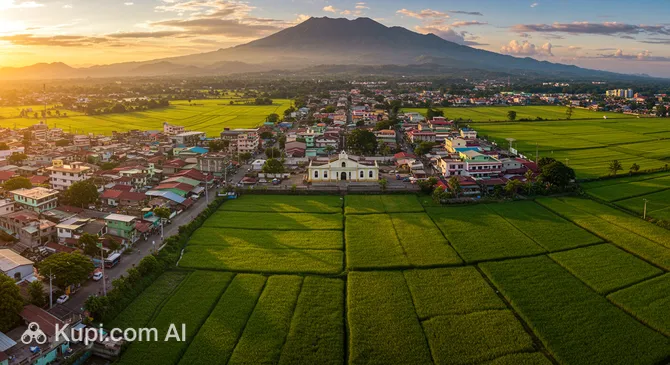
Santo Tomas is a dynamically developing city in the Batangas province of the Philippines, often referred to as the "Gateway to Batangas." Located at the majestic foothills of Mount Makiling, it harmoniously combines the atmosphere of a growing industrial center with a deep respect for its Catholic traditions. The settlement received its city status relatively recently, in 2019, which gave a new impetus to its economic development and urbanization.
Santo Tomas. Illustration.
Source: Kupi.com AI
Geographically, the city is located just 61 kilometers south of Manila, making it an important transit hub. With a population of approximately 226,772 people, Santo Tomas is a vibrant suburban area where modern infrastructure coexists with historical heritage. You can get closer to the rich history of this region through its architecture and stories of local heroes, such as General Miguel Malvar.
For travelers, Santo Tomas is interesting primarily as a point of contact with the authentic daily life of a Philippine province. Here, you can visit old churches, see modern shopping clusters, and experience the hospitality of the "Tomasinos"—local residents whose lives are closely intertwined with religious festivals and family values. We invite you to discover this energetic city, which serves as an ideal bridge between the hustle and bustle of the capital and the picturesque expanses of southern Luzon.
Weather Overview
Santo Tomas is located in a tropical climate zone, characterized by high humidity and consistently warm temperatures throughout the year. The typical temperature range fluctuates from +25°C to +32°C. Due to its proximity to Mount Makiling, the city sometimes enjoys fresher air than stifling Manila, although dense development in the center can trap heat during daylight hours.
Two seasons are clearly distinguished in the region. The dry season lasts from December to May—this is the best time for trips, when the probability of precipitation is minimal and the sky is a brilliant blue. The rainy season usually begins in June and continues until November; during this period, heavy tropical downpours and typhoons are possible, which can significantly affect traffic. You can check the current forecast and study the city's climate in more detail on specialized pages.
The hottest months are April and May, when the thermometer often rises above +33°C. During this period, it is important to always carry water and use sunscreen. The most comfortable and "cool" weather usually sets in during January and February, when the average temperature is around +25°C, making walks and excursions as pleasant as possible.
Average monthly temperature
Average monthly precipitation
Interesting Facts
Santo Tomas was founded by Dominican missionaries back in 1666, making it one of the oldest settlements in Batangas province.
The city is the birthplace of General Miguel Malvar—the last high-ranking Filipino military leader to lay down arms during the conflict with American forces in 1902.
It was the first municipality in the Philippines to be granted cityhood during the presidency of Rodrigo Duterte in 2019.
Almost all of the city's 30 districts (barangays) are named after Christian saints, highlighting the deep religiousness of the local residents.
Due to its location at the intersection of key highways, the city is considered the official "Gateway to Batangas Province" for everyone traveling from Manila.
How to Get There
Getting to Santo Tomas is quite simple thanks to its strategic location on Luzon's key transport arteries. Most tourists arrive here via the capital of the Philippines, Manila. The city does not have its own airport or railway station, so the main emphasis is on road transport. Detailed information on routes and logistics can be found in the section on how to get to the city.
The nearest major air hub is Ninoy Aquino International Airport (MNL) in Manila, located approximately 50–60 kilometers away. From the airport to Santo Tomas, you can travel by taxi, private transfer, or bus, with the journey taking between 1.5 to 3 hours depending on traffic. The car trip follows the South Luzon Expressway (SLEX), which is the shortest route from the capital.
Bus service in the region is excellently developed. Regular trips to Batangas depart from Manila terminals in the Buendia or Cubao districts, making a stop in Santo Tomas. Companies such as JAC Liner provide comfortable transportation, with ticket prices usually ranging from 100 to 200 pesos. Since railway lines in this part of the country are currently not functioning for passenger service, buses and jeepneys remain the main means of transport for tourists.
Station
Passenger traffic
Distance
Calamba railway station
6
9 km
Dr. Santos station
6
43 km
FTI railway station
5
43 km
Asia World station
6
45 km
Manila International Airport LRT Station
6
46 km
Main Attractions
Although Santo Tomas is primarily known as an important transport and industrial hub, an inquisitive tourist will find many interesting locations here. One of the city's main spiritual and architectural gems is the St. Thomas Aquinas Parish Church, founded in the 17th century. This majestic building preserves an atmosphere of centuries-old traditions and is a center of attraction for deeply religious locals.
For those interested in the history of the struggle for independence, a visit to Museo Ni Miguel Malvar is a must. This museum is dedicated to the memory of the last Filipino general to surrender during the Philippine-American War. The museum's exhibition tells the detailed story of the life of the national hero born in these parts and presents unique artifacts from that era. Another significant religious site nearby is the National Shrine of Padre Pio, where pilgrims from all over the country flock.
The modern side of the city is best experienced at the massive SM City Sto. Tomas shopping complex. It is not just a place for shopping, but a full-fledged entertainment center with modern cinemas and recreation areas. If you crave peace and quiet, you can stop by Consuelo Park—a cozy green space that is perfect for a short break and a walk in the fresh air amidst the city's bustle.
Local Cuisine
A gastronomic journey through Santo Tomas is primarily an introduction to the hearty and aromatic cuisine of Batangas province. The undisputed favorite and signature dish of the city is Lomi—a thick and rich soup with thick egg noodles, plenty of meat, chicharon (pork cracklings), and vegetables. This dish is so popular that specialized "Lomi Houses" can be found at literally every turn; a portion of this soup will not only warm you up but also serve as a full meal.
Among other traditional dishes, it is worth trying the famous Filipino Adobo, the sour soup Sinigang, and, of course, the festive Lechon—a pig roasted over charcoal until the skin is crispy. For drinks, be sure to try the refreshing young coconut juice Buko juice or sample a local exotic—Tuba, fermented coconut sap, which is a traditional alcoholic beverage in rural areas.
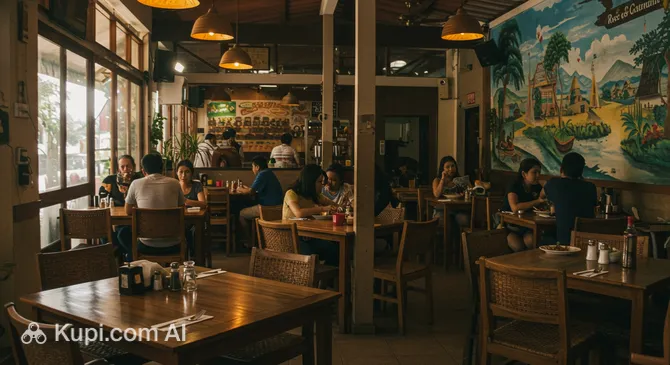
Rose and Grace Restaurant. Illustration.
Source: Kupi.com AI
Traveler photos:
The food culture in the city is diverse: from affordable "carinderias" (street eateries), where you can try home-cooked food for 50–200 pesos, to fine dining restaurants. For a more formal dinner, the legendary Rose and Grace Restaurant, famous for its traditional recipes, is ideal. If you crave European classics with a Filipino twist, stop by Mama Lou's Italian Kitchen, which offers an excellent selection of pasta and pizza in a cozy setting.
Travel Tips
Welcome to Santo Tomas! To make your trip to this "Gateway to Batangas" as comfortable and safe as possible, we have prepared a list of practical recommendations from experienced travelers.
Clothing and Essentials: Choose light cotton clothing, as the region experiences tropical heat. Be sure to bring an umbrella or raincoat, especially if traveling during the rainy season (June to November). When visiting St. Thomas Aquinas Parish Church and other temples, observe the dress code: shoulders and knees should be covered.
Transport: Use jeepneys or tricycles to move around the city—it's cheap and authentic. If you value comfort, install the Grab app to call a taxi. Factor in potential traffic jams on the SLEX highway, especially on weekends.
Finances: The local currency is the Philippine Peso (PHP). Cards are accepted in large shopping malls like SM City, but for paying for jeepneys, markets, and small cafes, you will definitely need cash. ATMs are available in the center, but they may charge a fee for international cards.
Health and Safety: Drink only bottled water and use mosquito repellent to protect yourself from tropical fevers. The city is generally safe during the day, but at night it is better to avoid walking in remote and poorly lit areas.
Communication: The official language is Tagalog, but most residents understand and speak English well. You can buy a local SIM card (Globe or Smart) in any shopping center for stable internet access.
Local Etiquette: Filipinos are very friendly and polite. Greet people with a smile. When interacting with elders, you might see the "mano" gesture (placing the elder's hand to your forehead) as a sign of respect—you can simply give a polite nod.
What to Avoid: Do not engage in arguments about religion or politics, as Filipinos are very sensitive to these topics. Try not to display large sums of money and expensive jewelry in crowded places to avoid attracting pickpockets.
Pro Tip: Be sure to try the local lomi soup in one of the small eateries—it's the fastest way to feel like a local in Santo Tomas!
May your introduction to Santo Tomas be filled with bright discoveries and only positive emotions. Have a great trip!
Entertainment & Nightlife
The nightlife in Santo Tomas is rather quiet and local, reflecting the city's status as a cozy residential suburb. You won't find loud mega-clubs here; however, evening entertainment lovers can have a great time at one of the many karaoke bars scattered throughout the barangays. The local crowd prefers gathering in cozy establishments where they can sing their favorite hits and enjoy socializing with friends to the sounds of OPM (Original Pilipino Music).
The main center of entertainment in the evening hours is the modern SM City Sto. Tomas complex. Here, guests can enjoy cinemas showing the latest global releases, bowling, and gaming zones for the whole family. If you are looking for a more active nightlife with dance floors and cocktail bars, locals usually head to neighboring cities like Tanauan or Lipa, which are no more than half an hour away by taxi.
For those seeking culinary experiences in the evening, an excellent choice would be the Rose and Grace Restaurant, known for its hospitality, or the atmospheric Mama Lou's Italian Kitchen. The city's cultural life is most vividly displayed during religious festivals, particularly on March 7th, the feast day of St. Thomas Aquinas. During this time, the city streets come alive with solemn processions and festive events that bring all the townspeople together.
Parks & Museums
Santo Tomas is gradually developing its recreational zones, striving to preserve islands of greenery amidst encroaching urbanization. The main natural landmark here is Mount Makiling, whose forested slopes reach the city limits. At its base, you can find several hiking trails for light trekking. In the very center of the city, Consuelo Park is open for residents' relaxation—a cozy green space where locals love to have small picnics and spend time with their families.
The city's cultural heritage is concentrated in its museums, most notably the Museo Ni Miguel Malvar. This museum complex, dedicated to the memory of the last general of the Philippine Revolution, offers visitors a deep dive into the country's history at the end of the 19th century. Personal belongings of the general, documents, and everyday items are exhibited here, allowing visitors to feel the spirit of the era of the struggle for freedom. The museum is a must-visit for anyone who wants to understand the origins of Filipino patriotism.
If you are looking for larger park areas, it is worth taking a short trip to neighboring Los Baños, where the famous botanical gardens of the UP Los Baños university are located. Nevertheless, the cozy atmosphere of the Rose and Grace Restaurant or the modern areas of the shopping center can also be great places for daytime leisure between visits to historical sights.
Getting Around
The transport system of Santo Tomas is typical of Philippine cities and offers tourists a chance to immerse themselves in the local flavor. The main means of transportation between districts are the famous jeepneys—brightly painted minibuses that run along established routes along the main highway and between barangays. For short trips within residential blocks or to the doors of a specific establishment, such as Mama Lou's Italian Kitchen, it is best to use tricycles (motorcycles with sidecars). The fare for these is low, usually ranging from 20 to 50 pesos for a short distance.
There is no metro or tram in the city, but there is a well-developed bus service connecting it with Manila and other cities in Batangas province. Buses run frequently, especially during the day. For greater comfort and safety, especially in the evening hours, it is recommended to use the Grab app or call an official taxi. The cost of a taxi ride around the city usually varies between 150–300 pesos depending on distance and traffic.
Tourists should take into account that during peak hours (from 7 to 9 AM and from 5 to 8 PM), serious traffic jams occur on the main roads and exits to the SLEX expressway. Plan your trips in advance and try to avoid traveling at these times. Payment in public transport is made in cash to the driver or conductor, so always keep small bills and coins with you.
Accommodation
Accommodation options in Santo Tomas are mainly geared towards business travelers and those planning long-term stays. As the city is an important industrial hub, modern condominium apartments and budget guesthouses predominate. The cost of a standard room or apartment through popular rental services usually starts from 1,000–3,000 Philippine pesos per night.
Most convenient accommodation options are concentrated along the main highway and around the SM City Sto. Tomas shopping center, providing easy access to transport and infrastructure. For those who prefer established hotel chains, the Microtel by Wyndham is an excellent choice, offering a consistently high level of service and comfort. If you are planning a trip during major holidays or festivals, it is recommended to book accommodation in advance, as demand from local residents can increase sharply.
If you are looking for a more resort-style stay with swimming pools and additional amenities, you should consider options in neighboring areas such as Pansol or Los Baños, which are only a 15–20 minute drive away. Nevertheless, for those who want to experience the authentic life of the city and have excellent restaurants like Rose and Grace Restaurant or Mama Lou's Italian Kitchen close at hand, staying in the heart of Santo Tomas is the most practical decision.
Nearby Cities
Thanks to its location in the center of the CALABARZON region, Santo Tomas serves as an excellent starting point for exploring the picturesque surroundings. Just a few kilometers to the north is the city of Calamba, known for its hot springs and the Rizal Shrine, the ancestral home of national hero Jose Rizal. This place is perfect for spending a day in a thermal pool and getting acquainted with colonial architecture.
Another wonderful destination is a trip to Los Baños. This town is famous not only for its scientific centers and university but also for the stunning botanical gardens at the foot of Mount Makiling. A walk along the rainforest trails will provide unforgettable impressions for nature lovers. Also very close by is the city of Tanauan, where you can visit local markets and enjoy views of Taal Lake.
Exploring these nearby cities allows you to see all the diversity of Luzon—from academic towns and thermal resorts to historical centers. Any of these places can be reached quickly and inexpensively by local jeepneys or buses, making such excursions accessible and exciting for every tourist.
Shopping & Souvenirs
Shopping in Santo Tomas is an exciting combination of modern comfort and colorful market trade. The main attraction for all shopping enthusiasts is SM City Sto. Tomas. This modern shopping center features both international brands and popular Filipino labels. You can find almost everything here: from electronics and clothing to cosmetics, and after shopping, you can relax in the spacious food court or visit the cinema.
For those seeking a more authentic experience, head to the central market in Poblacion. This is the heart of local trade, where early in the morning you can buy the freshest fruits, vegetables, and seafood delivered from surrounding farms and coastal areas. The market is a great place to feel the true rhythm of the city's life and observe the bustling trade of the "Tomasinos."
As for souvenirs, people most often bring back religious-themed items made by local craftsmen, as well as gastronomic gifts from Santo Tomas. Be sure to buy a pack of local dry noodles to cook lomi at home or coconut-based sweets. Shops usually operate from 9:00 AM to 9:00 PM; payment in major malls is accepted by card, but in markets and small shops, you will definitely need cash in the local currency—Philippine pesos.