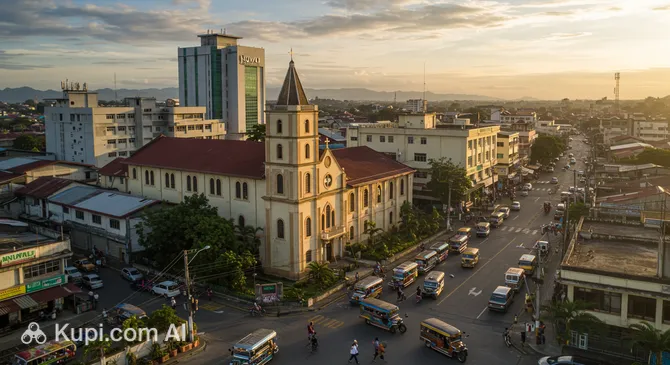
Biñan is a dynamically developing city in the province of Laguna in the Philippines, which is rightfully called the "City of Life." Located just 34 kilometers south of Manila, it serves as an important link between the capital and the country's southern regions. Here, the modern industrial rhythm harmoniously coexists with colonial heritage, creating a unique atmosphere of a thriving commercial and industrial hub.
Binan. Illustration.
Source: Kupi.com AI
The city stretches across flat terrain along the shores of Laguna de Bay, which historically contributed to its economic growth. Today, Biñan is home to over 400,000 people, and the city itself is known as one of the wealthiest municipalities in the CALABARZON region. For tourists, it is interesting primarily as a place where you can feel the real Filipino flavor away from the main tourist trails.
The city's rich historical past is reflected in its architecture: old Spanish-era houses have been preserved in the central Poblacion district. A visit to this city allows you to see the Philippines as it is—energetic, hospitable, and striving for the future. We invite you to get to know this amazing place, where the bustling trade of the largest markets meets the quiet of museum halls.
Weather Overview
Biñan experiences a tropical monsoon climate, characterized by high temperatures and significant humidity throughout the year. Average annual figures usually hover between 26–32°C. Two main seasons are clearly defined here: the dry season, lasting from December to May, and the rainy season, which spans from June to November.
Expect hot sunny days in March and April, when temperatures can reach 34°C, and be prepared for frequent downpours in July and August, when the maximum amount of precipitation falls. Air humidity remains consistently high; however, the proximity to Laguna de Bay brings a light breeze that slightly tempers the heat. Before your trip, it is recommended to check the current city climate to choose the right wardrobe.
The most pleasant time to visit is considered the months from January to March: during this period, rains are rare, and the heat is not so exhausting. January pleases with average temperatures around 26°C, which is ideal for long walks and sightseeing in the open air.
Average monthly temperature
Average monthly precipitation
Interesting Facts
Biñan was founded by Captain Juan de Salcedo in June 1571, just a month after the founding of Manila, making it one of the oldest settlements in the region.
In 2007, the city was officially recognized as the wealthiest municipality in the Philippines based on annual income, ahead of many other developed regions.
It is home to the largest public market in the entire province of Laguna and the CALABARZON region, serving as a key trading hub for Southern Luzon.
The city is unofficially called the "Residential Capital of the South" due to the vast number of modern residential complexes and its proximity to the country's main industrial parks.
Biñan covers an area of only 43.5 square kilometers, yet it is one of the most densely populated and economically active cities in the Manila vicinity.
How to Get There
Biñan boasts excellent transport accessibility, being a key southern hub of the metropolitan region. The main transport artery is the South Luzon Expressway (SLEX), which connects the city with Manila. A car journey from the city center typically takes 45 to 90 minutes; however, one should consider potential traffic congestion during peak hours, especially around the Southwoods exit.
For air travelers, the closest gates are the terminals of Ninoy Aquino International Airport in Manila. The most convenient way to get there is by using the Grab service or a taxi, which will cost an average of 500–1000 pesos. Additionally, intercity buses regularly depart from the capital's Buendia and Cubao terminals, heading to the Biñan public market or the SM City shopping mall.
Railway communication in the region is represented by lines passing through neighboring cities, but long-distance trains rarely stop directly in Biñan at present. Most tourists prefer using buses or public utility vehicles (jeepneys) to travel between cities in Laguna province. Detailed information on routes and schedules can be found on the page describing ways to get to Biñan.
Station
Passenger traffic
Distance
Calamba railway station
6
14 km
Dr. Santos station
6
22 km
FTI railway station
5
23 km
Asia World station
6
25 km
Manila International Airport LRT Station
6
25 km
Main Attractions
Although Biñan is primarily known as an industrial center, there are several places here that deserve travelers' attention. One of the main points of interest is the Biñan Museum, located in the historical center. Here you can explore exhibitions dedicated to the colonial past and the cultural development of the region, making it a must-visit for history buffs.
For those looking for active recreation and entertainment, the popular Splash Island water park is located in the Barangay San Francisco area. It is a great place for family vacations with many water slides and pools. If you are interested in an authentic atmosphere, head to the famous public market—the largest in Laguna province, where life buzzes from early morning.
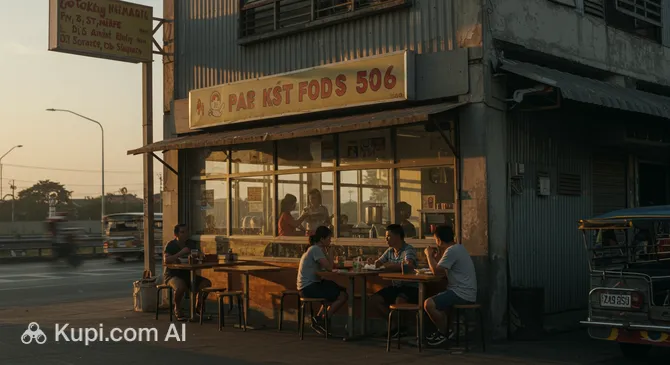
Biñan Highway Fast Food Restaurant. Illustration.
Source: Kupi.com AI
Traveler photos:
There are also many interesting establishments in the vicinity of the city. For example, lovers of comfortable leisure often visit Robinsons Sta. Rosa or WalterMart Carmona, which offer not only shopping but also various leisure areas. For those who want to have a snack in a familiar setting, the Fast Food Restaurant on Biñan Highway is always open at the entrance to the city.
It is also worth paying attention to the local gastronomic flavor in places like Funnside Ningnangan Biñan or the popular Gerry's Grill in Santa Rosa, which serve traditional Filipino grilled dishes. You can spend the evening in the cozy Tumbayan, enjoying the atmosphere of a hospitable suburb.
Local Cuisine
The culinary traditions of Biñan are closely linked to the rich gastronomic heritage of Laguna province. The local menu is based on dishes made of rice, pork, and fresh seafood caught in Laguna de Bay. Be sure to try the classic adobo (meat stewed in soy sauce and vinegar) or the aromatic sour soup sinigang, which local chefs prepare with special skill.
The food culture here is diverse: from bustling street markets with affordable prices to modern restaurants in shopping malls. If you want to get acquainted with authentic Filipino cuisine in a relaxed atmosphere, stop by Funnside Ningnangan Biñan. For those who prefer a quick snack by familiar standards, the Fast Food Restaurant on Biñan Highway, located on the city's main transport artery, is always open.
Biñan Highway Fast Food Restaurant. Illustration.
Source: Kupi.com AI
Traveler photos:
Among beverages, fresh juices remain favorites, especially buko juice (coconut water), and the popular local beer, San Miguel. For dessert, don't miss the chance to order halo-halo—an amazing mixture of crushed ice, fruit, sweet beans, and ice cream that perfectly refreshes in the tropical heat. An evening meal at the city market will offer you the most authentic flavors at very affordable prices.
Travel Tips
When planning a trip to Biñan, check out these practical tips to help make your journey as comfortable and safe as possible.
Clothing and items: Choose light cotton clothing, as the climate here is hot and humid. Be sure to bring sunglasses and comfortable shoes for walking through the market. Don't forget an adapter for power outlets (usually type A or B).
Transport: Use jeepneys or tricycles to move around the city—it's cheap and authentic. For trips to the airport or Manila, it's better to book Grab to avoid haggling and travel in comfort.
Finance: The primary currency is the Philippine peso (PHP). Cards are accepted only in large shopping centers, so always carry cash for markets, transport, and small cafes.
Health and Safety: Drink only bottled water. Use mosquito repellent in the evenings. Biñan is safe, but keep an eye on your bags in markets and do not wear valuable jewelry openly.
Communication: The official language is Filipino, but English is widely spoken. It is useful to know simple phrases: "Salamat" (thank you) and "Magandang umaga" (good morning).
Local Etiquette: Filipinos are very friendly. Greet people with a smile. It is customary to remove your shoes when entering a private home unless the hosts indicate otherwise.
What to avoid: Try not to criticize local culture or religion in public conversations. Also, avoid traveling during peak hours (7:00–9:00 AM and 5:00–7:00 PM) to avoid wasting time in traffic jams.
Additional tip: Visit Biñan during the dry season (December to May) to fully enjoy walks and outdoor activities in water parks without rain.
Following these simple rules will help you feel the true hospitality of the Philippines and enjoy the atmosphere of this lively city!
Entertainment & Nightlife
Nightlife in Biñan is quiet and primarily local, reflecting the city's status as a residential and commercial suburb. The main centers for evening leisure are karaoke bars (KTV), which are scattered throughout the Poblacion area. For Filipinos, karaoke is a national passion, so visiting such an establishment will allow you to plunge into the thick of local culture and fun.
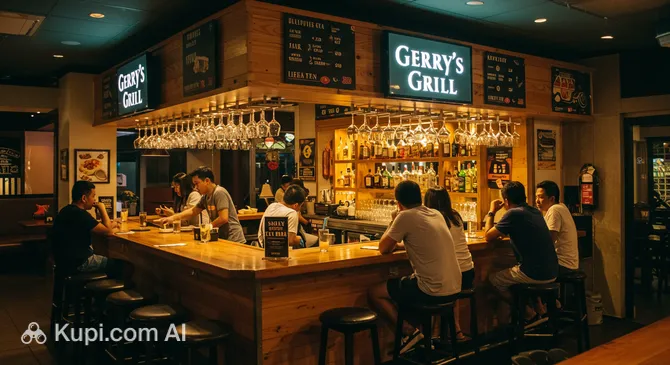
If you are looking for a place for dinner with drinks in a more familiar format, Gerry's Grill in Santa Rosa is an excellent choice. This establishment is famous for its grilled dishes and relaxed atmosphere, suitable for both friendly gatherings and family evenings. Also popular is Tumbayan, where you can spend time over a glass of local beer in the company of city residents.
Gerry's Grill Sta. Rosa. Illustration.
Source: Kupi.com AI
Traveler photos:
Daytime entertainment in the city is concentrated around large shopping complexes such as SM City, which feature modern cinemas and game zones. In the summer months, the main attraction is the Splash Island water park, attracting thousands of visitors with its rides. For noisier clubs and large concert venues, city residents usually head to neighboring Manila, which can be reached in about an hour.
Parks & Museums
Green zones in Biñan are cozy corners of tranquility amidst bustling urban development. The main places for walking are concentrated in the historical center, the Poblacion district, where small squares and parks allow you to relax in the shade of trees. Although the city is densely built up, residents value every island of nature, often heading to the shores of Laguna de Bay to contemplate the water expanses.
For those who want to dive deeper into the region's culture, the Biñan Museum opens its doors. This is a small but very informative museum whose exposition tells the story of the city's founding, its role in the struggle for independence, and traditional crafts. The museum often hosts temporary exhibitions of local artists, allowing you to feel the city's modern creative pulse.
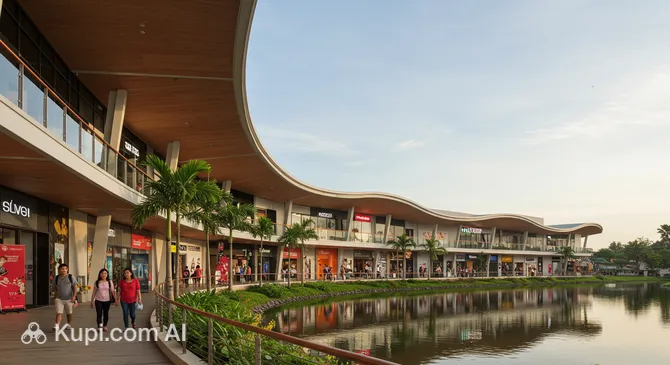
Carmona Shopping Mall. Illustration.
Source: Kupi.com AI
Traveler photos:
If you miss large-scale nature parks, you can always check out the recreation areas at major commercial sites, such as WalterMart Carmona or Robinsons Sta. Rosa, where landscape design creates a pleasant atmosphere for leisure. Water sports enthusiasts will find their "park" at the Splash Island water park, which offers not only slides but also well-maintained outdoor recreation areas.
Getting Around
The transport system of Biñan is typical of a dynamic Philippine suburb, offering travelers colorful and affordable ways to get around. The backbone of internal transport is jeepneys—brightly decorated public utility vehicles that ply the main barangays. The fare is minimal (from 10 to 20 pesos), and the routes cover almost all corners of the city.
For short distances or traveling through narrow streets, tricycles (motorcycles with sidecars) are indispensable. This is the fastest way to get from your hotel doorstep to the market or a shopping mall. If you value comfort and the coolness of air conditioning, the Grab app works excellently in the city, allowing you to call a taxi at a fixed price, which is especially convenient during the hot afternoon hours.
Connection with Manila and neighboring cities is provided by comfortable buses traveling along the SLEX highway. It is important to remember that during the morning and evening peak hours, serious traffic jams are possible, so plan your trips with extra time. Fares in public transport are paid in cash to the driver, so it is always useful to have small bills and coins with you.
Accommodation
The choice of accommodation in Biñan is mainly oriented towards business travelers and those looking for long-term rentals. Due to its proximity to major industrial parks, modern apartments in condominiums and residential complexes prevail here. Such accommodation options often offer a high level of comfort, with swimming pools and gyms, which is convenient for long stays.
For short-term visits and transit tourists, budget motels and small mid-range hotels are available in the city. The price range usually varies from 1,000 to 3,000 pesos per night. Most hotels are concentrated along the main roads and near major shopping centers, such as Robinsons Sta. Rosa, ensuring convenient access to transport and infrastructure.
Sta. Rosa Mall. Illustration.
Source: Kupi.com AI
Traveler photos:
If you plan to visit Biñan during local festivals or major holidays, it is recommended to book your accommodation in advance through popular international services. Since the city is not a classic tourist resort, there are few premium hotels here, but you can always find a clean and cozy option in the private sector or modern residential neighborhoods near the SLEX highway.
Nearby Cities
Thanks to its strategic position, Biñan serves as an excellent starting point for exploring the southern part of Luzon island. Just a couple of kilometers away is the city of Santa Rosa, known for its theme parks and large outlet centers, making it an ideal destination for a family weekend trip.
Only a few minutes' jeepney ride away is San Pedro, famous for its festivals and vibrant markets. It is also worth noting neighboring Carmona, where you can find great opportunities for outdoor activities. For those who want to trade the city bustle for mountain coolness, the famous Tagaytay with views of Taal Volcano is less than an hour's drive away.
The CALABARZON region, at the center of which Biñan is located, is rich in natural and cultural attractions. We recommend not limiting yourself to one city and making sure to visit neighboring General Mariano Alvarez or the coastal area of Tunasan. Each of these places will add new colors to your journey through the Philippines.
Shopping & Souvenirs
Shopping in Biñan is an exciting combination of traditional market trade and modern shopping centers. The city is famous for its massive public market, which is considered the largest in the province. Here you can find absolutely everything: from the freshest local fruits and seafood to textiles and folk crafts. This is the ideal place to purchase authentic Filipino goods at the lowest prices.
For fans of comfortable shopping, large shopping complexes are located within the city and on its borders. Robinsons Sta. Rosa is particularly popular, featuring both international brands and local electronics and clothing labels. It's also worth checking out WalterMart Carmona, which is convenient for its location and wide selection of everyday goods.
Carmona Shopping Mall. Illustration.
Source: Kupi.com AI
Traveler photos:
As souvenirs from Biñan, people often bring back rattan woven items, local coconut-based sweets, and traditional fabrics. Shops usually operate from 10:00 AM to 9:00 PM, while markets open at dawn. International cards are accepted in major malls, but you will definitely need cash Philippine pesos at the market and in small shops.