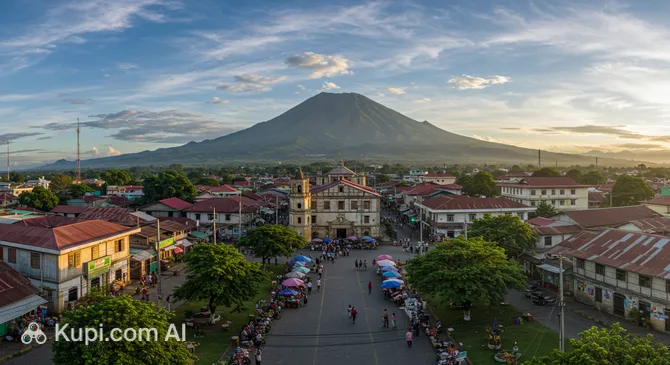
Silang is a charming municipality in the province of Cavite in the Philippines, often referred to as the "gateway to Tagaytay." Thanks to its elevated location, the town offers travelers a pleasant cool breeze, making it a true escape from the sweltering heat of Manila. It is the largest municipality in the province by land area, home to approximately 295,644 people, and its atmosphere combines the coziness of a developing suburb with vast agricultural landscapes.
The town's economy is closely tied to the land: aromatic coffee, coconuts, pineapples, and a variety of exotic fruits like guava and jackfruit are grown here. For tourists, the town is primarily interesting as a transit point with magnificent roadside markets and authentic cafes. Silang. Illustration.
Source: Kupi.com AI
A unique feature of the local community is its large Korean population, which brings its own distinct flavor to the city's daily life.
The municipality's rich historical heritage dates back to the Spanish colonial era and the times of the Philippine Revolution. Today, it is a quiet and accessible destination, ideal for those who want to see the real Philippines without the usual hustle and bustle. We invite you to visit Silang to enjoy its fresh air, the hospitality of the locals, and the taste of ripe tropical fruits straight from the farm plantations.
Weather Overview
The weather in Silang is largely determined by its high-altitude location. Thanks to its hilly terrain, it maintains a cooler and fresher microclimate than the coastal areas of Cavite or Manila. The average temperature throughout the year ranges from a pleasant 23°C at night to 32°C during the hottest daytime hours, making the city an excellent place to take a break from the tropical heat.
The town's climate is characterized by a clear change of seasons. The dry period lasts from January to April, with March and April being the sunniest months. The rainy season arrives in June and peaks in July and August, when rainfall can exceed 500 mm per month. Expect a warm summer with frequent but refreshing showers, and a dry, comfortable winter with clear skies.
For those planning a trip, it's important to consider the humidity, which remains high throughout the year. However, the abundance of greenery and agricultural land contributes to good air ventilation. When planning your route, be sure to check the current city climate so you can bring an umbrella during the rainy season or light clothing for sunny walks in the hills.
Average monthly temperature
Average monthly precipitation
Interesting Facts
The town's name is derived from the Tagalog word silangan, which means "east," referring to the municipality's geographical position within the province of Cavite.
Silang is officially recognized as the largest municipality in Cavite by land area, covering more than 209 square kilometers of fertile land.
The town is home to one of the most significant Korean communities in the Philippines, whose members choose this location for its comfortable climate and proximity to nature.
The municipality played an important role during the Philippine Revolution against Spanish colonial rule, serving as a strategically important point in the region.
Silang is a true agricultural paradise, where not only common coconuts are grown on an industrial scale, but also exotic longans, caimitos, and santols.
How to Get There
Getting to Silang is quite simple due to its proximity to the capital. The town is located approximately 43 kilometers south of Manila, and the main mode of transport is by road. You can find more details about routes and logistics on the page describing how to get to Silang in the most convenient ways.
The nearest major air hub is Ninoy Aquino International Airport (MNL) in Manila, located about 50 kilometers away. A trip from the airport to the city by car or taxi will take between 1.5 to 2.5 hours, depending on traffic density on the Cavite highways. There is currently no direct rail link to Silang, so travelers rely on an extensive network of buses and jeepneys.
Buses heading toward Tagaytay from Manila (terminals in Pasay or Parañaque) regularly make stops in Silang. Jeepneys are also a popular and colorful way to travel, connecting the town with neighboring Dasmariñas and Imus. For a more comfortable trip, it is recommended to use the Grab app or rent a car, although you should take potential traffic jams on Aguinaldo Highway into account during peak hours.
Station
Passenger traffic
Distance
Calamba railway station
6
21 km
Dr. Santos station
6
29 km
Asia World station
6
32 km
FTI railway station
5
33 km
Manila International Airport LRT Station
6
33 km
Main Attractions
Although Silang is better known as an agricultural hub, it has sites that deserve the attention of history and architecture enthusiasts. One of the town's main gems is the Diocesan Shrine and Parish of Our Lady of Candelaria. This ancient church impresses with its monumentality and serves as the spiritual heart of the community, reflecting the region's deep Catholic traditions.
While exploring the town, be sure to stop by the local public markets. These are not just places for trade but living attractions where you can feel the rhythm of life in Cavite province. Here, you can find local handicrafts and the freshest produce grown on the surrounding hills. Nature lovers will appreciate the views of Mount Sungay, which serves as a natural landmark and beautifies the local landscape.
Most points of interest in Silang are located along the main transport arteries. For tourists, these become convenient "pit stops" where they can rest in the shade, have a snack, and buy traditional "pasalubong" souvenirs. Although the town does not claim to be a major tourist center, its sincerity and the calm atmosphere of the hills create a unique impression of the trip.
Local Cuisine
Silang's gastronomic scene is an ode to the freshness and fertility of the Philippine land. The main feature of local cuisine is the use of ingredients literally "straight from the garden." Be sure to try dishes featuring local pineapples, bananas, and coconuts. Roadside eateries known as cantinas serve classic pork adobo and freshly caught fish fried to a golden crust.
The town is famous for its locally produced coffee, which has a rich aroma and is often served in small, cozy coffee shops. Among the drinks, buko juice (fresh coconut water) and various fruit shakes are also worth mentioning. In local markets and shopping centers like Premier Plaza, you can find the popular dessert halo-halo—a mixture of crushed ice, milk, sweet beans, and fruits.
For those who want to experience religious traditions and grab a bite in the historical center, it's worth visiting the area around the Diocesan Shrine and Parish of Our Lady of Candelaria. Street food stalls often operate near the church, preparing aromatic empanadas. Authentic flavors and affordable prices make visiting local establishments a pleasant discovery for any gourmet.
Travel Tips
To make your introduction to Silang as pleasant and carefree as possible, we have prepared some practical tips to help you settle into this hospitable region more quickly.
Clothing and Essentials: Choose lightweight clothing made from natural fabrics, but be sure to bring a light jacket or sweater—it can get chilly on the hills of Silang in the evening. When visiting churches, observe a modest dress code (shoulders and knees covered).
Transport: The main modes of transport are jeepneys and tricycles. If you value comfort, use the Grab app, but remember that there can be serious traffic congestion on the main roads during peak hours.
Finances: Always carry a supply of cash in Philippine Pesos. Cards are accepted in large shopping centers, but at markets and in jeepneys, you will need small bills and coins.
Health and Safety: Drink only bottled water. The town is safe, but keep an eye on your personal belongings in markets and crowded areas. Pharmacies are easy to find along the main roads.
Communication: English is widely spoken, and you will have no trouble making yourself understood. Locals are very friendly, and a few phrases in Tagalog (e.g., "Salamat" — thank you) will elicit a sincere smile.
Local Etiquette: It is customary to remove your shoes when entering a private home. Showing respect to elders is an important part of Philippine culture.
What to Avoid: You should not plan trips to remote areas late at night, as road lighting may be insufficient. Avoid criticizing local traditions or religion.
Extra Tip: Be sure to visit local farm stalls in the morning—this is when you'll find the widest selection of fresh tropical fruits at the best prices.
May your journey to Silang be filled with bright flavors and warm encounters, revealing the quiet and sincere beauty of Cavite province to you!
Entertainment & Nightlife
Nightlife in Silang is quiet and almost family-oriented, which distinguishes it from bustling metropolises. You won't find massive nightclubs or loud discos here, as the municipality lives at the rhythm of an agricultural suburb. Evening entertainment is mainly centered around cozy cafes, local restaurants, and markets that remain lively until late evening.
If you're looking for a more active nightlife with bars and panoramic views, locals usually head to neighboring Tagaytay, which is only a 15–20 minute drive away. However, within Silang itself, you can enjoy your time in shopping centers like Premier Plaza, which features cinemas and gaming zones for the whole family.
Daytime leisure in the city is often associated with outdoor recreation. Villa Marca Resort, Hotel and Event Center is a popular spot where you can spend the day by the pool or organize a picnic against the backdrop of green hills. The safety level in the city is good, so evening walks in the central areas are quite comfortable, and for returning to your hotel late at night, you can always use taxis or ride-sharing apps.
Parks & Museums
Nature is Silang's main museum. Instead of traditional exhibition halls, the city offers travelers the chance to enjoy landscapes created by nature itself. The hilly terrain and highlands, such as Mount Sungay, provide wonderful opportunities for contemplating green panoramas and studying local ecosystems rich in various species of flora and fauna.
There are few organized city parks in the conventional sense in the municipality; however, their role is successfully filled by agricultural lands and farms open to the public. Walking among coconut groves and coffee plantations allows you not only to relax from the city noise but also to get acquainted with the agrarian way of life of the Filipinos. Plazas in the barangays (local districts) also serve as recreational spots where residents gather in the evenings.
If you are looking for a place that combines nature relaxation with infrastructure, look into Villa Marca Resort, which features well-maintained grounds. Cultural leisure can be complemented by a visit to the Diocesan Shrine of Our Lady of Candelaria, which is an architectural monument in itself, preserving the region's history better than any museum.
Getting Around
The public transport system in Silang is typical for a Philippine province, based on accessibility and local color. The main stars of the roads here are jeepneys—brightly decorated minibuses that ply between the main districts (barangays) and neighboring towns. A ride on them costs very little and allows you to feel the true local rhythm of life.
For short trips within neighborhoods or along narrow rural roads, tricycles (motorcycles with sidecars) are indispensable. This is the most flexible form of transport, capable of taking you practically to the doorstep of the house or shop you need. It is best to agree on the fare for a tricycle ride in advance. Intercity bus routes connecting Manila with Tagaytay also pass through Silang, making the city an important transit hub.
Payment for all types of public transport is made in cash (pesos). If you prefer a modern service, ride-sharing apps like Grab operate in the city, although the wait for a car in remote areas may be longer. Travelers should keep in mind that traffic jams often occur on main highways, especially on Aguinaldo Highway, during peak hours, so it is better to plan trips to Tagaytay or Manila with extra time to spare.
Accommodation
The choice of accommodation in Silang reflects its status as a quiet suburb and a transit hub. Budget-friendly inns, guest houses, and apartments—often rented by expats or students—predominate here. Most accommodation options are concentrated along the main roads, which is convenient for those making a stop on the way to Lake Taal or Tagaytay.
For those looking for a full vacation with a range of additional services, Villa Marca Resort, Hotel and Event Center is an excellent option. This place offers comfortable rooms and facilities for leisure surrounded by tropical greenery.
Villa Marca Resort, Hotel and Events Place. Illustration.
Source: Kupi.com AI
Traveler photos:
The price range in the city is very democratic: it is easy to find affordable housing even during the peak season. However, if your trip falls on holidays or weekends, when the flow of tourists from Manila increases, we recommend booking rooms in advance through popular online services. Areas closer to the border with Tagaytay offer more picturesque views and a cooler atmosphere, making them the most attractive for staying.
Nearby Cities
Silang serves as an excellent starting point for exploring Cavite province and neighboring regions, offering many interesting destinations within a short drive. Just a 15–20 minute drive south is the famous Tagaytay, which attracts tourists with its breathtaking views of Taal Volcano and developed leisure infrastructure.
For those interested in shopping and a modern urban rhythm, a trip to Dasmariñas, located just 9 kilometers away, is a great choice. Also worth noting is the cozy town of Amadeo, which is rightfully considered the coffee capital of the Philippines, and the historical municipality of Indang with its ancient churches and slow-paced lifestyle.
Exploring the surroundings of Silang will allow you to see the full diversity of the Philippines: from modern shopping centers and amusement parks to quiet farmlands and coffee plantations. Most of these towns are easily accessible by jeepney or rental car, making them ideal for day trips.
Shopping & Souvenirs
Shopping in Silang is primarily a hunt for fresh produce and authentic souvenirs. Numerous stalls line the Aguinaldo Highway selling "pasalubongs"—traditional gifts for loved ones. This is the place to buy the famous local coffee, fresh pineapples, jackfruit, and coconut products. Market prices will pleasantly surprise you, and the quality of the products grown on the local hills is always top-notch.
For a more conventional shopping experience, there is the Premier Plaza shopping center. It houses clothing stores, supermarkets, and electronics outlets. You can spend time comfortably in the mall, grab a bite at the food court, and use the ATMs.
Premier Plaza. Illustration.
Source: Kupi.com AI
Traveler photos:
Most shops and markets operate from early morning until 8–9 PM. Small stalls and markets prefer cash payments in Philippine pesos, while shopping centers accept international credit cards. Remember that Silang is an agricultural region, so the best purchases here are natural products and handmade items from local artisans.