Support

Bazylika kolegiacka Matki Bożej Nieustającej Pomocy, św. Marii Magdaleny i św. Stanisława Biskupa

About

In the heart of the historic center of Poznań stands a masterpiece of Baroque architecture — the Collegiate Basilica of Our Lady of Perpetual Help, Saint Mary Magdalene and Saint Stanislaus the Bishop. This majestic Jesuit church, also known locally as the "Fara", is rightly considered one of the most beautiful religious buildings that Poland is proud of.
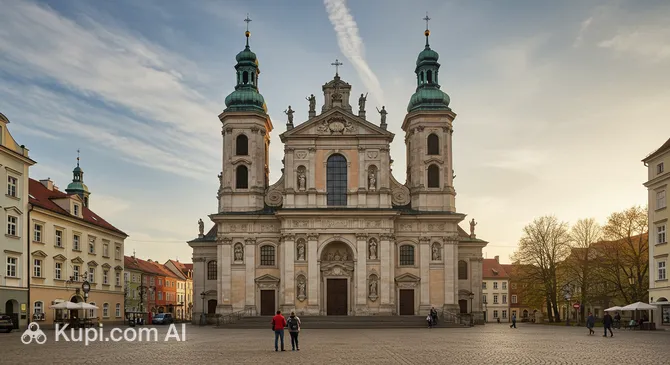
Collegiate Basilica of Our Lady of Perpetual Help, St. Mary Magdalene and St. Stanislaus Bishop
Collegiate Basilica of Our Lady of Perpetual Help, St. Mary Magdalene and St. Stanislaus Bishop. Иллюстрация. Источник: Kupi.com AI

The building is a classic example of 17th-18th century Jesuit Baroque. Its impressive five-axis façade in the Il Gesù style and interiors with a nave height of 27 meters are striking in their scale. The basilica is famous not only for its architecture but also for its luxurious decoration, worked on by the outstanding Italian and Polish masters of the time.

This temple is not just a historical monument, but the living heart of the city, where art, spirituality, and centuries-old traditions intertwine. Its richly decorated pediments and numerous chapels make it a mandatory stop on the itinerary of any tourist who appreciates the aesthetics of the Baroque era.

Contacts

To plan your visit or check service times, you can use the official contact details. The Collegiate Basilica is one of the most visited and highly-rated attractions in the city, boasting a rating of 4.8 out of 5 based on thousands of reviews.

How to contactContact
AddressGołębia 1, 61-779 Poznań, Poland
Phone+48 61 852 69 50
Websitefara.archpoznan.pl

What to Do

Once inside the basilica, first pay attention to the main altar, designed by the famous Pompeo Ferrari. Its monumental forms and detailed finishes represent the pinnacle of Baroque art. It is also worth carefully examining the ten side chapels, each with its own unique style and history.

Be sure to look up at the vaults: the paintings by Karol Dankwart and the exquisite stucco work by Alberto Bianco create the illusion of an infinite celestial space. History buffs and mystery seekers will be interested in peering into the massive church crypts. There are eleven vaults here where Jesuit monks and noble citizens are buried, and at the entrance, you can see a memorial plaque with the symbolic inscription "In Christo Pax".

For many visitors, the basilica becomes a place of silence and spiritual searching. You can not only admire the architecture but also attend a service or simply sit in silence, enjoying the majestic tranquility of this sacred place. The basilica regularly serves as a venue for musical evenings, so if you are lucky, your visit may be accompanied by the powerful sounds of the historic organ.

Getting There

The Basilica is located in the heart of the historic district at Gołębia 1. Finding it is easy, as the church's majestic towers are visible from many points in the Old Town. If you are already walking through the Market Square, the walk to the church will only take a few minutes of pleasant strolling through the narrow streets.

The attraction is easily accessible by public transport in Poznań. Trams and buses run regularly to the central part of the city. The nearest stops are within walking distance, making a visit to the church convenient even for those unfamiliar with the city.

For those who prefer comfort, taxis or car-sharing services are always available. If you are traveling by your own car, it is recommended to leave it in one of the paid parking lots around the perimeter of the historic center, as traffic directly near the basilica is restricted. Exact coordinates for navigation: 52.4061619, 16.9341072.

Ближайший город: Poznan

History & Facts

The history of this majestic structure began back in the 16th century. In 1570, Bishop Adam Konarski invited the Jesuit order to Poznań, gifting them a small church. However, over time, the order's influence grew, and the need arose for a larger temple that could accommodate all parishioners and reflect the power of the Catholic faith.

Construction of the modern building began in 1651 under the direction of the talented architect Thomas Poncino de Gorizia. The process was long and was interrupted for decades due to wars and lack of funds. It was only at the end of the 17th century that work resumed with renewed vigor. Significant contributions to the basilica's appearance were made by masters such as Bartłomiej Nataniel Wąsowski and Giovanni Catenazzi, who worked on creating the massive vaults and dome.

The solemn opening of the church took place in 1701, and its consecration in 1705. Despite the official opening, decorative and finishing work inside the temple continued until the mid-18th century. Over its long history, the building has endured many trials, including serious damage during the World Wars. A large-scale post-war reconstruction was completed in 1951, returning the temple to its former glory.

Time Needed

To leisurely explore the basilica's interiors, admire the paintings, and soak in the atmosphere, most travelers need 1 to 2 hours. If you plan to study each altar in detail or want to go down into the crypts, you should set aside a little more time.

If your visit coincides with an organ concert, which is often held within the church walls, allow an extra hour in your schedule. This is a unique opportunity to hear the sound of one of the best organs in the country in the magnificent acoustics of the Baroque hall.

Working Hours

Since regular services are held in the church, opening hours for tourists may change depending on the day of the week and the church calendar. During masses, sightseeing and free movement around the basilica are usually restricted so as not to disturb the worshipers.

For up-to-date information before your visit, it is recommended to check the official website of the basilica or confirm details via the contact phone number. Remember that access to certain parts of the church, such as the crypts, may follow a separate schedule.

Nearby

A stroll around the basilica's surroundings allows you to dive deeper into the city's atmosphere and find interesting locations for relaxation and entertainment. The Old Town offers many options: from historical sites to modern gaming spaces.

Exploring the attractions near the church can significantly enrich a tourist's experience, allowing you to combine a cultural program with active leisure. Below are the nearest sites worth visiting:

NameDistance
Museum of Illusions, Science and Art0.2 km
Church of St. Anthony of Padua0.3 km
Just Friends Poznań0.3 km
DRAM Cocktail Bar & Restaurant0.3 km
Royal Castle in Poznań0.4 km
National Museum in Poznań0.4 km
Poznań Potato Museum0.4 km

Reached the end of the page?

That means the route is fully explored