Support

Tumski Bridge

About

Tumski Bridge (Most Tumski) is one of the most recognizable and romantic symbols of Wrocław, located in Poland. This charming steel pedestrian bridge spans the Oder River and connects two historic districts: the oldest part of the city, Cathedral Island (Ostrów Tumski), and Sand Island (Wyspa Piasek). Thanks to its iconic status and picturesque location, it has become a true magnet for tourists and locals alike.
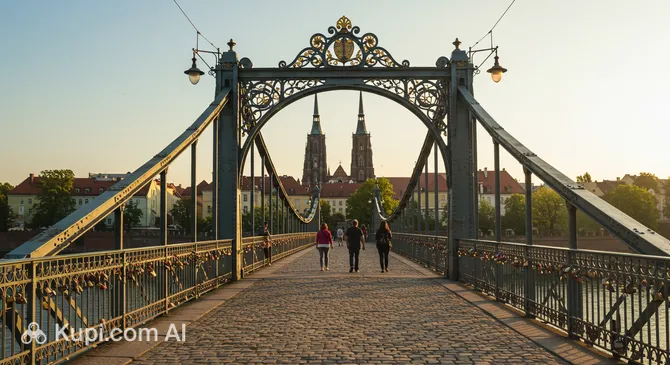
Tumski Bridge. Illustration.
Source: Kupi.com AI

Traveler photos:

The bridge is an elegant structure built in 1889 in a style characteristic of the late 19th century. It is just over 52 meters long and about 7 meters wide. Graceful portals and metal trusses make it not only a functional structure but also an important architectural monument, often called the "Bridge of Lovers" due to the tradition of hanging padlocks on its railings as a sign of eternal love.

Tumski Bridge is not just an engineering feat but a place with a special atmosphere. Walking across it allows you to enjoy magnificent views of the historic center and the river, feel the spirit of old Wrocław, and take unforgettable photos. It is a place where history blends harmoniously with modern romance, making it a must-see on any traveler's itinerary.

Contacts

Since Tumski Bridge is a public pedestrian site, it is open to visitors 24/7 and does not have specific contact information. It is located in the historic center and connects Cathedral Island (Ostrów Tumski) and Sand Island (Wyspa Piasek). You can reach the bridge on foot from Market Square or by public transport, taking tram lines 8, 9, 17, or 23 to the "pl. Bema" stop.

How to contactContact
AddressŚwiętej Jadwigi 1, 50-266 Wrocław, Poland
Websitepodroztrwa.pl

What to Do

A stroll across Tumski Bridge is an opportunity to enjoy picturesque views of the Oder River and the historic buildings that surround it. This place has long been a favorite for romantic dates, earning the bridge the unofficial name "Lovers' Bridge." The main tradition here is a symbolic ceremony: couples hang locks on the railings as a sign of their love and throw the keys into the water, believing this will bond them forever.

Tumski Bridge is not only an attraction in its own right but also a wonderful starting point for further exploration of Wrocław. It is located in the immediate vicinity of other iconic sites, such as the majestic Cathedral of St. John the Baptist and the colorful streets of Cathedral Island. Guided tours often pass through here, introducing tourists to the rich history of the city's oldest district.

In addition to romantic walks, the bridge is an ideal spot for photo sessions, especially at sunset when the sun's rays beautifully illuminate the river and architecture. During the warmer months, you might encounter various themed events here. Overall, it is a great place to just relax, watch the passing boats, and fully experience the unique atmosphere of the old city.

Getting There

Tumski Bridge is located in the heart of Wrocław, making it easily accessible for walking tours. One of the most pleasant ways to reach it is to stroll from the central Market Square (Rynek). This route will take you approximately 15–20 minutes and allows you to enjoy the picturesque streets of the city's historic center.

For those who prefer public transport, reaching Tumski Bridge is also quite simple. You can take a tram or a bus, as there are convenient stops near the bridge. The closest ones are "Katedra" and "Plac Bema", where many city routes stop, making this a quick and convenient option from any part of the city.

If you are traveling by car, there are several paid parking lots in the vicinity. However, it is worth noting that traffic in Wrocław's historic center is limited, so it is recommended to use public transport or a taxi to avoid parking difficulties. For outdoor enthusiasts, cycling is a great option—well-maintained city bike paths lead directly to the bridge.

Nearest city: Wroclaw

History & Facts

The history of Tumski Bridge dates back to the distant past, with the first mentions of a crossing at this site dating as far back as the 12th century. Originally a wooden bridge, for centuries it served not only as a link between Cathedral and Sand Islands but also performed a symbolic function. For a long time, it served as the border between territories under secular and ecclesiastical authority. To mark this division, a special post with two coats of arms—episcopal and Bohemian—was installed here, highlighting the unique status of this location in the life of medieval Wrocław.

The bridge acquired its modern appearance at the end of the 19th century. In 1889, the old wooden structure was replaced with a new steel one, designed by architect Alfred von Scholz. This was a significant engineering achievement for its time: the metal elements for the bridge were manufactured at a plant in Rudziniec, nearly 150 kilometers away, and delivered to the construction site by river on barges, which was an economically efficient solution. Additionally, figures of saints—Hedwig and John the Baptist—can be seen on the bridge, installed in 1893.

Tumski Bridge has survived many historical events, including sustaining significant damage in 1945, after which it was restored. In 1976, the bridge was granted official status as a historical monument of Poland, ensuring its protection and preservation for future generations. One of the unique features adding to its charm is the antique gas lamps, which are still hand-lit every evening by a lamplighter, creating a uniquely romantic atmosphere.

Time Needed

Visiting Tumski Bridge itself usually doesn't take much time. A leisurely stroll across it, taking some beautiful photos, and soaking in the romantic atmosphere typically takes about 30 to 60 minutes. This is plenty of time to examine the famous "love locks," admire the panorama of the Oder River, and simply feel the spirit of this iconic spot in Wrocław.

If you want to do more than just see the bridge and wish to explore its surroundings, you should plan for more time. Tumski Bridge serves as a gateway to Cathedral Island—the oldest part of the city, rich in attractions. For a more immersive experience, including a walk across the bridge and a visit to nearby sites like the majestic Cathedral of St. John the Baptist, it is recommended to set aside about 1.5–2 hours. This will allow you to enjoy the historic heart of Poland without rushing.

Working Hours

You can visit Tumski Bridge at any time convenient for you, as it is part of the city's infrastructure and is open to pedestrians 24/7 year-round. This means the bridge has no specific operating hours, and you can enjoy a stroll across it both during the day and late in the evening when the famous gas lamps are lit.

Since Tumski Bridge is a public space, no tickets or advance reservations are required to visit. You are free to come here any day of the week to admire the views, take photos, or simply relax, making trip planning as simple and flexible as possible.

Open 24 hours

Nearby

Visiting Tumski Bridge is just the beginning of your journey through the historical heart of Wrocław. To fully experience the atmosphere of this unique place, it is worth spending time in its surroundings. A stroll through the ancient streets leading from the bridge will reveal many other iconic sites, each preserving its own piece of the city's rich history.

Exploring nearby attractions will allow you to get a more complete picture of Wrocław, its culture, and its architectural heritage. In the immediate vicinity of the bridge, you will find museums, ancient churches, and picturesque parks that perfectly complement your experience. Below is a list of interesting places located very close by.

NameDistance
Museum of Illusions Wroclaw0.2 km
Wrocław Zoo0.4 km
Racławice Panorama0.5 km
National Museum in Wrocław0.6 km
Wroclaw Market Square0.9 km
Wroclaw Old Town Hall0.9 km
Museum of Bourgeois Art0.9 km

Have you reached the end of the page?

So the route has been studied inside and out