Support

Porto Cathedral

About

The Cathedral of Porto (Sé do Porto) is not just the city's main Catholic church, but one of the oldest and most significant architectural landmarks in all of Portugal. Located at the highest point in the historic center, the cathedral and its square serve as a magnificent viewpoint offering panoramic views of the Douro River and the ancient quarters. Its monumental appearance dominates the cityscape, serving as a starting point for discovering the rich heritage of this amazing city.
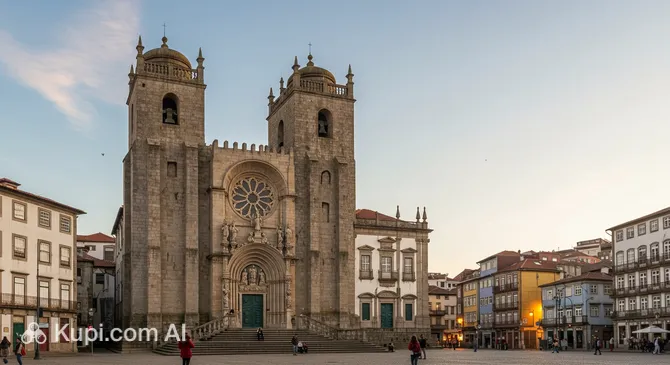
Porto Cathedral. Illustration.
Source: Kupi.com AI

Traveler photos:

The history of the cathedral is reflected in its unique architecture, where several styles are harmoniously intertwined. Originally built in the 12th century as a Romanesque fortress-church, it has been supplemented with new elements over the centuries. Today, its appearance features austere Romanesque walls, elegant Gothic details such as the cloister, and opulent Baroque decorations. These massive walls and twin towers still recall the city's fortress past.

The interior of the cathedral impresses with the contrast between its external austerity and the refinement of its decor. Here you can see a magnificent silver altar, as well as the Gothic cloister, whose walls are decorated with famous panels of blue and white azulejo tiles depicting biblical scenes. A visit to Porto Cathedral is an opportunity not only to see an outstanding architectural monument but also to deeply feel the centuries-old history and culture of the city.

Contacts

To plan your visit, check service schedules, or get additional information about Porto Cathedral, you can use the official contact details. It is always best to check the official website for the most up-to-date information.

How to contactContact
AddressTerreiro da Sé, 4050-573 Porto, Portugal
Phone number+351 22 205 9028
Websitewww.diocese-porto.pt

What to Do

A visit to Porto Cathedral offers many experiences for any traveler. Start your exploration with the majestic facade and powerful towers, which recall the building's fortress past. Be sure to go up to the observation deck—from here, you'll find breathtaking panoramic views of the historic city center, the Douro River, and the famous tiled roofs of Porto. It’s the perfect spot to feel the scale of the city and take some unforgettable photos.

Upon entering, you will discover true treasures. The interior decor surprises with the contrast between external austerity and refined decoration. The centerpiece is the magnificent main altar, made entirely of silver. Take time to study the unique stained-glass windows that fill the space with colored light, the ancient frescoes, and the richly decorated chapels. Every detail of the interior reflects different eras—from austere Romanesque to opulent Baroque.

The Gothic cloister deserves special attention—a quiet courtyard whose walls are decorated with the famous Portuguese azulejo tiles. These large-scale blue-and-white panels depict biblical scenes and create a unique atmosphere of peace. Here, you can also visit a small cathedral museum featuring exhibitions on the temple's history and religious art.

To dive deeper into the atmosphere of this place, try to catch one of the organ music concerts regularly held in the cathedral. Additionally, visiting during a service or ceremony will allow you to experience the spiritual life of modern Porto and see the cathedral not just as a historic monument, but as a living center of the religious community.

Getting There

Porto Cathedral stands majestically on a hill in the heart of the historic Sé district, making it easily accessible for travelers. Thanks to this central location, one of the best ways to reach the cathedral is on foot from the city's central squares. This route will allow you not only to enjoy the views but also to feel the atmosphere of the ancient streets of Porto.

For those who prefer public transport, there are several convenient options. The easiest way is to use the metro. The nearest station, São Bento, famous for its azulejo panels, is just a 5-10 minute walk from the cathedral. Additionally, numerous city and tourist buses stop near the attraction, making it easy to get here from anywhere in the city.

If you are traveling by car, remember that traffic in the historic center can be difficult due to narrow streets. There are paid parking lots near the cathedral, but finding a free space can be challenging. Given this, a more convenient alternative is using a taxi or public transport, which will help avoid parking difficulties and allow you to fully enjoy your visit to this iconic site.

Nearest city: Porto

History & Facts

The history of Porto Cathedral dates back to the beginning of the 12th century. Its construction began around 1110 at the initiative of Bishop Hugo, and the cathedral was originally intended not only as a religious center but also as part of the city's fortress. That is why its appearance is so monumental: massive stone walls, powerful towers, and battlements reflect its defensive past. The construction of this grand structure continued for almost three centuries and was completed in the 13th century, laying the foundation for a future architectural masterpiece.

Over the centuries, the cathedral has constantly changed, absorbing features of different architectural eras. New elements were gradually added to the original austere Romanesque foundation. Thus, elegant Gothic details appeared in the building, and later, elements of Mannerism. Particularly significant changes occurred in the 18th century when the famous Italian architect Nicolau Nasoni brought the opulence and drama of the Baroque style to the cathedral's appearance, working on the design of the facade and interiors.

The cathedral has witnessed key events in the history of not only the city but all of Portugal. Within its walls, Prince Henry the Navigator—one of the most important figures of the Age of Discovery—was baptized. Additionally, in the 14th century, it hosted the royal wedding between King John I of Portugal and the English princess Philippa of Lancaster. This marriage strengthened the alliance between the two maritime powers and played an important role in the history of the country.

Time Needed

When planning a visit to Porto Cathedral, you should aim for 1-2 hours. This time is usually enough to explore all the main parts of this iconic site without rushing. During this period, you will be able not only to appreciate the grandeur of the main nave but also to pay attention to the details that make the cathedral unique.

Most of the time is spent visiting the paid areas, which are of the greatest interest to travelers. This includes the Gothic cloister, famous for its azulejo tile panels, the treasury with a collection of religious art, and, of course, the climb up the tower. The tower offers one of the best panoramic views of the historic center of Porto and the Douro River, so you should allow at least 30-40 minutes for this.

If you are short on time, you can take a quick look at the main part of the cathedral for free, which will take no more than 15-20 minutes. However, to get a full understanding of this historic monument in Portugal, it is highly recommended to set aside time for a full tour. Also, consider potential queues during the peak tourist season, which may slightly increase your total stay.

Working Hours

Porto Cathedral is open to visitors year-round, but opening hours vary by season. During the summer period (from April to October), the cathedral usually welcomes guests from 9:00 to 18:30. In the winter months (from November to March), opening hours are reduced, and the cathedral is open from 9:00 to 17:30. It is important to note that on some days, especially during religious holidays such as Christmas and Easter, the cathedral may be closed to tourists or have a modified schedule.

For a standard visit, advance ticket booking is generally not required—they can be purchased directly at the ticket office at the entrance. However, to avoid queues during the high tourist season and to ensure the schedule is up-to-date, it is highly recommended to check the latest information on the official website of the Diocese of Porto before your visit.

9:00 – 18:30

Nearby

A visit to Porto Cathedral is just the starting point for exploring the historic heart of the city. Thanks to its location at the top of the hill, many other iconic sites are within walking distance, helping you dive deeper into the atmosphere of Porto and all of Portugal. The historic city center is quite compact, making it easy to explore on foot.

A walk around the cathedral's surroundings will enrich your experience, allowing you to see the city's contrasts: from the bustling embankment to quiet viewpoints. Every turn of the ancient streets reveals something new, whether it's an architectural masterpiece, a cozy cafe, or a panoramic view of the Douro River. Below is a list of interesting places located very close by.

NameDistance
Stock Exchange Palace0.4 km
Clérigos Tower0.4 km
Clérigos Church0.4 km
Do Norte Café0.4 km
Dom Luís I Bridge0.4 km
Porto Exit Games (Baixa)0.6 km
Downtown Brunch & Specialty Coffee Bar0.7 km

Have you reached the end of the page?

So the route has been studied inside and out