Support

Pavilion of Knowledge

About

The Pavilion of Knowledge (Pavilhão do Conhecimento) is a modern interactive science museum that hospitably opens its doors in the Park of Nations district of Lisbon, the capital of Portugal. It is a place where science comes to life, becoming accessible and engaging for visitors of all ages – from curious toddlers and teenagers to adults seeking to broaden their horizons and learn something new.
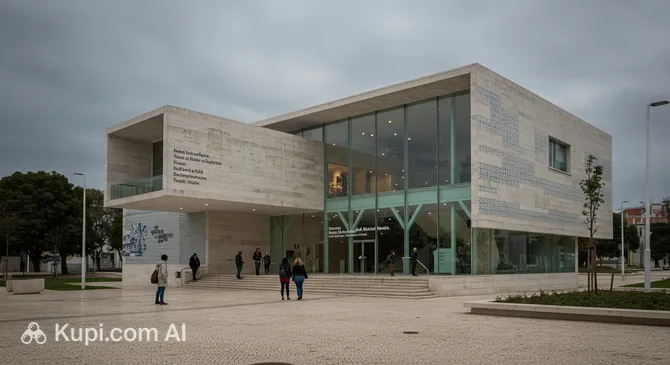
Pavilion of Knowledge. Illustration.
Source: Kupi.com AI

Traveler photos:

The main feature of the Pavilion of Knowledge is its interactivity. The exhibitions and activities here are designed so that visitors can not only observe but also directly participate in experiments and scientific demonstrations. The museum is created to spark interest in science and technology, allowing everyone to touch the world of discovery and feel like a real researcher.

Interestingly, the museum's impressive building was designed by the renowned Portuguese architect João Luís Carrilho da Graça specifically for the Expo '98 international exhibition. Initially, it functioned as the "Pavilion of the Knowledge of the Seas," but it was later wisely transformed into one of the country's most popular and beloved science museums, continuing its mission of education and inspiration for thousands of visitors.

Contacts

If you are planning to visit the Pavilion of Knowledge and want to find up-to-date information on opening hours, ticket prices, or special events, we recommend consulting official sources. The most current information can always be found on the museum's official website.

How to contactContact
AddressLargo José Mariano Gago nº1, 1990-073 Lisboa, Portugal
Phone number+351 21 891 7100
Websitewww.pavconhecimento.pt

What to Do

In the Pavilion of Knowledge, an exciting immersion into the world of science awaits you through numerous interactive exhibits. Here, every visitor, regardless of age, can feel like a real researcher. You can personally participate in physics and chemistry experiments, assemble an electric circuit, study the amazing properties of various materials, and test the laws of mechanics in practice. The exhibits clearly demonstrate natural phenomena and introduce the latest scientific achievements, making complex things understandable and exciting.

Special attention at the Pavilion of Knowledge is given to young guests. A wonderful play area called "The Unfinished House" has been created for them. In this space, children can try on the roles of builders, foremen, or painters, enthusiastically working on the construction of a model house. This is not only fun but also an educational activity that helps develop creative thinking and interest in different professions.

To make every visit unique, the Pavilion of Knowledge regularly organizes spectacular science shows, educational workshops, and interesting temporary exhibitions. And if you want to take a piece of scientific discovery home with you or continue your experiments there, the museum shop is at your service. It offers a wide range of educational toys, experiment kits, and books on natural sciences for curious minds of all ages.

Getting There

The Pavilion of Knowledge is located in the modern district of Lisbon known as the Park of Nations (Parque das Nações). Reaching this fascinating science center is quite easy, whether you prefer public transport, driving, or taking a taxi.

For those choosing public transport, the closest and most convenient point is the Oriente metro station (Red line, Vermelha). From there, the Pavilion of Knowledge is just a leisurely 5-10 minute walk. Near the metro station, there is also a major railway station and a bus terminal, making the museum easily accessible for guests arriving from various parts of the city or its surroundings.

If you are traveling by car, you will find parking areas in the Park of Nations district. It is worth noting that the Park of Nations itself is a beautifully landscaped space, ideal for strolling. A visit to the Pavilion of Knowledge can easily be combined with exploring other nearby attractions, such as the Lisbon Oceanarium or the Vasco da Gama shopping center, allowing for a full and eventful day.

Nearest city: Lisbon

History & Facts

The history of the Pavilion of Knowledge is inextricably linked with one of the most significant events in Lisbon's history – the Expo '98 World Exhibition. The building was constructed specifically for this grand event, originally named the "Pavilion of the Knowledge of the Seas." It was intended as one of the exhibition's central features, designed to highlight themes of oceans and marine research, which was particularly symbolic for Portugal with its rich maritime history.

The architectural design of the pavilion, created by the talented Portuguese architect João Luís Carrilho da Graça, received high international acclaim. For this outstanding creation, the architect was honored with a prestigious award – the Grand Prix of the Jury at an international architecture competition. This fact alone emphasizes not only the functional but also the aesthetic value of the building, which has become a modern landmark of the city.

After the conclusion of Expo '98, the pavilion found new life when it was converted into the interactive science museum we know today as the Pavilion of Knowledge. Since its opening, it has quickly gained popularity, becoming one of the most visited museums in Portugal. Furthermore, the pavilion has taken an important place in Lisbon's educational infrastructure, inspiring generations of young and adult researchers to explore science.

Time Needed

To fully experience the exhibitions at the Pavilion of Knowledge, we recommend setting aside 2 to 4 hours. This amount of time is generally sufficient to view the main interactive zones without rushing and to get a general idea of the scientific concepts presented.

However, if you plan a deeper immersion—for example, participating in available workshops or exploring each interactive installation in more detail—your visit might last longer. This is especially true for families with children: young explorers often engage with great enthusiasm in scientific experiments and may need more time to fully enjoy all the opportunities offered by the Pavilion of Knowledge in Lisbon.

Working Hours

The Pavilion of Knowledge generally opens its doors to visitors daily from 10:00 AM to 6:00 PM. However, it is important to remember that opening hours may vary depending on the season or holidays. Therefore, to make your visit as comfortable and predictable as possible, we strongly advise checking the current schedule and visiting conditions, including information on whether pre-booking tickets is required (especially for groups or on peak dates), on the museum's official website shortly before your planned trip. Usually, the museum is open year-round, but checking with an official source will help avoid any surprises and plan your time in the best possible way.

DayOpening hours
Monday10:00 – 18:00
Tuesday10:00 – 18:00
Wednesday10:00 – 18:00
Thursday10:00 – 18:00
Friday10:00 – 18:00
Saturday10:00 – 19:00
Sunday10:00 – 19:00

Nearby

A visit to the Pavilion of Knowledge in Lisbon is a fascinating adventure into the world of science in itself. However, to make your trip even more fulfilling and memorable, it is worth paying attention to the attractions located nearby. Exploring the surroundings will allow you to immerse yourself deeper into the atmosphere of this modern district of Lisbon and discover other interesting places that can be a pleasant addition to your museum visit.

The Park of Nations area, where the Pavilion of Knowledge is situated, is a landmark in its own right, offering many options for walking and relaxation. By combining a visit to the museum with exploring nearby points of interest, you can gain a fuller impression of the multifaceted nature of Portugal's capital.

NameDistance
Lisbon Oceanarium0.2 km
Calouste Gulbenkian Museum5.7 km
Taberna Sal Grosso5.9 km
Lisbon Resort6.3 km
A Ginjinha6.5 km
Afonso's Bifanas6.6 km
Ruby Rosa6.7 km

Have you reached the end of the page?

So the route has been studied inside and out