Support

Monsanto Forest Park

About

Monsanto Forest Park (Parque Florestal de Monsanto) is a true green oasis in Lisbon, the capital of Portugal. Occupying an impressive area of about 10 square kilometers—roughly 10% of the city's total territory—it is rightfully considered one of the largest urban parks in Europe. Located on the western outskirts of Lisbon, Monsanto serves as the city's "lungs" and a favorite spot for outdoor recreation.
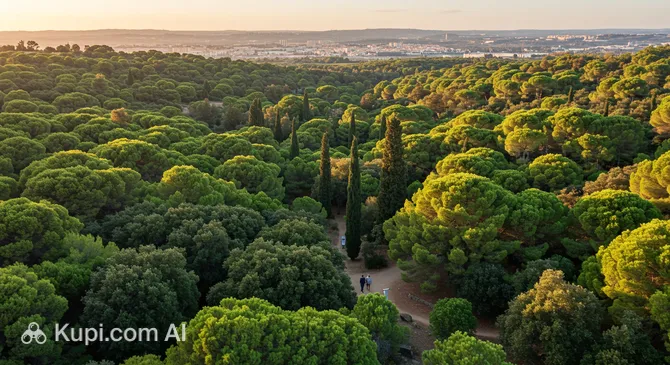
Monsanto Forest Park. Illustration.
Source: Kupi.com AI

Traveler photos:

The history of Monsanto Park is an amazing example of transformation. Once, these hilly slopes were barren and prone to erosion. However, starting in the 1930s, large-scale reforestation work was launched. Thanks to titanic efforts and the planting of thousands of trees and shrubs specifically selected for the local climate and soil conditions, the lifeless area turned into the lush green forest we see today.

Today, Monsanto Forest Park is not only an important ecological site but also a highly popular recreational space. It offers residents and visitors of Lisbon a unique opportunity to take a break from the city bustle and enjoy fresh air and the beauty of nature without leaving the limits of the metropolis. Here you can find numerous hiking and cycling paths, picnic areas, sports zones, and observation decks with magnificent views of the city and the Tagus River.

Contacts

Since Monsanto Forest Park is a vast natural area, it does not have a single contact center like a museum or a specific building. The most up-to-date information regarding trail conditions, available recreation areas, and events is best checked on the official tourism resources of Lisbon or at tourist information centers upon arrival.

Various park entrances can be reached by public transport (buses serving the city's western districts), taxi, or rental car. Given the size of Monsanto Forest Park, it is recommended to decide in advance which part you would like to visit to plan your route.

How to contactContact
AddressLisbon, Portugal
Phone number+351 21 762 8200
Websitewww.cm-lisboa.pt

What to Do

In Monsanto Forest Park, visitors can expect many opportunities for active recreation and quiet leisure. The vast territory of the park is ideal for hiking along numerous trails, invigorating runs, and bike rides among the greenery. You can also organize a wonderful picnic at specially equipped areas, enjoying the fresh air and nature. For those who prefer more structured activities, two sports complexes are located within the park, offering various types of activities.

Nature lovers will appreciate the presence of a large campsite in Monsanto Forest Park. This is a great opportunity to stay with a tent and spend a few days surrounded by lush vegetation, far from the city noise, while remaining within Lisbon. The campsite offers basic amenities for a comfortable stay in nature.

One of the most unusual and intriguing features of Monsanto Forest Park is the historical Fort Monsanto located on its territory. This impressive structure was built between 1863 and 1878 during the reign of King Luís I and initially served as part of Lisbon's defense system. Over time, the fort was converted into a military and then a civilian prison. Interestingly, after a renovation in 2007, it continues to function as a high-security prison. Thus, Monsanto Forest Park is a unique place where a natural oasis sits next to an active penitentiary institution, making it one of the few such urban parks in the world and adding a special character to walks in its surroundings.

Getting There

There are several ways to reach Monsanto Forest Park, this vast green expanse in Lisbon, depending on your preferences and starting point in the city. The park is located in the western part of the Portuguese capital, and its various zones are accessible by both public and private transport.

The most common way to get to Monsanto Forest Park using public transport is by bus. Several city routes pass near or directly to various park entrances and zones. While the Lisbon metro does not reach the park itself, it can be a convenient way to get to bus stops heading towards Monsanto Forest Park. It is recommended to check current route numbers and schedules on the official Lisbon transport company website or via navigation apps, specifying the part of the park you are interested in. Buses can take you to popular picnic areas, sports grounds, or the start of numerous hiking trails that crisscross the park.

For greater convenience, especially if traveling with family, sports equipment, or planning to visit remote corners of Monsanto Forest Park, you can use taxis or popular ridesharing services. A trip from the center of Lisbon takes a moderate amount of time, depending on traffic and the specific destination in the park. If you prefer to travel by rental car, there are parking areas in the park; however, it is better to check their availability in advance, especially on weekends and holidays.

Given the impressive size of Monsanto Forest Park, it is highly recommended to identify the specific part or attraction you wish to visit before your trip. This will help you choose the most optimal route and mode of transport, making your journey to the "green lungs" of Lisbon as comfortable and pleasant as possible.

Nearest city: Lisbon

History & Facts

The history of Monsanto Forest Park is inextricably linked with the name of Duarte Pacheco, an outstanding Portuguese engineer and visionary politician. In the 1930s, when urban planning ideas were actively spreading across Europe, it was Pacheco—then serving as Minister of Public Works and later becoming the Mayor of Lisbon—who initiated the creation of this green space. His vision was ambitious: to transform abandoned territories into a true oasis for citizens that would serve as a recreation spot and improve the capital's ecology.

Work on the park began in 1934. The main task was to transform the barren and erosion-prone hills of Serra de Monsanto, the highest point around Lisbon, into a lush, thriving forest. To achieve this, a large-scale reforestation project was implemented: thousands of trees and shrubs, carefully selected for the local climate and soil conditions, were planted on the slopes. This titanic effort made it possible to turn a desolate area into the future "green lungs" of the Portuguese capital.

Notably, even before the massive greening began, a significant structure already existed on top of Monsanto Hill. Construction of a fort began here in 1863 and was completed in 1878 during the reign of King Luís I. Initially, the fort was part of the plan to fortify Lisbon, but its purpose changed over time. It served as a military prison and was converted into a civilian one after World War I. Following a renovation in 2007, Fort Monsanto continues to function as a high-security prison, adding a unique historical layer to the natural landscape of the modern park.

Time Needed

Monsanto Forest Park is a vast green area, and the time needed to fully explore it can vary significantly depending on your interests and plans. If you want to take an introductory trip, perhaps driving along the main roads, stopping at a few panoramic viewpoints to admire Lisbon, and maybe having a short picnic, then 2-3 hours might be enough. This time will be sufficient to get a general impression of the park's scale and its natural beauty.

However, for a deeper immersion into the atmosphere of Monsanto Forest Park, you should plan for more time. If your plans include a long hike along one of the many trails, a substantial bike ride, or visiting specific themed zones and recreation areas, feel free to allocate half a day (4-5 hours) or even more. The park offers a variety of routes, hidden corners, and opportunities for active recreation that are best explored leisurely.

For those wishing to explore various parts of the park, including its lesser-known trails, or spend time camping, a full day or even several visits might be required. Monsanto Forest Park is so large and multifaceted that many residents and guests of Lisbon return here again and again, discovering something new each time. Therefore, when planning your visit, decide on your priorities to optimally calculate your time and get the most enjoyment.

Working Hours

Monsanto Forest Park, being a vast natural area, is generally available for visits year-round and does not have strict entrance gates with limited opening hours like a museum or palace. You can enjoy walks, runs, or picnics on its territory at any time convenient for you, including early morning or evening. However, it is worth considering that individual facilities within the park, such as sports complexes, playgrounds, or rental points, may have their own working schedules.

To get the most accurate and up-to-date information on the opening hours of specific zones or facilities within Monsanto Forest Park, as well as the need for pre-booking for any activities (for example, for camping or sports sessions), it is recommended to visit the official park website or Lisbon tourism portals. Information can also be obtained from local tourist information centers upon arrival in the city.

Open 24 hours

Nearby

After enjoying the natural beauty and tranquility of Monsanto Forest Park, do not miss the opportunity to explore other interesting places nearby. Lisbon is a city with a rich history and culture, and discovering its diverse attractions will make your journey even more fulfilling and memorable.

Expanding your itinerary will allow you to dive deeper into the atmosphere of the Portuguese capital and discover new facets of this amazing city. Below is a list of some attractions near Monsanto Forest Park that might interest you.

NameDistance
Hello Park1.8 km
Ajuda National Palace1.9 km
JumpYard Lisbon2.3 km
Lisbon Earthquake Memorial3.1 km
National Coach Museum3.1 km
Museum of the Orient3.2 km
Lapa Palace Hotel3.4 km

Have you reached the end of the page?

So the route has been studied inside and out