Support

Museu Nacional Grão Vasco

About

Located in the heart of the ancient city of Viseu, the Grão Vasco National Museum is rightfully considered one of the most important cultural treasures that Portugal takes pride in. Founded in 1916, it is housed in the monumental granite building of the Palace of the Three Steps (Paço dos Três Escalões), whose austere Mannerist walls harmoniously stand alongside the majestic city cathedral.
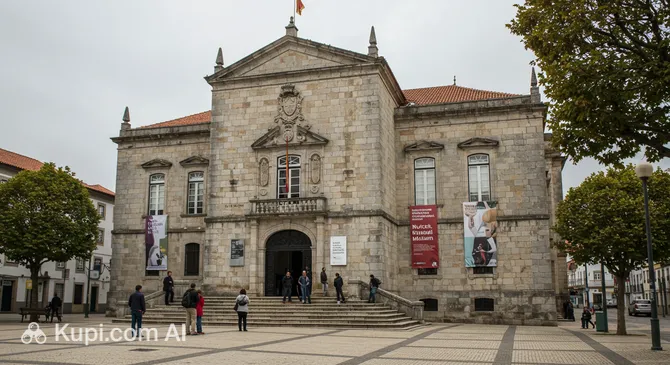
Grão Vasco National Museum
Grão Vasco National Museum. Иллюстрация. Источник: Kupi.com AI

The museum is named after the legendary Renaissance painter Vasco Fernandes, better known by his nickname Grão Vasco (The Great Vasco). His works, characterized by incredible detail and emotional depth, form the core of the exhibition and allow visitors to touch the "Golden Age" of Portuguese painting.

In addition to Renaissance masterpieces, the museum features rich collections of sculpture, jewelry, and rare porcelain. In the early 21st century, the building was carefully reconstructed by the famous architect Eduardo Souto de Moura, transforming the historical halls into a modern and comfortable museum space.

Contacts

To clarify information about special exhibitions or details regarding group visits, you can contact the museum administration directly. Official resources will help you plan your visit in advance and stay informed about any temporary changes to the operating schedule.

How to contactContact
AddressAdro Sé, 3500-195 Viseu, Portugal
Phone+351 232 422 049
Websitewww.museunacionalgraovasco.gov.pt

What to Do

The main reason to visit the museum is the opportunity to see the masterpieces of Grão Vasco firsthand. Be sure to take the time to study the famous "Old Altarpiece" of the Viseu Cathedral, consisting of 18 panels, as well as the magnificent "Last Supper" triptych. These works are striking in their mastery of light and texture, characteristic of the Portuguese Renaissance.

Beyond painting, the museum's halls feature unique examples of religious sculpture in wood and stone dating from the 14th to 18th centuries. Equally interesting is the collection of Portuguese faience and exquisite oriental porcelain, which vividly demonstrates the country's trade links in past centuries.

Don't forget to pay attention to the architecture itself: the combination of rough granite and minimalist modern interiors creates a special atmosphere for contemplating art. A walk through the halls turns into a kind of meditation, where every exhibit—from a precious liturgical vessel to antique furniture—tells its part of the history of Portugal.

Getting There

Finding the Grão Vasco National Museum is easy—it is located in the heart of the historic center at Adro Sé, directly adjacent to the city's cathedral. Thanks to this central location, the museum is easily reachable on foot from anywhere in the old town.

If you arrive in Viseu by intercity bus or train from Lisbon or Porto, the walk from the station (Estação de Viseu) to the museum entrance takes about 10–15 minutes. You can use local taxi services or stroll through the picturesque streets of the center.

For travelers by car, there are parking areas near the cathedral square; however, keep in mind that the museum is in a pedestrianized part of the city, so the final meters will have to be covered on foot while enjoying the ancient architecture.

Ближайший город: Viseu

History & Facts

The museum's history began in 1916, when a decree was issued to preserve the artistic heritage of the Viseu Cathedral. A key figure in the establishment of the institution was Francisco de Almeida Moreira, the first director, who dedicated his life to searching for and uniting the scattered treasures of the region into a single collection.

The building itself, known as the Palace of the Three Steps (Paço dos Três Escalões), was founded in 1593 as a seminary. Its granite walls in the Mannerist style reflect the austerity and grandeur of the era, while the second floor, added in the 18th century, gave the structure its final monumental appearance. The building only passed into state ownership in the 19th century.

An important milestone was the major reconstruction of 2001–2004, carried out by Pritzker Prize winner Eduardo Souto de Moura. The architect masterfully cleared the interiors of later additions, adapting the ancient halls to modern museum standards while preserving the authentic spirit of the granite palace.

Time Needed

To explore the rich exhibition without rushing, guests usually need about 1.5 to 2.5 hours. This time is sufficient to carefully study not only the famous altarpiece panels but also the collections of applied arts, as well as to appreciate the architectural solutions of the building itself.

If you are a true connoisseur of Renaissance painting, you might want to linger longer at the works of Vasco Fernandes to examine the finest details of his technique. In any case, allow at least two hours for your visit to ensure the experience is complete.

Working Hours

When planning your visit, please note that Monday is the day off. On other days of the week, the museum operates on a stable schedule with a break for lunch.

Opening Hours:
• Tuesday – Sunday: 10:00 – 13:00 and 14:00 – 18:00.
• Monday: Closed.

DayWorking hours
ПонедельникЗакрыто
Вторник10:00 – 13:00, 2:00 – 18:00
Среда10:00 – 13:00, 2:00 – 18:00
Четверг10:00 – 13:00, 2:00 – 18:00
Пятница10:00 – 13:00, 2:00 – 18:00
Суббота10:00 – 13:00, 2:00 – 18:00
Воскресенье10:00 – 13:00, 2:00 – 18:00

Nearby

Exploring the surroundings of the cathedral square will allow you to immerse yourself deeper in the atmosphere of the medieval city. Just steps away from the museum are concentrated the most important historical monuments reflecting the centuries-old history of the region.

A stroll through the adjacent streets will reveal cozy squares, ancient walls, and monuments to great rulers, making your visit to the city's cultural center truly comprehensive and memorable.

NameDistance
Viseu Cathedral0 km
Irish Bar0.1 km
Obviamente0.1 km
Gate of the Knights0.3 km
Forum Viseu0.3 km
Mothers' Garden0.3 km
Vintage Maison0.5 km

Reached the end of the page?

That means the route is fully explored