Support

Radu Vodă Monastery

About

Radu Vodă Monastery (Romanian: Radu Vodă) is an active male Orthodox monastery nestled in the heart of Bucharest, the capital of Romania. It stands on the namesake hill and is rightfully considered one of the city's most important religious and historical monuments, attracting both pilgrims and connoisseurs of ancient architecture.
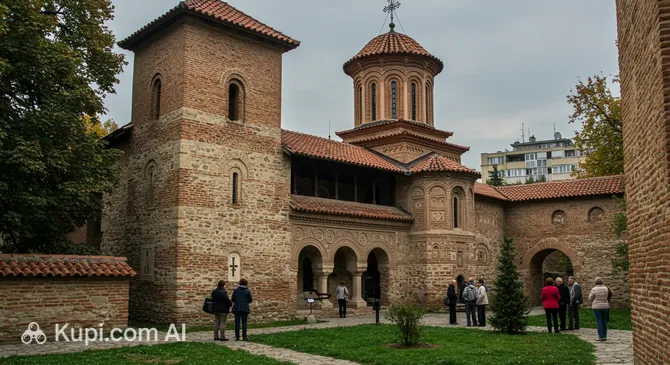
Radu Vodă Monastery. Illustration.
Source: Kupi.com AI

Traveler photos:

The monastery belongs to the Romanian Orthodox Church and has two especially revered patronal feasts: the Holy Trinity and Saint Hierarch Nectarios of Aegina. These days bring many believers to the monastery, creating an atmosphere of special spiritual elevation and unity.

The architectural ensemble of Radu Vodă Monastery is a beautiful example of Romanian ecclesiastical architecture. It includes the main church, a majestic bell tower, an inner courtyard surrounded by monastic buildings, and other structures. Every detail of the complex breathes history and invites visitors to immerse themselves in an atmosphere of peace and faith, touching centuries-old traditions.

Contacts

To plan your visit or check the current service schedule, you can contact the representatives of the Radu Vodă Monastery in Bucharest directly. All the necessary contact information for reaching the monastery, located in Romania, is provided below.

How to contactContact
AddressStrada Radu Vodă 24A, București 040275, Romania
Phone number+40 31 425 2526
Websitemanastirearaduvoda.ro

What to Do

While visiting Radu Vodă Monastery, you can immerse yourself in its rich history and enjoy the beauty of the architectural ensemble. Be sure to see the main church, the majestic bell tower, walk through the cozy inner courtyard, and notice the ancient monastery gates. Each element of this complex holds a piece of the past, allowing visitors to feel the spirit of the era.

The church altar, which is an important spiritual and artistic center of the monastery, deserves special attention. You should also take a close look at the architectural elements from the 18th century that have survived to this day, which testify to the various stages of the monastery's construction and reconstruction. These details will help you better understand the historical value of this place.

Within the monastery walls is a notable site—the tomb of Patriarch Justinian. He was buried in the monastery wall after his passing in 1977, and this place is an object of pilgrimage and veneration. Furthermore, the monastery is interesting because at various periods of its history, it served as the residence of the rulers (voivodes) of Wallachia and metropolitans. For some time, it even served as a temporary residence for the Patriarchs of Antioch, highlighting its significance in the Orthodox world.

Getting There

Radu Vodă Monastery is conveniently located in Bucharest, making it easily accessible for visitors. You can reach this historic sanctuary in several ways, depending on your preferences and starting point in the city. Thanks to its position on the namesake hill in the central part of the capital of Romania, the journey to the monastery can be a pleasant part of your city exploration in itself.

One of the most common ways to reach Radu Vodă Monastery is by public transport. Bucharest has a well-developed metro network, and the nearest station is likely within walking distance or a short ride on surface transport. You can use the Piața Unirii (Unification Square) metro stations, which serve as a major transport hub, and from there either walk or take a bus or tram. It is recommended to check current routes and public transport numbers heading toward the monastery in advance.

If you prefer a more direct and comfortable way to travel, a taxi is an excellent choice. A taxi ride from most hotels in central Bucharest or other key city points to Radu Vodă Monastery usually doesn't take long, depending on traffic. Both traditional taxi services and popular ride-sharing apps operate in the city, making this option accessible and convenient.

For those who enjoy exploring the city on foot, the location of Radu Vodă Monastery also offers that opportunity. If you are in the historical center of Bucharest or sightseeing nearby, a walk to the monastery can be an engaging experience. This will allow you not only to enjoy the city views but also to better feel its atmosphere as you head toward one of its significant spiritual and historical gems.

Nearest city: Bucharest

History & Facts

The history of Radu Vodă Monastery dates back to the distant past. It is believed that the first church on this picturesque hill in Bucharest was built in the early 16th century during the reign of Prince Mihnea the Evil (Mihnea I cel Rău), the son of the famous Vlad the Impaler. However, the monastic complex seen today owes its foundation to Voivode Alexander II Mircea and his wife Catherine. They established the monastery in the second half of the 16th century (1568-1577) as a token of gratitude to God for a victory in an important battle that took place right on this site.

Over the centuries, Radu Vodă Monastery has experienced periods of decline and revival, being rebuilt and restored many times. One of the most significant restorations, which returned the monastery to its former glory, was carried out between 1969 and 1974 at the initiative of Patriarch Justinian. These works preserved the unique architectural appearance and spiritual heritage of the monastery for future generations, strengthening its status as an important monument.

Radu Vodă Monastery has always played a prominent role not only in the religious but also in the political and cultural life of Wallachia and later Romania. It served as a residence for Wallachian princes and metropolitans, and provided temporary shelter for high-ranking church hierarchs. This monastery witnessed many key events in Romanian history, reflecting the complex development of Romanian lands and the Orthodox Church in the region, and it remains an important spiritual center to this day.

Time Needed

To explore Radu Vodă Monastery, an average visitor usually needs 1-2 hours. This time is enough to leisurely stroll through the grounds, admire the architecture of the main church and the bell tower, go inside if permitted, and feel the atmosphere of this historical site.

If you plan a more in-depth visit—for example, if you want to study the frescoes and iconostasis in detail, visit any small museum exhibits at the monastery (if available and open), or simply spend time in prayer and reflection—it is worth setting aside a bit more time. For those interested in history and spiritual life, a visit may take up to 2-3 hours.

Overall, Radu Vodă Monastery is not a massive complex, so exploring it won't require a full day. However, to fully enjoy its tranquility and beauty, do not rush. Allow enough time to soak in the spirit of this significant place in Bucharest.

Working Hours

When planning a visit to Radu Vodă Monastery, it is important to remember that it is an active monastery, and its visiting hours may be tied to the service schedule. Although specific information about opening hours is not always available in general sources, for the most accurate and up-to-date information, it is recommended to visit the monastery's official website or check directly before your trip through local tourist information centers in Bucharest. Typically, such sanctuaries are open to visitors throughout the day.

As for advanced booking, it is generally not required for individual visits to Radu Vodă Monastery. However, if you are interested in a guided tour or planning a visit for a large group, it is worth checking for such an option in advance. The monastery is expected to welcome pilgrims and tourists year-round, but it is always useful to verify the information in case of special events or church holidays that might affect access.

7:00 – 21:00

Nearby

A visit to Radu Vodă Monastery is undoubtedly a significant event for any traveler interested in the history and spiritual culture of Bucharest. However, to make your trip even more enriching and complete, it is worth paying attention to the attractions located nearby. Exploring the surroundings will allow you to dive deeper into the city's atmosphere, discover new interesting places, and form a more comprehensive view of its multifaceted character.

Other iconic sites are located near the monastery, each unique and deserving of attention in its own way. These may include historical monuments and museums, as well as simply picturesque corners or popular recreation spots. A short walk or drive from the monastery can lead you to new discoveries and vivid impressions, complementing your experience of visiting this sanctuary.

NameDistance
St. Anthony Church0.8 km
Museum of Football0.8 km
Manuc's Inn0.8 km
Museum of Communism0.9 km
Jeonju Korean BBQ1 km
Stavropoleos Monastery Church1.1 km
University Square1.3 km

Have you reached the end of the page?

So the route has been studied inside and out