Support

Grigore Antipa National Museum of Natural History

About

The Grigore Antipa National Museum of Natural History is one of Romania's oldest and most significant scientific centers, located in the heart of Bucharest. Founded back in 1834, it is not only a repository of unique knowledge about biodiversity but also one of the most modern and attractive museums in the Romanian capital. The museum building itself is of architectural value, being a beautiful example of early 20th-century Neoclassicism.

The museum's collection is truly impressive—it features more than 2 million exhibits, covering zoology, paleontology, geology, and ethnography. Visitors can see skeletons of prehistoric animals, including the unique skeleton of a Deinotherium (Deinotherium Gigantissimum), various dioramas representing ecosystems from the Carpathian Mountains to the Black Sea, and a very rare collection of butterflies. Thanks to a recent modernization, the exhibition has become interactive and engaging for both adults and children.
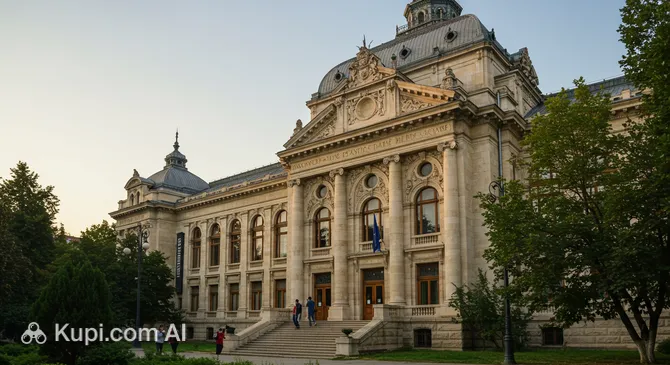
Grigore Antipa National Museum of Natural History. Illustration.
Source: Kupi.com AI

Traveler photos:

The museum proudly bears the name of Grigore Antipa, a prominent Romanian scientist who led it for over 50 years and made an enormous contribution to the development of hydrobiology and museology. His innovative approach to presenting exhibits, in particular the creation of the world's first dioramas, defined the museum's identity for many decades.

Today, the Antipa Museum is not just a collection of artifacts, but a living educational center where you can spend an entire day immersed in the mysteries of nature and Earth's history. It is rightfully considered a must-see on the itinerary of any tourist interested in science and culture, offering a unique opportunity to get acquainted with the natural heritage of Romania and the whole world.

Contacts

To plan your visit, confirm opening hours, or get additional information, you can contact the museum directly. It is always a good idea to check the institution's official website for the most up-to-date information, as all news and event announcements are published there.

How to contactContact
AddressŞoseaua Pavel D. Kiseleff 1, București 011341, Romania
Phone number+40 21 305 6031
Websitewww.antipa.ro

What to Do

Visiting the Grigore Antipa National Museum of Natural History is a fascinating journey into the world of nature and science. Here, you can explore a rich collection spanning zoology, paleontology, and geology. Of particular note are the impressive dinosaur skeletons that transport visitors back to the prehistoric era. In addition, the halls feature extensive collections of insects and birds, as well as large specimens of rare rocks and minerals. Each exhibit is carefully selected to clearly demonstrate the incredible diversity of life on Earth.

The museum's exhibition goes beyond the traditional representation of natural history. In addition to skeletons and taxidermy, the collection surprises with artifacts from completely different fields. You can see ancient Byzantine and Roman coins, as well as exquisite sculptures and paintings. This diversity makes the museum interesting for a very wide audience, as nature, history, and art intertwine here. You can spend hours studying fossils and then move on to examining ancient coins or works of art.

For those seeking deeper knowledge, the museum offers a unique opportunity to visit its scientific library. It houses more than 100,000 books and scientific articles, making the institution an important research center. This highlights the museum's role not only as a tourist attraction but also as a serious scientific institute contributing to the study and preservation of natural heritage.

Getting There

The Grigore Antipa National Museum of Natural History is conveniently located in the northern part of Bucharest, in the immediate vicinity of the capital's vibrant center. Thanks to its strategic location near other cultural landmarks, it is an easily accessible point on the city’s tourist map.

Getting to the museum is very convenient by public transport. The nearest metro station, Piața Victoriei (Victory Square), is just a few minutes' walk away. This transport hub serves two main metro lines (M1 and M2), making the trip fast from any district in Bucharest. Additionally, numerous buses and trolleybuses stop nearby, with routes covering the entire city.

For those who prefer walking and are staying in the center, the walk to the museum is a pleasant opportunity to get to know the city better. You can also take a taxi; a ride from the central areas will be short and inexpensive. The museum is so well-known that any local resident or taxi driver will be able to show you the way without difficulty.

Nearest city: Bucharest

History & Facts

The history of the Grigore Antipa National Museum of Natural History dates back to 1834, making it one of the oldest and most significant museums in Romania. The institution was founded thanks to a generous donation from Alexandru Ghica, the brother of the then-ruler of Wallachia, Mihalache Ghica. This initial collection was remarkably diverse and laid the foundation for the museum's multifaceted nature: it included ancient Byzantine and Roman coins, an extensive collection of minerals and fossils, as well as taxidermy specimens of mollusks, fish, birds, and mammals.

The museum received its modern name in honor of the prominent Romanian scientist and zoologist Grigore Antipa, who directed it for over half a century, from 1892 to 1944. It was his innovative ideas and dedication to science that transformed the museum into a leading institution. Antipa was a pioneer in the use of dioramas—three-dimensional compositions representing animals in their natural habitats. This approach revolutionized the museum world and defined the exhibition's look for many decades to come.

The building that houses the museum today is itself an important landmark in Bucharest. Built in the early 20th century, it is a striking example of Neoclassical architecture and graces one of the city's main streets. Interestingly, from the very beginning, the collection included not only natural science exhibits but also works of art—sculptures and paintings—highlighting the founders' desire to create a comprehensive cultural and educational center.

Time Needed

When planning a visit to the Grigore Antipa National Museum of Natural History, you should expect that a full but not overly detailed tour of the main exhibition will take about 2–3 hours. This will be enough time to see the most famous exhibits, including the impressive skeletons of prehistoric animals, the renowned dioramas representing the ecosystems of Romania and the world, and to get a general overview of the planet's rich biodiversity.

If you are traveling with children, are a big fan of natural sciences, or want to thoughtfully examine every detail and read all the information signs, feel free to set aside half a day or even more. Interactive displays and temporary exhibitions, which are often held at the museum, may also require additional time. Thus, the duration of the visit can easily be adapted to your personal pace and interests, turning it into either a brief educational stop or a deep dive into the world of science for several hours.

Working Hours

The Grigore Antipa National Museum of Natural History is open to visitors year-round, but opening hours depend on the season. During the summer period, from April 1 to October 31, the museum is open from Tuesday to Sunday from 10:00 to 20:00, with the last entry at 19:00. In the winter season, from November 1 to March 31, the opening hours are shorter: from Tuesday to Friday the museum is open from 10:00 to 18:00, and on Saturday and Sunday from 10:00 to 19:00. It is important to remember that Monday is the closing day regardless of the time of year.

Although advance ticket booking is not usually required for individual visits, it is recommended to purchase them online to avoid potential queues. If you plan to visit with a group and want to book a guided tour, advance registration is mandatory and must be made at least seven days before the visit. In any case, we strongly advise checking the museum's official website (www.antipa.ro) before your trip for the most up-to-date information on opening hours, possible schedule changes, and special events.

DayOpening hours
MondayClosed
Tuesday10:00 – 19:00
Wednesday10:00 – 19:00
Thursday10:00 – 19:00
Friday10:00 – 19:00
Saturday10:00 – 19:00
Sunday10:00 – 19:00

Nearby

After immersing yourself in the world of nature at the Grigore Antipa Museum, don't be in a hurry to leave the area. Its surroundings are rich with other iconic Bucharest landmarks, and a short walk will allow you to significantly enrich your experience of the Romanian capital. The museum's convenient location makes it an excellent starting point for further exploration of the city's cultural and historical heritage.

Both majestic architectural monuments and cozy green oases where you can relax are just a few minutes' walk or a short public transport ride away. Below is a list of some interesting sites located nearby, with their distance from the museum.

NameDistance
La Mița Biciclista1.2 km
Bucharest Blu Hotel1.5 km
Park Inn Bucharest Hotel & Residence1.5 km
Arch of Triumph1.6 km
Romanian Athenaeum1.7 km
Cismigiu Gardens1.8 km
Ceaușescu Mansion1.9 km

Have you reached the end of the page?

So the route has been studied inside and out