Support

الجدران الملكية

About

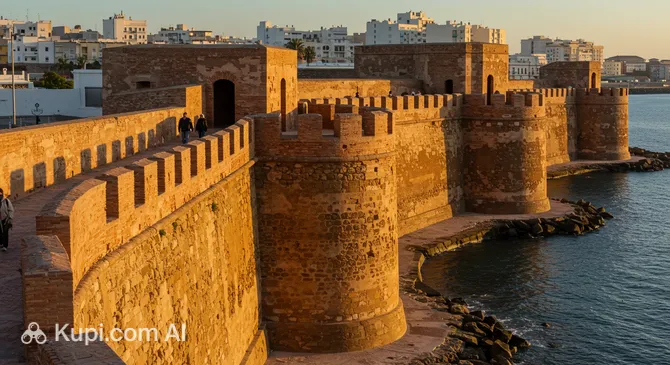
Imagine a monumental structure that for centuries served as a shield for one of the most strategically important ports in the Mediterranean. The Royal Walls of Ceuta are a majestic ensemble of defensive fortifications located in the city of Ceuta, which is part of Spain. This fortress system is unique because it literally separates the city's historical core from the rest of the world, creating a one-of-a-kind architectural landscape.
\n\n
Royal Walls of Ceuta
Royal Walls of Ceuta. Иллюстрация. Источник: Kupi.com AI
\n\n

These massive walls represent a complex structure that combines features from different eras, from ancient Arab foundations to powerful European bastions. The central elements are two massive forts at the edges, which were once the only barrier between the city and external threats. Today, this outstanding historical site is recognized as one of the region's main attractions, drawing tourists with its power and austere beauty.

\n\n

Walking along the perimeter, you can see how harmoniously the walls blend into the city's modern appearance, offering guests breathtaking panoramic views of the sea. This is a place where history literally comes to life under your feet, recalling the times when Ceuta was a key hub at the crossroads between the Atlantic and the Mediterranean.

Contacts

To clarify information about visiting the site or arranging tours, you can use the following contact details:

\n\n
How to contactContact
Address51001 Сеута, Испания
Phone+34 856 20 05 60
Websiteturismodeceuta.com

What to Do

The main reason travelers come here is for the opportunity to walk right along the top of the massive walls. From this height, you can enjoy stunning views of old Ceuta and the endless blue of the sea. The fortress looks especially striking in the rays of the setting sun when the evening illumination turns the stern defensive structure into a fairytale setting for photos.

\n\n

During your walk, look for the preserved antique cannons and coats of arms decorating the gates. History buffs can descend into accessible underground passages or climb the watchtowers. For those who want to learn more about the secrets of fortification, regular guided tours are available, where guides explain the role of each bastion in the city's defense.

\n\n

At the foot of the walls lie shaded alleys, perfect for relaxing after sightseeing. Additionally, the fortification grounds often serve as a backdrop for cultural events, hosting open-air festivals and concerts that let you see the ancient stones in a completely different, festive light.

Getting There

Reaching this historical landmark is easy, as the Royal Walls are located right in the heart of the old city. Since Ceuta is an exclave, most tourists arrive by ferry from Algeciras, Spain, or Tangier, Morocco. The sea crossing takes between 30 and 60 minutes, and the walls are just a 10–15 minute walk from the ferry terminal.

\n\n

If you arrive at the local airport (La Unión), a taxi or public bus ride to the city center takes about 15 minutes. Within Ceuta, it is convenient to get around using EMTUCE buses (routes 1 through 8 pass through the central districts), which stop in the immediate vicinity of the fortifications.

\n\n

For those traveling by car, keep in mind that entry to the historical center may be restricted, and parking spaces near the attraction are mostly paid. The best option is to leave your car in one of the designated parking lots and continue on foot, enjoying the views of the ancient streets at the address: 51001 Ceuta, Spain.

Ближайший город: Ceuta

History & Facts

The history of this magnificent defensive complex began as far back as 962 AD. By order of the Caliph of Córdoba, Abd ar-Rahman III, the first stones of the Arab fortifications were laid to protect the strategically important port from attacks by sea and land. The construction was completed by his son, al-Hakam II, creating one of the most powerful fortification systems of that era.

\n\n

Over the centuries, the walls were constantly modified and expanded, reflecting changing rulers and architectural styles. In 1415, the city was captured by the Portuguese, who added their own elements to the defensive system. Later, in 1668, under the Treaty of Lisbon, Ceuta officially came under the control of Spain, leading to a new wave of large-scale reconstructions.

\n\n

The period following the long siege of 1727 holds particular significance in the history of the walls. It was then that the fortifications were significantly reinforced, acquiring the imposing appearance we see today. The Royal Walls of Ceuta have become a symbol of resilience and the city's undeniable historical value, surviving numerous battles while preserving their authenticity.

Time Needed

To take a leisurely stroll through the complex, inspect the massive towers, and take beautiful photos, you will typically need 1 to 2 hours. This is usually enough for a basic introduction to the architecture and the main observation decks.

\n\n

If you plan to visit the indoor exhibitions, explore the underground passages, or book a full guided tour, it is better to set aside about 3 hours. You should also consider the time needed to see the adjacent squares and monuments, which naturally fit into a walking route through the historical center.

Working Hours

Since the Royal Walls are part of the urban landscape, their exterior can be viewed 24 hours a day. An evening walk along the illuminated fortifications can be even more romantic and atmospheric than a daytime visit.

\n\n

However, access to the equipped observation decks, towers, and museum rooms usually follows a set schedule: daily from 10:00 AM to 6:00 PM. Please note that working hours may change depending on the season or public holidays, so it is recommended to check the official Ceuta tourism website for up-to-date information before your visit.

Nearby

Exploring the surroundings of the Royal Walls will allow you to dive deeper into the atmosphere of this unique place, where cultures and eras intertwine. Nearby, you will find charming squares, modern recreation areas, and ancient forts, each deserving of a separate visit.

\n\n
NameDistance
Ribera Beach0.2 km
Chorillo Beach0.4 km
Mesón Restaurante Alberto0.4 km
Military Museum of the Legion0.6 km
Port of Ceuta0.6 km
Mediterranean Maritime Park0.8 km
House of the Dragons0.8 km

Reached the end of the page?

That means the route is fully explored