Support

Puerto de Ceuta

About

Located at the northern tip of the African continent, right across from the Rock of Gibraltar, is the Port of Ceuta — the city's most important maritime gateway. Situated on the narrow isthmus of the Almina Peninsula, this harbor serves as a key link connecting the city of Ceuta with the rest of the world. It is not just a transport terminal, but the vibrant heart of the city, where the maritime routes of Europe and Africa meet.
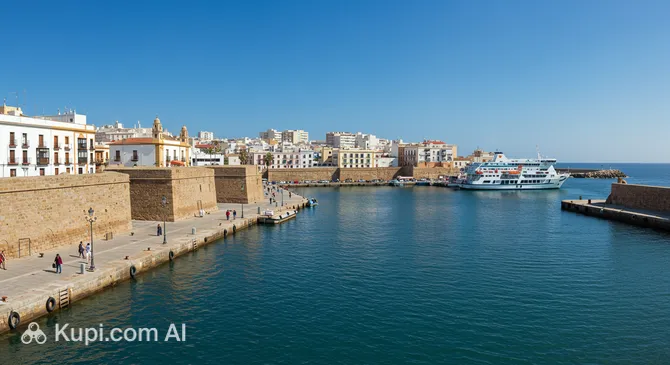
Port of Ceuta
Port of Ceuta. Иллюстрация. Источник: Kupi.com AI

As part of Spain, this port provides constant ferry service to the mainland. Its infrastructure includes powerful breakwaters, passenger and cargo berths, and a modern helipad. For tourists, this location is often the first point of contact with the fascinating mix of cultures characteristic of the region.

Surrounded by picturesque views of the Mediterranean Sea, the port plays a huge role in the economy of the exclave. With a population of about 80,000, the city relies heavily on this harbor as a strategic trade and tourism hub. Life here is always bustling: from the arrival of huge cruise liners to the activity of small fishing boats.

Contacts

To check ferry schedules or get information about available services, you can contact the port administration directly. Information desk staff will help you navigate the terminals and provide up-to-date vessel arrival times. You can also use official data to plan your route via navigation services.

How to contactContact
AddressMlle. España, s/n, 51001 Ceuta, Spain
Phone+34 956 52 70 00

What to Do

At the port, travelers can enjoy leisurely strolls along the modern promenade, watching the movement of ferries and yachts. Many restaurants and cafes are concentrated along the coastline, serving the freshest seafood. It is the perfect place to sample local cuisine, where Spanish traditions are interestingly complemented by North African motifs.

Near the port area, there are unique historical sites such as the restored Arab baths (baño árabe). Walking through the neighboring streets, you can feel the city's amazing atmosphere, where Christian, Muslim, Hindu, and Jewish traditions have peacefully coexisted for centuries. Just a few minutes' walk away are the Royal Walls and the Cathedral, which are definitely worth including in your itinerary.

For those who enjoy active leisure, the port offers boat rental services and organized sea fishing. Excursion boats also depart from here, allowing you to view the city and its powerful fortifications from the sea, offering a completely different perspective on the scale of this historical fortress.

Getting There

The most popular way to reach this place is by using the ferry service. Regular routes connect the harbor with the Spanish city of Algeciras, and the crossing through the strait takes about an hour. Additionally, there is a modern helipad located at the port, allowing for quick flights to the mainland.

If you are already in the city center, the port is easily accessible on foot within a few minutes, as it is located on the peninsula's central isthmus. You can also reach the passenger terminal by taxi or city bus. Given that Ceuta is an exclave, don't forget to allow time for border control when planning a trip from the Moroccan side.

Ближайший город: Ceuta

History & Facts

The history of this place is inextricably linked with the fate of the city, which for centuries served as an arena for the clashing interests of great powers. The port's modern status began to take shape in 1668, when Portugal officially recognized that Spain would retain control of this strategic region. Since then, the Port of Ceuta has become a vital outpost on the northern coast of Africa.

In the 19th century, large-scale fortifications were built here, including powerful bastions designed to protect the harbor from attacks by sea. These walls are partially preserved today, having turned into unique architectural monuments. The port played a key role in logistics and supply during periods of Spanish presence in Morocco, remaining a "window to Europe" for all residents of the peninsula.

Over the years of its existence, the harbor has seen thousands of ships and representatives of many different cultures. This centuries-old heritage is reflected in the atmosphere of the adjacent quarters, where Christian traditions coexist with echoes of the Arab past. Today, it is not only a historical site but also a dynamically developing center of maritime trade.

Time Needed

A typical introduction to the port area and a walk along the promenade usually takes about 2 to 4 hours. This is quite enough time to watch the arriving ships, browse local shops, and enjoy the view of the Strait of Gibraltar.

If you decide to supplement your visit with a trip to nearby attractions such as the Royal Walls or the Arab baths, it's better to set aside half a day for the walk. For those planning a sea excursion or fishing trip, staying in the port area can take up to 6–8 hours.

Working Hours

The maritime terminal is Open 24 hours, providing round-the-clock ship handling and passenger transport. This makes it accessible for visiting at any time, regardless of your arrival schedule.

However, tourist sites, shops, and cafes located within the port area usually operate from morning until late evening. If your goal is to visit specific establishments or excursion offices, it's best to follow the standard daytime operating schedule — from 9:00 AM to 9:00 PM.

Круглосуточно

Nearby

Exploring the surroundings of the harbor will allow you to feel the unique character of this exclave city more deeply. Within walking distance of the piers are both modern cultural centers and ancient fortresses that have guarded the peace of local residents for centuries.

NameDistance
Royal Walls of Ceuta0.6 km
Portuario Bar & Restaurant0.6 km
Mesón Restaurante Alberto0.6 km
Ceuta Park Mall0.7 km
Chorillo Beach0.8 km
Ribera Beach0.8 km
Mediterranean Maritime Park1.1 km

Reached the end of the page?

That means the route is fully explored