Support

Iglesia Mayor Prioral

About

Rising above the charming town of El Puerto de Santa María, the Main Parish Church (Iglesia Mayor Prioral) is an authentic architectural treasure, representing Spain at its historical best. This majestic temple, built from the golden sandstone of Sierra de San Cristóbal, is not just a religious site, but a true minor basilica, a status confirmed by the Pope himself.
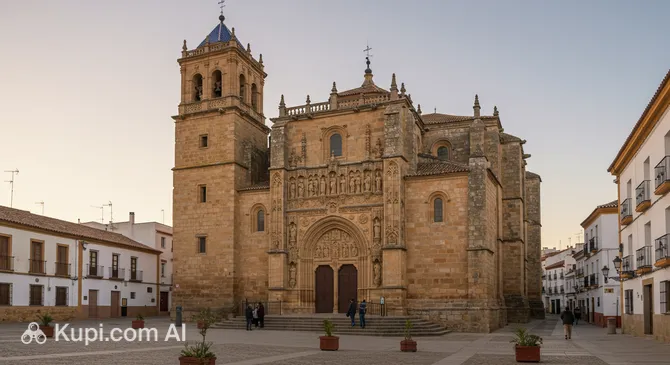
Priory Church
Priory Church. Иллюстрация. Источник: Kupi.com AI

The building is striking in its eclecticism: here, Gothic vaults harmoniously coexist with lush Baroque and strict Renaissance lines. Built on the site of an ancient mosque, the church symbolizes a deep connection between eras and the cultural transformation of the region after the Reconquista.

Inside, guests are greeted by a grandiose space of three naves, where the ribbed vaults of the central part soar high above the side altars. The basilica is considered one of the most significant shrines in the province of Cádiz and is a must-visit for everyone who appreciates monumental art and ancient history.

Contacts

To clarify information about special events or to check the schedule of services, you can use the temple's official communication channels.

How to contactContact
AddressPl. de España, s/n, 11500 El Puerto de Sta María, Cádiz, Spain
Phone+34 956 85 17 16
Websitewww.iglesiamayorprioralelpuerto.com

What to Do

Inside the church, visitors' attention is immediately drawn to the incredible ribbed vaults of the central nave, whose scale creates a sense of infinite space. Be sure to approach the main altar, which features a unique 18th-century neoclassical templete. This work by architect Torcuato Benjumeda is considered one of the most important examples of ecclesiastical art in southern Spain.

The church's external portals deserve special study. The famous Puerta del Sol (Portal of the Sun) delights with its decorative Plateresque finishes and Baroque elements, creating a magnificent "facade-retable." On the other side of the temple, you can see the stricter but no less significant Gothic portal, Puerta del Perdón (Portal of Forgiveness), which has preserved the spirit of the late Middle Ages.

Don't forget to look into the side chapels, each of which houses its own relics and works of art. Among them, the Chapel of the Patroness and the Sacramental Chapel stand out. A walk through these quiet halls allows you to fully enjoy the silence and craftsmanship of Andalusian artisans from different eras.

Getting There

The shrine is located in the very heart of El Puerto de Santa María on Plaza de España. It is easy to find, as the building dominates the upper part of the historic center and serves as an excellent landmark for walks.

For those who prefer public transport, city buses that connect the main districts with the center stop within walking distance. If you are traveling by car, parking spaces can be found near the square; however, keep in mind that traffic in the old part of the city can be difficult during peak hours.

Since El Puerto de Santa María is in the province of Cádiz, it is also convenient to get here by taxi or commuter train from neighboring cities such as Jerez de la Frontera or Cádiz. From the railway station, you can walk to the church while enjoying the atmosphere of ancient Spanish streets.

Ближайший город: El Puerto de Santa María

History & Facts

The history of this majestic structure dates back to 1486. Construction was carried out under the careful patronage of the influential Dukes of Medinaceli, who owned the city at that time. Just a few years later, in 1493, services began to be held in the church, although the work was far from complete. The architectural foundation of the building was originally executed in a strict Gothic style, from which the impressive Puerta del Perdón portal has survived to this day.

The fate of the church was not simple: in the 17th century, it underwent serious trials. A major earthquake in 1636 caused the collapse of the central nave, requiring almost complete reconstruction. The restoration work was led by the famous architect Antón Martín Calafate, who skillfully integrated the surviving fragments—the outer walls and the apse—into the updated design. After him, the work was completed by Francisco de Guindos.

The second stage of the church's life officially began in 1671 with its grand reopening. Since then, the building has been constantly improved, gaining new chapels and artistic details. Notably, in 2014, Pope Francis granted the church the honorary status of a minor basilica, highlighting its exceptional spiritual and historical significance for the entire region.

Time Needed

To leisurely inspect all the architectural details, admire the altars, and visit the side chapels, it is recommended to set aside 1 to 2 hours for the visit. This is quite enough time to feel the grandeur of the interiors and take commemorative photos of the facades.

If you plan to attend mass or study the neoclassical templete in the center of the church in detail, it is worth adding another half hour. In any case, a visit to the basilica fits easily into a walking route through the historic center of the city.

Working Hours

The basilica is open to visitors daily; however, the schedule is divided into morning and evening hours, which is typical for the southern region:

  • Monday — Friday: 08:30 – 13:00 and 18:00 – 21:00
  • Saturday: 08:30 – 12:30 and 18:00 – 21:00
  • Sunday: 08:30 – 14:00 and 18:30 – 21:00

Please note that during liturgical services, tourist sightseeing may be limited, so it is better to plan your visit at the beginning of the morning or evening operating blocks.

DayWorking hours
Понедельник8:30 – 13:00, 6:00 – 21:00
Вторник8:30 – 13:00, 6:00 – 21:00
Среда8:30 – 13:00, 6:00 – 21:00
Четверг8:30 – 13:00, 6:00 – 21:00
Пятница8:30 – 13:00, 6:00 – 21:00
Суббота8:30 – 12:30, 6:00 – 21:00
Воскресенье8:30 – 14:00, 6:30 – 21:00

Nearby

A walk around the basilica is an excellent way to get to know the region's rich architectural heritage more deeply. The city's historic center is literally dotted with luxurious palaces and fortresses, which are within a few minutes' walk.

Exploring the nearby attractions will allow you to feel the era when the city flourished thanks to maritime trade and the patronage of noble families.

NameDistance
Rafael Alberti Foundation Museum0.2 km
Castle of San Marcos0.4 km
Ditaly0.4 km
Real Plaza de Toros0.5 km
Osborne Wineries0.5 km
El Faro de El Puerto Restaurant0.8 km
Bodega Real0.9 km

Reached the end of the page?

That means the route is fully explored