Support

Tudela

About

Tudela is a picturesque and welcoming city located in the autonomous community of Navarre, on the banks of the majestic Ebro River. This destination wonderfully combines the natural beauty of a fertile valley with a unique architectural heritage, making it an important cultural center in the region.

Home to about 37,000 residents, the city offers an intimate and tranquil atmosphere, ideal for travelers looking to avoid noisy tourist crowds. It is here that you can truly feel the essence of Spain and enjoy its authentic charm away from the hustle and bustle of major metropolises.
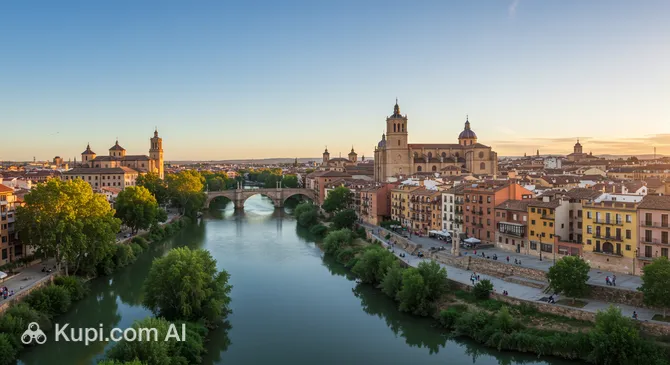
Tudela. Illustration.
Source: Kupi.com AI

The rich history of Tudela is captured in every stone of its ancient streets. One of the first sights guests often encounter upon arrival is the impressive medieval bridge across the Ebro River—a witness to many eras and events. The historic city center is a veritable open-air museum where the traditions of different cultures have intertwined.

The Cathedral of Santa Maria is rightly considered the main architectural gem, serving as a magnificent example of Gothic architecture. Walking enthusiasts should check out the local squares, such as Plaza Mercadal and Plaza Vieja. Here, you can not only admire historical facades but also relax in a cafe while enjoying the famous local cuisine.

Tudela is a real treasure for those seeking a harmony between educational tourism and relaxation. The city invites you to wander through its picturesque alleys, visit its museums, and become part of vibrant festivals that showcase the deep traditions of this amazing region.

Weather Overview

Tudela's climate is characterized by a noticeable contrast between seasons, which is typical for this region of Navarre. When planning your trip, keep in mind that the weather in Tudela can be truly sweltering or quite chilly, depending on the chosen month.

Summer here is hot and sunny. The highest temperatures are recorded in July and August, when daytime air warms up to an average of 31°C. This is also the driest period of the year: the number of days with precipitation is minimal (about 4–5 per month). Spring and early autumn offer milder conditions: in May and September, average temperatures stay at comfortable marks of 17–20°C, which is ideal for long excursions.

Winters in the city are cool but not extremely cold. In January, the average temperature is about 6.5°C, and nighttime figures can drop to 2.5°C. Expect a warm, sometimes hot summer with rare precipitation and fresh winters, when rains are slightly more frequent but do not pose serious obstacles for travelers.

Average monthly temperature

Average monthly precipitation

Interesting Facts

Beyond its main architectural monuments, Tudela holds many fascinating secrets that make its history truly come alive. Here are some curious facts to help you look at this Navarrese city from a new perspective:

  • City of Three Cultures. During the Middle Ages, Tudela was a unique example of peaceful coexistence between three communities: Christian, Muslim, and Jewish. This heritage left an indelible mark on the city's appearance, where Gothic cathedrals stand alongside the winding streets of the former Jewish quarter and elements of Arabic architecture.

  • Birthplace of a Great Wanderer. Although names are often omitted in brief summaries, the city's history is inextricably linked to Benjamin of Tudela. This famous 12th-century traveler embarked on journeys across Europe, Asia, and Africa a hundred years before Marco Polo, bringing fame to his hometown through his detailed travel notes.

  • Vegetable Capital. Tudela is often called the "green garden" of the region. Local vegetables, especially artichokes and asparagus, are considered some of the finest Spain has to offer. Culinary traditions are so revered here that residents hold large-scale festivals dedicated solely to celebrating local produce.

  • Strategic Crossing. The medieval bridge over the Ebro River with its 17 arches (the number of which changed over the centuries) is not just a beautiful crossing. For a long time, it was the only bridge in the vicinity, making Tudela a vital center for trade and regional control.

How to Get There

Tudela is conveniently located in the Ebro River valley, making it easily accessible for travelers despite not having its own airport within the city limits. Tourists usually arrive at major transport hubs in neighboring provinces and then continue their journey by land. You can find more details and view all ways to get to Tudela on a dedicated page of our guide.

Since Tudela itself does not have an airport, it is most convenient for travelers to use the air gateways of neighboring cities. The closest and most comfortable option is Zaragoza Airport (IATA: ZAZ), located about 64 km from Tudela. The journey from there by taxi or bus takes about an hour. It is a regional airport that handles both domestic and some European flights.

An alternative option is Pamplona Airport (IATA: PNA), which is approximately 79 km from Tudela. Travel time is just over an hour. It is also worth mentioning Biarritz Pays Basque Airport (IATA: BIQ), located in France. Although it is further away (about 156 km), it is a popular international hub for those traveling through northern Spain and southern France.

For your convenience, here is a summary of the main airports used to reach the region:

AirportPassenger trafficDistance
Zaragoza Airport686 00064 km
Pamplona Airport220 42379 km
Vitoria Airport263 869130 km
San Sebastian Airport483 000145 km
Biarritz - Anglet - Bayonne Airport970 589156 km

Rail connections also play a vital role in transport logistics. Major stations in neighboring provincial centers are often used for long-distance travel. One of the key hubs is Zaragoza-Delicias Station, located about 73 km from Tudela. This is a modern station with high passenger traffic, serving high-speed trains. From here, you can reach your destination by bus or taxi.

Another significant point is the Pamplona Railway Station (about 85 km from Tudela). It is an important station that serves as a convenient transfer point for tourists traveling around the north of the country.

Below is information on the nearest major railway stations:

StationPassenger trafficDistance
Zaragoza-Delicias Station4 mln73 km
Soria Railway Station72 50080 km
Logroño Railway Station308 35182 km
Pamplona Railway Station977 41885 km
Huesca Railway Station200 75299 km

Main Attractions

Tudela is a city with a rich past, and its streets literally breathe history. The main pride of the locals and a magnet for tourists is the Cathedral of Santa Maria. This majestic temple was built in the 12th–13th centuries on the foundations of an old mosque, symbolizing the transition of eras. Special attention should be paid to the "Gate of the Last Judgment"—a portal with incredibly detailed carvings depicting scenes of heaven and hell. Inside the cathedral, an atmosphere of serenity prevails, and the blend of Romanesque and Gothic styles makes it an architectural masterpiece that must be seen with your own eyes.

The heart of the city's social life is the Plaza de los Fueros. Built in the 17th century, it once served as a venue for bullfighting, a history reflected in its enclosed structure and the balconies of the surrounding buildings where spectators watched the spectacle. Today, it is an ideal place for a leisurely break: house facades are decorated with the coats of arms of Navarrese towns, and a bandstand sits at its center. Here, you can sip coffee in one of the many cafes while soaking up the city's lively atmosphere.

For those who want to see Tudela from above, the Torre Monreal is a must-visit. This 13th-century defensive structure once served as a watchtower. Nowadays, it houses a camera obscura—a unique optical device that allows for real-time, 360-degree observation of city life. By climbing up here, you not only touch medieval history but also get the best panoramic shots of the Ebro River valley.

It is impossible to imagine the city's skyline without its famous bridge over the Ebro River. This medieval engineering marvel with 17 arches spans 360 meters and was the main crossing in the region for centuries. A walk across the bridge offers a magnificent view of the old town and the cathedral, especially in the rays of the setting sun. This spot is steeped in the spirit of travel, as it was through this bridge that trade routes and pilgrims heading into Spain once passed.

While this site is not in the very center, a visit to Tudela would be incomplete without a trip to the Bardenas Reales Nature Park, located very close by. This semi-desert landscape with whimsical rock formations and canyons, reminiscent of Martian scenery, is listed as a UNESCO Biosphere Reserve. The contrast between the green Ebro valley and the rugged beauty of the desert leaves a lasting impression and attracts nature lovers and photographers from all over the world.

Local Cuisine

Tudela's gastronomic scene is a direct reflection of the richness of the fertile Ebro River valley. Local cuisine is often referred to as "Navarre's kitchen garden," as vegetables here are elevated to a cult status. Travelers can expect simple but incredibly delicious dishes where the main focus is on the quality and freshness of ingredients grown in nearby fields.

The city's primary culinary symbol is Menestra Navarra. This is a thick and rich vegetable stew whose composition may change depending on the season, but the taste always remains superb. it usually includes artichokes, asparagus, peas, and beans, which are simmered to perfect tenderness, often with the addition of jamón for aroma. Another "must-try" dish is choperos—appetizing small fried sausages. They are often served with a side of golden potatoes or fresh vegetables, creating a hearty and home-style meal.

No meal here is complete without a glass of good wine. The Navarre region is famous for its vineyards, and local white wines perfectly complement the flavor of vegetable dishes. They are characterized by their freshness, lightness, and fruity notes. Rosé wines are also popular, providing great refreshment on a hot summer day and pairing well with light snacks.

The food culture in Tudela is democratic and diverse. Locals love visiting farmers' markets where stalls overflow with fresh cheeses and sausages. This is an excellent place to try street food and buy delicacies to take away. If you are lucky enough to be in town during one of the gastronomic festivals, you can witness demonstrations of traditional culinary techniques and immerse yourself in the harvest festival atmosphere that Spain is so proud of.

Travel Tips

Preparing for a trip to Tudela doesn't require complex logistics, but knowing a few local nuances will help you avoid minor inconveniences and immediately feel at home in this cozy Navarrese city. We've gathered the most relevant recommendations to make your stay here as comfortable as possible.

  1. Clothing and Seasonality. The climate here is contrasting: it can be very hot in summer, while in winter, a piercing wind called the "cierzo" blows, so be sure to bring a windproof jacket and scarf during the cold season. For walking on the cobblestones of the historic center, choose the most comfortable shoes without heels. If you plan to enter active churches, such as the Cathedral, remember the dress code: shoulders and knees should be covered.

  2. Transport Accessibility. Tudela is a compact city, and its historic center is best explored on foot; you will likely not need public transport within the old town. Renting a car only makes sense if you plan a trip to the Bardenas Reales desert or surrounding wineries, as regular transport does not go there.

  3. Finances and Payment. The currency is the Euro. Bank cards are accepted almost everywhere, including supermarkets and restaurants, but for buying souvenirs in small shops or paying for coffee in a bar, it's better to have some cash (bills of €5–10). Tipping in Spain is not mandatory, but rounding up the bill or 5–10% for good service is always appreciated.

  4. Rhythm of Life and Siesta. This is perhaps the most important tip: keep the siesta schedule in mind. From 14:00 to 17:00, most shops, museums, and even some pharmacies close for a break. Plan your shopping for the morning or evening, and spend the hot afternoon hours resting or having a long lunch at a restaurant.

  5. Language and Communication. The main language of communication is Spanish. Unlike northern Navarre, the Basque language is used less frequently here. English is understood in tourist offices and hotels, but it might be harder to explain yourself in ordinary bars. Learn a couple of phrases: "Hola" (Hello) and "Gracias" (Thank you)—locals very much appreciate politeness.

  6. Safety and Health. Tudela is a very calm and safe city where you can walk without fear even late at night. Pharmacies are marked with a green flashing cross; if you need medicine at night or on a weekend, look for a list of duty points (Farmacia de guardia) on the door of any pharmacy.

  7. What to Avoid. Don't try to have dinner at 18:00 or 19:00—restaurant kitchens are usually still closed at this time. Dinner here starts late, after 20:30 or even 21:00. Attempting to order a full meal earlier may result in being offered only cold snacks.

  8. Gastronomic Souvenir. The best thing to take away from Tudela is local canned vegetables (conservas). Jars of white asparagus (Espárragos de Navarra) or artichoke hearts, bought in a regular supermarket or specialized shop, make excellent and delicious gifts.

By following these simple tips, you can avoid typical tourist mistakes and enjoy the atmosphere of Tudela without unnecessary fuss. May your journey through this welcoming corner of Navarre leave only warm memories and gastronomic delights!

Entertainment & Nightlife

Despite the city's compact size, Tudela's nightlife has a vibrant and distinctive character. There are no massive metropolitan clubs here, but the culture of bar hopping and social gathering is exceptionally well-developed. The epicenter of evening entertainment is the Old Town (Casco Antiguo). As the sun sets, the historic streets fill with the hum of voices, music, and the clinking of glasses, creating an incredibly cozy and friendly atmosphere.

The main artery of nightlife is Calle Herrerías and its adjacent alleys, as well as the area around Plaza de los Fueros. This is where most of the popular bars and pubs are concentrated. Locals follow the tradition of "poteo"—moving from one establishment to another, drinking small glasses of wine or beer and snacking on pintxos. If you happen to be in town on a Thursday, be sure to participate in "Juepincho"—a weekly tradition where many bars offer a drink and a snack at a reduced fixed price.

The crowd in Tudela's establishments is very diverse, ranging from students to elderly couples enjoying their evening. The dress code is relaxed: casual or smart casual style is appropriate everywhere. Most bars stay open until 2:00–3:00 AM, especially on weekends. For those who want to keep the party going until morning, there are night disco-bars playing everything from Spanish pop to international hits.

Regarding specific venues, it's worth checking out the places that set the tone for the local night. For example, Bar La Cura is popular for its lively atmosphere and excellent selection of drinks. Music and cocktail lovers also frequently gather at Consentidos, where you can spend time in a stylish setting. For fans of a more informal atmosphere and rock music, local pubs in the Rúa street area are a great choice.

As for daytime cultural entertainment, Tudela offers a calm but interesting leisure experience. Art lovers should visit the Muñoz Sola Museum of Modern Art (Museo Muñoz Sola de Arte Moderno), which houses a fine collection of 19th-century French paintings. Theater-goers are encouraged to check the schedule at the Gaztambide Theater (Teatro Gaztambide)—the city's main performing arts venue, hosting concerts and plays.

In terms of safety, Tudela is one of the calmest cities in the region. Walking through the center at night, including the area around the cathedral and Plaza Mercadal, is completely safe. Since the city is small, you will likely not need a taxi to move between bars—everything is within walking distance. If you need to get to a distant hotel, it is better to call a car by phone or find one at the taxi stand near the station, as hailing a taxi on the street is not common here.

Parks & Museums

Tudela offers travelers a harmonious blend of natural beauty and deep cultural immersion. Surrounded by fertile lands and unique landscapes, the city is perfect not only for wandering through historical halls but also for relaxing in the fresh air, allowing for a mix of educational tourism and nature contemplation.

For lovers of peaceful walks, the Ebro River embankment and Paseo del Prado park are ideal spots. This is the city's green artery, where shaded alleys provide shelter from the midday sun, and views of the river and the ancient bridge create a romantic mood. Locals often hold picnics here or simply relax on benches, enjoying the silence. The Vía Verde del Tarazonica route begins right near the city—a former railway line converted into a picturesque path for cyclists and pedestrians, leading through fields and orchards to the neighboring town of Tarazona.

When discussing natural areas, one cannot overlook the unique landscape for which Spain is famous—Bardenas Reales. Although technically a vast biosphere reserve outside the city limits, it is an integral part of the Tudela nature experience. This semi-desert park with its whimsical rock formations, canyons, and plateaus is just a few kilometers away and serves as a prime destination for hiking tours and photoshoots against "lunar" landscapes.

The city's cultural life is centered in its museums, which, despite their compactness, house real treasures. The primary repository of history is the Museum of Tudela (Museo de Tudela), located in the ancient Dean's Palace (Palacio Decanal). The museum's exhibition is closely linked to the cathedral and covers sacred art, archaeological finds, and artifacts telling the story of the peaceful coexistence of Christian, Jewish, and Muslim cultures in medieval Tudela. The building itself, with its magnificent cloister, deserves separate attention.

Art connoisseurs should visit the Muñoz Sola Museum of Modern Art (Museo Muñoz Sola). Housed in a restored mansion, it features a unique collection of 19th-century French paintings gathered by local artist César Muñoz Sola. Here, you can see rare portraits and genre scenes that allow you to dive into the atmosphere of European art of that time without leaving Navarre.

The city's architectural face is completed by majestic Renaissance noble mansions. One of the most striking examples is the Palace of the Marquis of San Adrián. This 16th-century building impresses with its facade featuring a carved wooden cornice and an interior courtyard considered a masterpiece of the region's Renaissance architecture. A stroll past such buildings turns an ordinary route through the city into an open-air excursion.

Insider Tip: For the best panoramic view of the city and the Ebro River, climb the Cerro de Santa Bárbara hill, where the statue of the Sacred Heart of Jesus stands. This spot is not as popular with mass tourists as the Torre Monreal, but it is from here that you get a breathtaking view of the old town's rooftops merging into the endless fields of the Ribera at sunset.

Getting Around

Tudela's transport system perfectly matches the size and pace of life of this cozy city. Since distances here are small and the historic center is compact, there is no need for tourists to navigate complex metro or tram systems—they simply don't exist here. The main ways to get around for locals and guests remain walking and city buses.

Public transport is represented by a network of city buses (Transporte Urbano) that connects the center with distant residential areas, the railway station, the Queen Sofia Hospital (Hospital Reina Sofía), and the university. Routes are organized to cover key points and run at intervals of approximately 20–30 minutes on weekdays. On weekends and holidays, frequency decreases, and waiting times can increase up to an hour.

The fare system is very simple and convenient for short-term visits. In Tudela's buses, you don't need to buy tickets in advance at kiosks or look for validators at stops. Payment is made directly to the driver upon boarding. The cost of a single trip is about €1.35. For residents, there are rechargeable transport cards with discounts, but for tourists visiting for a couple of days, buying a single ticket with cash is the most practical option.

An important practical tip: try to have small coins or bills in denominations of €5–10. Bus drivers often do not have change for large banknotes (€50 and higher), and you might be refused passage. Boarding the bus is through the front door only, and exiting is through the middle or rear doors.

As an alternative to public transport, the city has a well-developed taxi service. Official cars are painted white and have a light on the roof (a green light means the car is free). Taxi stands are located in strategically important places: at the railway station and near the central Plaza de los Fueros. A trip within the city is inexpensive due to the short distances, but higher rates apply at night and on weekends.

Tudela is located on fairly flat terrain, making it ideal for cycling. While there is no city bike-sharing system, you can rent a bicycle at private rental points or hotels. This is especially relevant if you plan a trip along the "green ways" (Vías Verdes) or to the borders of the Bardenas Reales Nature Park. For moving around the old town, your own feet are best: many streets are pedestrianized, and vehicles simply don't enter there.

Accommodation

The choice of accommodation in Tudela, while not massive in scale, is capable of satisfying the needs of most travelers looking for comfort and authenticity. The city offers a balanced range of options: from modern 3- and 4-star hotels to cozy guesthouses and hostels. In recent years, renting tourist apartments has been gaining popularity, which is especially convenient for families or groups planning a longer stay and wishing to cook local vegetables themselves.

In terms of location, the Historic Center (Casco Antiguo) is the most attractive for tourists. Staying here, in the Plaza de los Fueros area or near the Cathedral, allows you to fully immerse yourself in the medieval atmosphere and have all the main attractions and tapas bars within walking distance. However, keep in mind that the old town can have parking difficulties and evening noise on weekends. For travelers with a car, it is more convenient to consider newer areas of the city or hotels on the outskirts, where it is easier to find parking and get quick access to the highway.

Booking Tip: Tudela is a city of festivals. If your trip coincides with the spring "Vegetable Celebration Days" (Jornadas de las Verduras) or Holy Week, you must book accommodation several months in advance. During these periods, demand is colossal, and available rooms in the city sell out very quickly, forcing tourists to look for lodging in neighboring villages.

The price range in the city can be described as moderate. The cost of living here is generally lower than in major tourist centers like San Sebastián or Madrid. Booking is most conveniently done through popular international online platforms, where almost all local accommodation facilities are listed, though some small guesthouses can also be booked directly by phone or email.

Nearby Cities

For those who wish to explore the surroundings, Tudela serves as an excellent starting point for day trips to several interesting nearby locations:

Just an hour's drive away is the majestic Zaragoza—the capital of Aragon. It is a city with a very rich heritage, where you can see the famous Basilica de Nuestra Señora del Pilar and the Aljafería Palace, a jewel of Islamic architecture in northern Spain. Zaragoza is ideal for those seeking a combination of monumental history and a lively urban atmosphere.

To the north lies Pamplona, the capital of Navarre, world-famous for the San Fermín festival. However, it's worth visiting for more than just the bulls: it is a green city with impressive fortress walls, a cozy historic center, and magnificent gastronomy. A walk along the Camino de Santiago pilgrim route, which passes through the city, will provide a special experience.

Wine and food lovers should definitely head to Logroño, the capital of the Rioja region. This city is famous for its Laurel Street (Calle Laurel), where bars serving the best pintxos and local wines are found at every turn. It is the perfect place for a gastronomic tour and getting to know the tapas culture.

CityPopulationDistance
Alfaro9 72718 km
Tarazona10 56520 km
Ejea de los Caballeros17 12439 km
Calahorra24 65441 km
Arnedo15 01745 km

These nearby destinations offer a glimpse into the diverse culture and landscapes of the region, from famous vineyards to the majestic cathedrals of neighboring provinces.

Shopping & Souvenirs

Shopping in Tudela is not a pursuit of high fashion or luxury brands, but rather a slow and pleasant introduction to the local way of life. The city does not boast the massive shopping areas typical of metropolises; however, it has a special atmosphere of coziness and authenticity. The main value for a tourist here lies in gastronomic shops and small specialized stores where product quality comes first. It is an ideal place to purchase items that Spain is rightfully proud of, especially the famous Navarrese delicacies.

The heart of the city's commercial life is the pedestrian street Calle Gaztambide-Carrera. This street and the adjacent Avenida de Zaragoza host most of the clothing, footwear, and accessory shops. You can find both popular Spanish mass-market brands and small family-run boutiques with unique selections. A walk along these streets flows smoothly into the historic center, where souvenir shops and traditional craft stores are hidden in the alleys around Plaza de los Fueros.

For those who prefer a "one-stop shop" format, the Puente de la Ribera shopping center is located on the outskirts of the city. This is a relatively small but functional complex featuring a hypermarket, sports goods stores, electronics, clothing, and an entertainment area with a cinema. It is most conveniently reached by car or taxi, as it is located on the exit from the city towards the highway.

Special attention should be given to the Mercado de Abastos (municipal market). This is the place to experience the true taste of Tudela. Stalls here overflow with the freshest seasonal products: from the famous artichokes and asparagus to local cheeses and meat delicacies. Visiting the market is not just about buying food; it's a cultural experience, a chance to chat with vendors and learn the secrets of choosing the region's best vegetables.

When choosing souvenirs, focus on gastronomy. Tudela is the vegetable capital, so the best gifts are high-quality canned delicacies (Conservas): white asparagus with the D.O. Navarra label, artichoke hearts, or "piquillo" sweet peppers. It's also worth looking at Navarre region wines, which offer an excellent price-to-quality ratio. For those with a sweet tooth, we recommend bringing back local sweets, such as the traditional cream pie known as "costrada."

When planning your shopping trip, remember the traditional schedule. Most small shops operate from 10:00 to 13:30 and reopen after the siesta, from 17:00 to 20:00 or 20:30. Large supermarkets and shopping centers usually work without a lunch break until 21:00–22:00. Bank cards are accepted almost everywhere, but for purchases at the market or in small kiosks, it's better to have some cash in Euros on hand.

Tourists residing permanently outside the European Union can take advantage of the Tax Free refund system when making purchases over a certain amount in stores that support this service. Don't forget to ask for a special tax-free form at the checkout and present your passport to claim your VAT refund when leaving the country.

Reached the end of the page?

That means the route is fully explored