Support

Broken Chair

About

The Broken Chair is an impressive monumental sculpture that has become one of the most recognizable symbols of Geneva, a city in Switzerland. Located on the Place des Nations, directly across from the main entrance to the United Nations Office at Geneva, this 12-meter wooden structure immediately catches the eye with its unusual and memorable appearance.
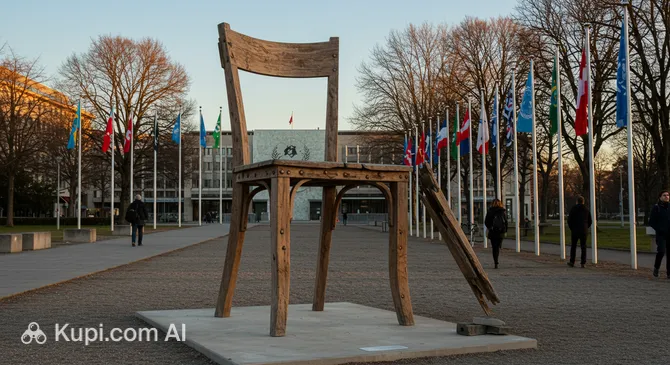
Broken Chair. Illustration.
Source: Kupi.com AI

Traveler photos:

The sculpture depicts a giant chair with one broken leg, giving it a special expressiveness and deep symbolism. The Broken Chair is not just an art object, but a powerful reminder of the victims of landmines and cluster munitions, as well as a call for their total ban. It symbolizes the fragility of human life and, at the same time, the resilience of the spirit, drawing global attention to important humanitarian issues and the need for peace.

The author of this iconic work is Swiss sculptor Daniel Berset. The sculpture was installed in 1997. Made of Douglas fir wood and weighing about 5.5 tons, it has become an integral part of Geneva's cityscape and one of its most photographed objects. The Broken Chair is an important symbol that provokes thought and inspires action in support of peace and humanity.

Contacts

To get the latest information about the Broken Chair sculpture, its history, and symbolism, it is recommended to visit the official website. While no direct phone number or email is provided for the monument itself, the website serves as the primary source of information.

How to contactContact
Address1202 Geneva, Switzerland

What to Do

Visitors to the Broken Chair can fully enjoy this impressive art object. First of all, it is worth viewing the sculpture from different angles to appreciate its scale and symbolism. This is a wonderful place to take memorable photos against the backdrop of one of Geneva's most recognizable symbols. Information plaques installed near the monument will help you gain a deeper understanding of the history and meaning of the Broken Chair as a call for peace and humanism.

Place des Nations, where the Broken Chair is located, is a popular place for walking in its own right. Often, this is where tour groups meeting for excursions around Geneva gather. The surrounding atmosphere invites leisurely contemplation and reflection.

Additionally, the space around the sculpture often serves as a venue for various public and cultural events. Temporary exhibitions, installations, and campaigns may take place here, attracting both tourists and locals. It is a great place to observe city life and feel its international spirit, especially given the proximity of iconic sites like the UN buildings and other international organizations.

Getting There

Getting to the famous Broken Chair sculpture in Geneva is quite simple, as it is located on the bustling Place des Nations, in the heart of the city's international quarter. This area is well-served by public transport. You can take tram No. 13 or 15, or buses No. 5, 8, 11, 22, 28, or F. They all stop at the station called "Nations," which is right next to the sculpture.

If you arrive in Geneva by train, the trip from the main Cornavin railway station to the Broken Chair takes very little time. By public transport, you will arrive in about 10 minutes. For those who enjoy walking, the route from the station to Place des Nations takes about 25 minutes, offering a chance to see a bit of the city along the way.

For those who prefer to travel by car, there are several paid parking lots near Place des Nations. However, keep in mind that Geneva is a busy city, and finding a free parking spot during peak hours can be quite difficult. Therefore, if possible, it is recommended to use the convenient public transport system.

Nearest city: Geneva

History & Facts

The history of the Broken Chair in Geneva began in August 1997, when this monumental sculpture was installed on the Place des Nations. It was initiated by the well-known humanitarian organization Handicap International. Originally, the Broken Chair was intended to be a temporary installation designed to draw attention to an important international issue. Its installation coincided with the signing of the Ottawa Treaty, which aimed to ban anti-personnel mines, and it was planned for the sculpture to remain in the square for only three months until the conclusion of this significant agreement.

However, fate had other plans. The Broken Chair made such a strong impression on the residents of Geneva and the international community that, due to numerous public and organizational requests, it was decided to keep the monument in its place permanently. Thus, the temporary symbol became one of the city's iconic and permanent landmarks, continuing to deliver its important message to the world. This decision highlighted the deep resonance the sculpture found in people's hearts and its enduring relevance.

The symbolism of the Broken Chair is multifaceted and profound. It serves as a powerful reminder of the suffering of those affected by landmines and other explosive remnants of war. The broken leg of the chair is not just a defect but a key detail representing both the vulnerability of human life and an incredible strength of spirit. Despite its "injury," the chair remains standing, symbolizing the resilience, courage, and dignity of people with disabilities, as well as an unwavering hope for a world without violence and suffering.

Time Needed

As a rule, visiting the Broken Chair sculpture in Geneva does not require much time. For most visitors, 15-30 minutes is enough to fully appreciate this impressive monument. This time is usually sufficient to walk around the Place des Nations where it is located, take some photos from different angles, and read the information about the sculpture displayed nearby.

The Broken Chair is a powerful symbol, and its main impact lies in its visual and conceptual perception. Therefore, a lengthy study is usually not required. However, if you wish to spend more time at Place des Nations, watch the surrounding life, or visit the nearby international organization buildings (from the outside), your stay here could certainly take longer. But for a direct encounter with the sculpture itself, half an hour will be quite enough.

Working Hours

The Broken Chair sculpture is an open-air monument, so it is available for viewing 24/7, year-round. You can visit this iconic Geneva landmark at any time that is convenient for you, without any restrictions on operating hours. Since the Broken Chair is located in a public space on Place des Nations, no advance booking or tickets are required to visit it.

Open 24 hours

Nearby

Visiting the Broken Chair certainly leaves a lasting impression. However, to truly feel the atmosphere of Geneva and make your trip even more fulfilling, it is worth looking at other interesting sites located nearby. Exploring the surroundings will allow you to dive deeper into the cultural and historical heritage of this unique city in Switzerland.

There are several notable sites near the Broken Chair that can complement your walk and broaden your understanding of Geneva's international significance. Here are a few that are easily accessible on foot:

NameDistance
Ariana Museum0.3 km
International Red Cross and Red Crescent Museum0.5 km
Conservatory and Botanical Garden of Geneva0.8 km
Museum of the History of Science of the City of Geneva1 km
Jardin de Penthes1.1 km
Palais Wilson1.3 km
Auberge de Savièse1.5 km

Have you reached the end of the page?

So the route has been studied inside and out