Support

Reformation Wall

About

The Reformation Wall is an impressive monument located in the heart of Geneva, within a picturesque university park. This monument, one of the most recognizable symbols of the city in Switzerland, is dedicated to the key figures and events of the Protestant Reformation. The wall was erected in the park of the University of Geneva, which was founded by John Calvin himself, adding a special historical weight to the site.
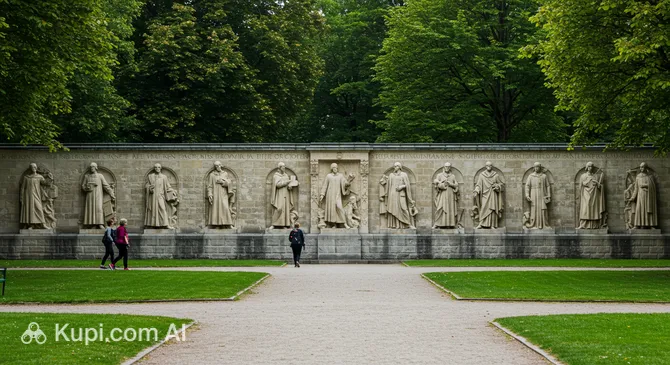
Reformation Wall. Illustration.
Source: Kupi.com AI

Traveler photos:

The monument consists of a massive stone wall about 100 meters long and 9 meters high. Majestic statues and skillfully crafted bas-reliefs rise along its length. The central place in the composition is occupied by four five-meter figures of outstanding Reformation leaders: John Calvin, William Farel, Theodore Beza, and John Knox. They are surrounded by statues of other important reformers, and bas-reliefs on the wall depict iconic scenes from the history of the movement.

Special attention is drawn to the Latin motto carved on the wall: "Post Tenebras Lux", which translates to "After darkness, light." This phrase became not only the slogan of the Reformation but also the motto of Geneva itself, emphasizing the pursuit of enlightenment and new ideas. A visit to the Reformation Wall allows for a deeper understanding of an important period in European history and an appreciation of the scale of the personalities who changed the course of events.

For tourists interested in history and monumental art, the Reformation Wall is a must-see on any Geneva itinerary. It is not just a monument, but a powerful reminder of the events that shaped modern Europe and a place to reflect on the influence of ideas on human history.

Contacts

Since the International Monument to the Reformation (Reformation Wall) is an open-air historical monument located in Bastions Park (Parc des Bastions) on the grounds of the University of Geneva, it does not have traditional contact details such as a phone number or email address. You can reach the monument by navigating toward the university campus in the center of Geneva.

For the most up-to-date information on access hours (if restricted), possible guided tours, or events related to the monument, we recommend consulting the official tourism portals of Geneva or visiting the tourist information centers directly in the city.

How to contactContact
AddressProm. des Bastions 1, 1204 Genève, Switzerland
Websitewww.ville-geneve.ch

What to Do

Visiting the Reformation Wall offers tourists several interesting activities and experiences. First and foremost, it is an opportunity to stroll through the picturesque university park where the monument is located. Here, you can take a leisurely walk along the wall, carefully examining its details and enjoying the peaceful atmosphere of this historical site.

The main object of study, of course, is the monumental sculptural composition itself. Visitors can get a close-up look at the majestic statues of the reformers whose ideas significantly influenced the course of European history. Particular attention should be paid to the central group of figures representing the most famous leaders of the Reformation. Also of interest are the numerous bas-reliefs skillfully carved into the wall, illustrating key episodes of the Protestant movement and important moments in European history.

The Reformation Wall is an excellent place for those interested in history, art, and culture. Here, you can not only take impressive photos against the backdrop of the grand monument but also immerse yourself deeper into the history of Geneva and all of Europe. Studying the details of the monument allows for a better understanding of the significance of the Reformation and its impact on the development of religion, education, and social thought.

Getting There

The Reformation Wall is conveniently located in the heart of Geneva, making it easily accessible for visitors. The monument is situated within the picturesque Bastions Park (Parc des Bastions), adjacent to the main building of the University of Geneva. Thanks to this central location, this iconic landmark in Switzerland can be reached in various ways.

One of the most convenient options is walking. If you arrive in Geneva by train, you can walk from the main Cornavin railway station to Bastions Park in about 15 minutes. The public transport system is also excellent: tram and bus stops are located near the park, just a few minutes' walk from the Reformation Wall.

For those who prefer more comfort or plan to travel extensively around the city, taxi services are always available. Additionally, you can rent a bicycle—this not only allows you to reach the park quickly but also provides a great opportunity to explore other attractions in central Geneva at your own pace. It is important to note that entry to Bastions Park is free, and the Reformation Wall itself is outdoors, so access is not limited by any specific opening hours.

Nearest city: Geneva

History & Facts

The idea of creating the Reformation Wall in Geneva arose in the early 20th century, when it was decided to commemorate the key figures and events of this significant period. In 1908, an international competition was announced for the best memorial design, attracting the attention of many architects. The winners of this creative contest were Swiss architects Alphonse Laverrière and Jean Taillens, whose vision formed the basis of this impressive monument.

The laying of the first stone of the future monument took place in 1909. This date was chosen intentionally and carried deep symbolic meaning: it coincided with the 400th anniversary of the birth of John Calvin, one of the main ideologists of the Reformation and founder of the University of Geneva, as well as the 350th anniversary of the university itself, which plays a vital role in the life of the city. Construction of the Reformation Wall continued for several years and was finally completed in 1917.

The famous sculptor Paul Landowski participated in creating the expressive sculptures that adorn the Reformation Wall. Interestingly, he later became world-famous as the author of the monumental Christ the Redeemer statue in Rio de Janeiro. The central figures of the composition are statues of four outstanding leaders: John Calvin, Theodore Beza, John Knox, and William Farel. These figures symbolize Geneva's significant contribution to the development and spread of Reformation ideas throughout Europe.

In addition to the four main figures, the Reformation Wall also includes sculptures and bas-reliefs depicting other important reformers and allies of the Genevan movement. Among them are historical figures such as the Hungarian prince Stephen Bocskai, the founder of the Rhode Island colony Roger Williams, the English political leader Oliver Cromwell, the Dutch Prince William I of Orange, the Elector of Brandenburg Frederick William I, and the French Admiral Gaspard II de Coligny. Each of these sculptures serves as a reminder of the multifaceted and broad geographical scope of the Reformation movement.

Time Needed

To see the Reformation Wall and enjoy a walk through the adjacent university park, most visitors usually need 30 to 60 minutes. This time is generally sufficient to get a general overview of the monument, its main elements, and its historical significance for Geneva and Switzerland.

During this interval, you can carefully examine the majestic statues of the central figures of the Reformation—John Calvin, William Farel, Theodore Beza, and John Knox—study the bas-reliefs depicting important historical scenes, and read the famous motto carved on the wall, "Post Tenebras Lux" ("After darkness, light"). You will also have the opportunity to take a leisurely walk through Bastions Park, where the wall is located, and take commemorative photos.

If you have a deep interest in the history of the Reformation or want to study each sculpture, inscription, and symbol embedded in the monument in more detail, your visit may take a bit longer, perhaps up to an hour and a half. However, for a general impression and understanding of the Reformation Wall's significance, even an hour will be quite enough to soak in the atmosphere of this iconic site.

Working Hours

Great news for everyone planning to visit the Reformation Wall in Geneva! This impressive monument is located in Bastions Park, which, according to available information, is open to visitors 24 hours a day. This means you can come here at any time convenient for you to view the monument.

Access to the Reformation Wall itself is free, and no entrance fee is charged. Pre-booking tickets or making an appointment for a visit is not required. The monument is available for viewing year-round, making it easy to include in your Geneva itinerary regardless of the season.

Open 24 hours

Nearby

Visiting the Reformation Wall is a wonderful opportunity to learn about an important part of Geneva's history, but you shouldn't stop there. Exploring the surrounding area will give you a more complete picture of the city, its atmosphere, and other significant sites located very nearby. A stroll through this part of Geneva can be a real discovery, as many interesting landmarks are literally just a few steps away.

Fortunately, central Geneva is quite compact, and getting to know other attractions won't take long, enriching your experience of visiting Switzerland. Below is a list of some interesting places located near the Reformation Wall.

NameDistance
Place du Bourg-de-Four0.2 km
St. Pierre Cathedral0.2 km
Claire Bar0.4 km
Museum of Art and History0.4 km
Le Pandore0.5 km
Patek Philippe Museum0.6 km
Museum of Far Eastern Art0.6 km

Have you reached the end of the page?

So the route has been studied inside and out