Support

Wat Phra That Doi Kham

About

Wat Phra That Doi Kham, known as the "Temple of the Golden Mountain," is an ancient and revered Buddhist temple located on a scenic hill near the city of Chiang Mai in Thailand. With a history spanning over 1,300 years, this temple is one of the oldest and most important spiritual centers in Northern Thailand. Its location provides visitors not only with spiritual peace but also with breathtaking panoramic views of the surrounding city and valleys.

The temple is a magnificent example of Lanna-style architecture. A major highlight is the main chedi (stupa), which according to tradition was built back in 687 AD. Legend has it that this stupa houses a sacred relic—a hair of the Buddha himself—making the temple a significant pilgrimage site. In addition to the ancient stupa, the complex is adorned with giant Buddha statues, including a 17-meter seated figure visible from a distance.
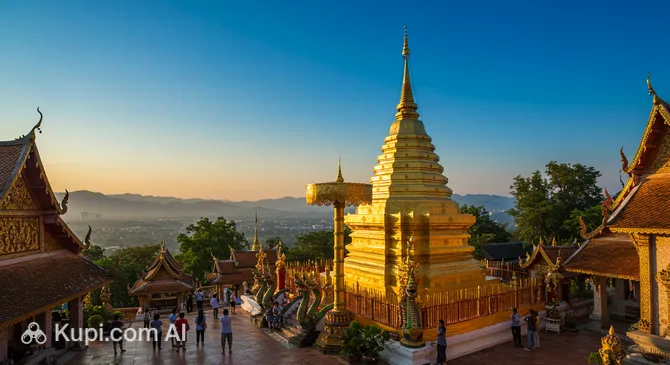
Wat Phra That Doi Kham. Illustration.
Source: Kupi.com AI

Traveler photos:

A visit to Wat Phra That Doi Kham is an opportunity to touch ancient history and enjoy exquisite temple architecture and a meditative atmosphere. The staircase leading to the temple is guarded by mythical Naga serpents, and the courtyard is decorated with numerous sculptures and images. This place is ideal for those seeking tranquility and wishing to gain a deeper understanding of the cultural and religious heritage of amazing Thailand.

Contacts

To plan your visit to Wat Phra That Doi Kham, you can use the information provided below. Although entry to the temple is free, operating hours may vary, so it is recommended to check for up-to-date information on official Chiang Mai tourism portals before your trip.

How to contactContact
AddressMoo 3, Mae Hia, Mueang Chiang Mai District, Chiang Mai 50100, Thailand
Websitewww.facebook.com

What to Do

A visit to Wat Phra That Doi Kham offers a wealth of experiences, combining spiritual practices, historical discovery, and nature appreciation. One of the first challenges for visitors is climbing the majestic staircase, guarded on both sides by mythical Naga serpents. This path has symbolic meaning, representing a spiritual ascent, and prepares guests for the peaceful atmosphere at the top. You can also see the famous 17-meter seated Buddha statue, which is visible even as you approach the mountain.

The central feature to explore is the ancient main chedi (stupa), which holds great historical value. After it collapsed in 1966 due to heavy rains, valuable Buddha images were discovered inside during its restoration, and these are now available for pilgrims and tourists to see. Locals and visitors come here to pray at the sacred Buddha image known as Luang Por Tanjai, making wishes for luck and success. As a sign of gratitude, it is customary to offer jasmine garlands.

Beyond the religious sites, one of the main reasons to visit the temple is to enjoy the stunning panoramic views. The spacious observation deck offers a breathtaking view of Chiang Mai, Royal Park Rajapruek, and the surrounding valleys. This spot has become incredibly popular for photography, especially on clear days. Here, you can not only take beautiful photos but also relax on the benches, soaking in the peace and beauty of northern Thailand's nature.

Getting There

Wat Phra That Doi Kham is located on a hilltop outside the central part of Chiang Mai, so the easiest and fastest way to reach it is by ground transport. You can easily order a taxi or use ride-hailing apps like Grab. The ride from the city center takes about 30-40 minutes, depending on traffic. Another popular option, especially for independent travelers, is renting a scooter or a car, which gives you the freedom to explore not only the temple but also other nearby attractions like Royal Park Rajapruek.

For those looking for a more budget-friendly and authentic experience, you might consider taking a songthaew — these are red pickup trucks that serve as public transport in Thailand. While there may not be a direct songthaew route to Wat Phra That Doi Kham like there is for the more famous Doi Suthep temple, you can negotiate an individual trip with the driver or take one to the nearest major point and catch a taxi from there. This method might require a bit more time and patience, but it allows for a deeper immersion into local life.

Whichever transport you choose, it will take you to the foot of the hill. To reach the temple itself, you'll need to climb a staircase that passes through a picturesque forest. This ascent is an integral part of the visit, setting a peaceful mood for what awaits at the top. It’s recommended to wear comfortable shoes and bring water, especially on a hot day.

Nearest city: Chiang Mai

History & Facts

The history of Wat Phra That Doi Kham dates back to ancient times, setting it apart from many other shrines in Chiang Mai. While most temples in this region were built in the 14th or 15th centuries, the oldest part of this complex—the main chedi (stupa)—dates back to 687 AD. This makes it one of the most ancient and historically significant sites not only in the city but in all of northern Thailand. The temple's founding is linked to the reign of the legendary Queen Jamadevi, the first ruler of the Hariphunchai Kingdom.

The temple is shrouded in an ancient legend closely tied to its foundation. According to lore, thousands of years ago, two cannibal giants lived on Doi Kham mountain. When the Buddha visited these lands, his wisdom convinced them to renounce cannibalism and embrace his teachings. As a sign of his blessing and to confirm their conversion, he left them a sacred relic—a strand of his hair. Legend has it that this hair was enshrined inside the main chedi, turning the temple into an important pilgrimage site.

The temple's modern history is also marked by a significant event. In 1966, following heavy rains, the ancient chedi collapsed. This event, though unfortunate, led to a remarkable discovery: as locals and authorities began clearing the debris, a series of valuable Buddha images were found inside the damaged stupa. Thanks to government funding, the chedi was fully restored, and the discovered relics are now on display for worshippers and visitors, adding even greater spiritual value to the temple.

Time Needed

For the average visitor, exploring Wat Phra That Doi Kham usually takes 1 to 2 hours. This time is generally sufficient to unhurriedly see the main highlights of the temple complex, feel its peaceful atmosphere, and enjoy the famous views. Many tour itineraries allocate about an hour for the visit, which is suitable for a quick yet meaningful introduction to the site.

The main part of the visit involves seeing several key features. You will need time to climb up to the temple via the staircase decorated with mythical Naga serpents or take the elevator. At the top, visitors explore the ancient chedi (stupa), which legend says houses a Buddha relic, and the impressive 17-meter seated Buddha statue, visible from afar. Many guests spend a significant part of their visit at the viewpoint, which offers breathtaking panoramic views of Chiang Mai and its surroundings, perfect for taking stunning photos.

The duration of your visit can vary depending on your personal interests. If you enjoy photography and history, or simply want to spend more time in meditation and quiet contemplation, it's worth allocating extra time. The temple is an active place of pilgrimage, and its serene setting is perfect for a leisurely stroll and a break from the city bustle. Therefore, when planning your trip, you can be flexible—allowing anywhere from one hour for a quick look to several hours for a deeper immersion into the spiritual and cultural atmosphere of this unique place.

Working Hours

Wat Phra That Doi Kham is open to visitors all year round. According to most sources, the opening hours are daily from 6:00 AM to 6:00 PM. This allows guests to visit the temple at sunrise to enjoy the morning coolness and tranquility, or later in the evening. Some sources list the closing time as 5:00 PM, so it's better to aim for an earlier time for an afternoon visit.

For a standard visit to the temple, no advance booking or registration is required. Entry to the grounds is generally free; however, as with many temples in Thailand, voluntary donations for the maintenance and development of the complex are welcome. While the operating hours are stable, it is always helpful to check for current information on official Chiang Mai tourism portals, especially if your trip coincides with public holidays.

6:00 – 18:00

Nearby

Visiting Wat Phra That Doi Kham is a wonderful opportunity to experience the spiritual heritage of northern Thailand, but you shouldn't stop at just one temple. The surroundings of Chiang Mai are rich with interesting places, and exploring nearby attractions will give you a more complete and vivid impression of the region's culture and nature. By combining a visit to the "Temple of the Golden Mountain" with a trip to other sites, you can make the most of your day.

Just a few kilometers from the temple, you'll find royal gardens, other ancient shrines, creative villages, and national parks. Each of these places has its own unique atmosphere and offers a new experience—from admiring exotic plants to discovering contemporary art and crafts. Below is a list of nearby attractions that are convenient to visit in a single trip.

NameDistance
Royal Park Rajapruek0.8 km
Baan Kang Wat3.7 km
Roi Dvarapala Ban Devalaya4.8 km
Doi Suthep–Pui National Park5.3 km
Family Entertainment Center Chiang Mai5.7 km
Ang Kaew Reservoir6.2 km
On The Rock at Nam Phrae6.9 km

Have you reached the end of the page?

So the route has been studied inside and out