Support

RAF Brize Norton

About the Airport

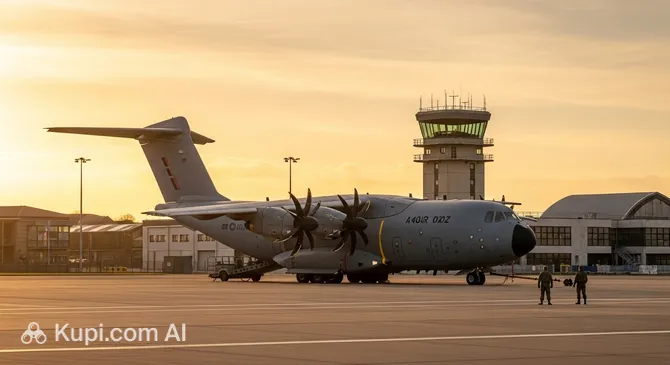
RAF Brize Norton. Source: Kupi.com Binoculars

RAF Brize Norton is not merely a transport hub; it is the beating heart of the Royal Air Force and the UK's largest air station. Unlike typical civilian airports, you will rarely see ordinary tourists here: the primary passengers are military personnel, civil servants, and residents of remote British territories. The airport serves as the key "aerial gateway" for unique flights to the Falkland Islands and Ascension Island, acting as a vital artery for connection with the outside world. The atmosphere here is steeped in strict discipline, and on the runway, instead of the usual low-cost liners, you are more likely to encounter powerful transport giants like the Voyager and Globemaster.

IATA Code BZZ
ICAO Code EGVN
City Brize Norton / Carterton (Oxfordshire)
Distance to Centre ~30 km to Oxford (approx. 120 km to London)
Status Military Airbase / Government Transport
Annual Passengers ~260,000 (predominantly military personnel)

Airport Features and Advantages:

Although Brize Norton is a military facility, its passenger infrastructure is organised at a high level to ensure comfort for people embarking on long service deployments.

Unique "Airbridge"
This is the only point in the UK from which regular transatlantic flights to the Falkland Islands (via Ascension Island) are operated. This route is used not only by the military but also by civilian specialists and local island residents. For many, this is the only opportunity to reach the "mainland".

"Gateway House" Terminal
The base's passenger terminal, known as Gateway House, offers amenities comparable to a good civilian airport. It features comfortable departure lounges, a 24-hour café, a duty-free shop (for eligible passenger categories), and even hotel rooms for those awaiting departure or transfer.

Service and Technology
To make the wait before long flights more pleasant (the flight to the Falklands takes about 18 hours), the terminal provides areas with Wi-Fi, gaming consoles, and shower rooms. Check-in and security controls here are stricter than at ordinary airports and require special permits or movement orders.

Contact Information

  • Official Website (Passenger Information): raf.mod.uk/raf-brize-norton — official flight rules, document requirements, and the "Airbridge" schedule are published here.
  • Helpline (Flight Information): +44 1993 895861 — a 24-hour automated line with departure and arrival data.
  • Airport Address: RAF Brize Norton, Carterton, Oxfordshire, OX18 3LX, United Kingdom.
  • Email: BZN-AMS-PassengerFeedback@mod.gov.uk — the official channel for feedback and passenger service enquiries.
  • Social Media: Operational news from the base often appears on the official pages on Facebook and X (Twitter).
  • Lost Luggage Information: To trace items, it is recommended to contact terminal staff directly upon arrival or use the passenger support contacts.
  • Passenger Support Service (Gateway House): +44 1993 897320 — terminal enquiry desk for clarifying airport operation details.

How to Get to the Airport

When planning a trip to Brize Norton, it is important to remember that this is an active military base, not a standard civilian airport. There are no express trains or metros leading directly to the terminal, and access to the territory is strictly controlled. The main landmark for travellers is the town of Carterton in Oxfordshire.

By Car and Taxi

A car is the most convenient way to reach the base, especially if you are travelling with heavy luggage. The airport is located near the A40 road connecting London and Wales. The journey from central Oxford will take about 30–40 minutes, and from London — approximately 1.5–2 hours depending on traffic.

For satellite navigation, use the postcode: OX18 3LX. Follow signs for RAF Brize Norton or Carterton. A taxi from Oxford will cost between 40 and 60 GBP. It is recommended to book a car in advance, as Uber may be unavailable in this rural area, and it is better to rely on local taxi services in Carterton or Witney.

Parking

Parking rules here differ from civilian airports. Private vehicles cannot be left directly at the entrance to the Gateway House terminal without a special pass. There is a dedicated car park for passengers (often requiring prior booking through military services), from where you can walk to the terminal or take a shuttle. Be sure to check the current parking rules in your travel documents before setting off.

Public Transport: Train + Bus

There is no direct rail link to the airport. The optimal route for those travelling on their own is:

  • Train: Get to Oxford railway station (trains run regularly from London Paddington; journey time is about 1 hour).
  • Bus: From Oxford station or the city centre (George Street), take a Stagecoach bus — routes S1 or S2. They run every 15–20 minutes.
  • Stop: You need to get off at the stop Carterton, RAF Main Gate. The bus journey will take about 50–60 minutes. A one-way ticket costs around 4–6 GBP.

Car Rental

There are no car rental desks (Hertz, Avis, etc.) within Brize Norton airport itself, as it is a secure facility. If you need a rental car, it is best to hire one in Oxford or at a major civilian airport upon arrival in the country, and then drive to the base.

Nearest Alternative Airports

Since Brize Norton serves specific flights, passengers often use neighbouring transport hubs for connections with standard commercial airlines. The nearest major international hub is Heathrow Airport, located 84 km away. The drive there takes just over an hour.

Also within a 90-minute drive are Birmingham International Airport and London Luton, which offer a wide choice of flights across Europe. For travel to the south-west, Bristol Airport is convenient. Quite nearby, just 16 km away, is another military base — Fairford (RAF Airbase), known for its air show, but it is not used for regular passenger transport.

Terminals and Map

Unlike huge civilian hubs with multiple terminals and confusing walkways, RAF Brize Norton (BZZ) is arranged compactly, logically, and strictly functionally. Everything here is subject to military discipline and the convenience of deploying personnel, so the terminal structure is intuitive even for those flying from here for the first time.

Number of Terminals and Their Purpose

The entire passenger flow of the airport is handled through a single terminal known as Gateway House. This modern building performs the functions of a classic air terminal, combining check-in, security, waiting, and arrival zones under one roof.

The absence of division into multiple terminals is a great advantage: it is impossible to mix up buildings or take the wrong internal train here. The terminal serves both the regular "Airbridge" to the Falkland Islands and Ascension Island, as well as flights to Cyprus (Akrotiri), Canada, the USA, and the Middle East.

Features of Gateway House Terminal

Despite its military status, the interior of Gateway House resembles a cosy regional civilian airport. Conditions for long waits have been created here, as the nature of military flights often implies delays or early passenger assembly.

  • Departure Zone (Airside): The spacious lounge is equipped with comfortable seats. There is a café serving hot meals and snacks, as well as a shop where you can buy essentials, books, and souvenirs before your flight.
  • Family Amenities: Since service personnel often travel with families, the terminal features play areas for children and mother-and-baby rooms.
  • Connectivity: Wi-Fi is available throughout the terminal, allowing you to stay connected until boarding the aircraft.

Check-in and Security Zones

Procedures at Brize Norton have their own strict timeframes and features that differ from civilian airlines.

Check-in Time: This is a critically important aspect. Check-in for flights here closes much earlier than at ordinary airports. The standard requirement is arrival at the terminal 3–4 hours before departure. For flights to the Falkland Islands, passengers are often asked to complete baggage check-in the evening before, so they only undergo personal security screening in the morning.

Security and Safety: Security control here is conducted with particular thoroughness. Queues may move slower than at Heathrow due to detailed checks of documents and hand luggage. Passengers are advised to prepare all military movement orders and passports in advance.

Navigation Scheme and Transfers

Navigation at Brize Norton is simplified to the maximum:

  • Entrance: After passing the base checkpoint (Main Gate) and parking, passengers enter the main hall of Gateway House on the ground floor. The check-in desks are located here.
  • Transfers: There are no shuttles or long walks between sectors. The path from the check-in desk to the security zone and boarding gate takes just a few minutes on foot.
  • Boarding: Unlike civilian airports with jet bridges, boarding (usually onto an Airbus Voyager A330 or A400M Atlas) is most often carried out via buses that transport passengers from the terminal to the aircraft stand, or on foot across the apron if the aircraft is parked nearby.

Arrival Zone

Upon arrival, passengers enter the border control zone. Since many flights arrive from outside the UK, a full UK Border Force post operates here. After passport control, you enter the baggage reclaim hall. It is compact, with several conveyor belts. The exit from the arrivals zone leads directly to the street or to the shuttle stop for the car park, eliminating long wanderings through the building after a tiring flight.

Airport History

The history of Brize Norton airbase is a chronicle of the transformation of an ordinary training ground into the UK's largest strategic transport hub. The official opening of the airfield took place on 13 August 1937. Initially, it was created as a training base for the Royal Air Force (No. 2 Flying Training School), where young pilots honed their skills in flying light aircraft.

World War II and Airborne Operations

With the outbreak of World War II, the airfield's role changed. By 1944, Brize Norton had become home to heavy glider units. It was from here, as part of the legendary Operation Overlord (the Normandy landings), that heavy Horsa transport gliders took off, delivering paratroopers to the continent. Later, crews from the base participated in the massive Operation Market Garden in the Netherlands, forever inscribing the airfield's name in military history.

The American Era and Massive Reconstruction

One of the most significant stages of development began in 1950, when the base was handed over for use by the United States Air Force (USAF). The Americans viewed Brize Norton as a key point for the Strategic Air Command in Europe.

It was during this period that the most extensive modernisation in the facility's history took place. American engineers extended the runway to modern dimensions and built new taxiways and accommodation blocks so the airfield could host heavy bombers like the B-36 Peacemaker and B-47 Stratojet. In the 1950s, the famous U-2 spy planes also flew secret missions from here.

Return of the RAF and Establishment as a Hub

In 1965, the base returned to UK control and was repurposed as the main centre for Transport Command. The first VC10 jet transport aircraft and heavy turboprop Belfast aircraft arrived here, marking the beginning of the era of global strategic airlifts.

In 1982, during the conflict in the Falkland Islands, Brize Norton played a decisive role as the logistics centre for Operation Corporate, ensuring a continuous flow of cargo and personnel to the South Atlantic. It was then that the concept of the "Airbridge", which operates to this day, was born.

Modernity: The "Future Brize" Programme

The airport's recent history is linked to the closure of the neighbouring Lyneham airbase in 2011–2012. The entire fleet of C-130 Hercules tactical transport aircraft was transferred to Brize Norton, requiring significant infrastructure expansion. Under the "Future Brize" modernisation programme, new hangars were built to service the giant C-17 Globemaster III and modern Voyager tankers.

Interesting Facts:

  • Connection with Concorde: Thanks to the long runway built by the Americans, in the 1970s Brize Norton was used as a testing centre for the supersonic airliner Concorde. Tests for aborted take-offs and British Airways crew conversion training were conducted here.
  • Largest Employer: Today, about 5,800 military personnel and 1,200 civilian specialists work at the base, making it the largest Royal Air Force station.
  • Gateway to Freedom: In 2021, the airport became a key point for receiving refugees and evacuated citizens during Operation Pitting (evacuation from Kabul), accepting thousands of people in a matter of days.

Services and Amenities

The infrastructure and service at Brize Norton (BZZ) differ significantly from typical civilian terminals. Since this is an active military base, you will not find galleries with luxury boutiques or dozens of restaurants offering world cuisines. However, the Gateway House terminal is designed to ensure maximum comfort for service personnel and their families before long flights. Everything here is subject to practicality, functionality, and cosiness.

Restaurants, Cafés, and Shops

The choice of dining outlets here is limited, but the quality of service is maintained at a decent level. The terminal features a main café, which operates according to the flight schedule. Here you can order a full hot breakfast, lunch, or dinner, which is especially relevant before an 18-hour flight to the Falklands. The menu usually includes traditional English dishes, sandwiches, pastries, as well as hot and cold drinks.

For shopping, there is a convenience store. It sells snacks, drinks, toiletries, books, magazines, and souvenirs with RAF branding. Please note that for passengers flying outside the UK (for example, to the Falkland Islands or Ascension Island), Tax Free shopping is available for certain goods, including perfumes, but the range is more modest than at Heathrow or Gatwick.

Lounges and Rest Areas

There are no commercial business lounges or Priority Pass lounges in the terminal. All passengers wait for departure in a single spacious Airside Lounge. It is equipped with comfortable soft seats and televisions. The atmosphere here is calmer and quieter than at ordinary airports.

A unique feature of Brize Norton is the availability of shower rooms. Passengers can freshen up before a flight, which is a huge plus considering the nature of long-haul military flights. It is better to have your own towels and toiletries, although sometimes they can be purchased on-site.

Wi-Fi and Charging Stations

Staying connected at Gateway House is easy. Free Wi-Fi is active throughout the terminal. Connection speeds are generally sufficient for checking emails, messaging apps, and light web browsing. The lounge area provides a sufficient number of power sockets (British standard, Type G) and USB ports for charging mobile devices and laptops.

Services for Passengers with Children

Military relocations often involve entire families, so the terminal is well adapted for little travellers:

  • Play Area: A special corner (Soft Play Area) with soft mats and toys is equipped for children, where they can burn off energy before the flight.
  • Mother and Baby Rooms: Separate rooms for changing and feeding infants are available, ensuring privacy and quiet.
  • Entertainment: For teenagers, gaming consoles are often available in the waiting hall to pass the time.

ATMs and Currency Exchange

ATMs dispensing British Pounds are installed in the terminal. Full-service currency exchange points with a wide selection (like Travelex) may not be present, or they work on a limited schedule. It is strongly recommended to arrange cash in the destination currency (e.g., Euros or US Dollars) in advance, before arriving at the base. Pounds Sterling are accepted in the Falkland Islands and Ascension Island, so exchange may not be necessary.

Medical Services and Accessibility

As a military facility, the base has excellent medical support; however, standard first aid services are available for passengers in the terminal. If you feel unwell, you should contact staff at the check-in desk or the duty officer.

The infrastructure is fully adapted for Passengers with Reduced Mobility (PRM). The terminal is equipped with ramps, wide doorways, and specialised toilets. If you require assistance boarding the aircraft (ambulift or escort), this must be indicated in advance when processing flight documents (via military departments or the booking service).

Hotels and Accommodation

One of the main features of the Gateway House terminal is the presence of its own hotel block right in the building. These are transit rooms (Bunk rooms or family rooms) provided to passengers during long connections or flight delays. Places are limited and allocated on a priority basis.

If there are no places in the terminal or you require more comfortable accommodation before arriving at the base, the nearest hotels are in the town of Carterton (just a 5-10 minute taxi ride away):

  • The Vines — a cosy hotel and restaurant in the centre of Carterton.
  • Cotswold Gateway Hotel — a popular option at the entrance to the town.
  • In the neighbouring town of Witney (15-20 minutes away), the choice of hotels is even wider, including chain options like Premier Inn.

Business Services

There are no specialised conference rooms or business centres for passengers in the terminal. The airport is oriented towards transit, not business meetings. If you need to print documents (for example, a boarding pass or movement order), you can ask for help at the information desk, but it is better to have all papers ready in advance.
Where to Eat

Dining options at RAF Brize Norton (BZZ) fully reflect its status as a military facility: you will not find exquisite fine dining restaurants or food court giants here. The catering system is organised on the principle of "filling, quality, and affordable" to provide energy for passengers embarking on very long flights (such as the 18-hour flight to the Falklands).

Main Establishments in Gateway House Terminal

Since the airport serves passengers through a single terminal, you won't have to search for cafés on different floors. All food outlets are concentrated compactly.

  • Airside Café: This is the main place where passengers spend time after passing security. The establishment operates as a buffet or self-service canteen. The café's schedule is flexible and strictly tied to the flight schedule: it opens a few hours before departure and closes after the last passenger has boarded. If a flight is delayed, the café continues to operate.
  • Coffee Shop and Bar: Inside the waiting area, there is also a bar counter where you can order freshly brewed coffee, tea, soft drinks, and light alcoholic beverages (beer, wine). Please note: alcohol consumption is strictly monitored as passengers are on the territory of a military facility.
  • Vending Machines: If the café is closed or you simply want a snack, vending machines with chocolate bars, crisps, and fizzy drinks are installed in the waiting halls (both in the public and "sterile" zones).

Menu and Signature Dishes

The cuisine at Brize Norton is simple but home-style. The focus here is on traditional British dishes that help provide a sense of comfort before a long journey.

What to Try:

  • Full English Breakfast: If your flight departs in the morning, this is the best choice for a substantial meal. Fried eggs, bacon, sausages, beans, and toast — a classic that is prepared very decently here.
  • Hot Dishes of the Day: At lunchtime, 2–3 hot options are usually offered: meat stew, curry with rice (very popular in the British forces), pasta, or traditional pies with mashed potatoes.
  • Fresh Pastries: Sausage rolls and Cornish pasties are excellent options for a quick snack.

Dietary Catering

Given the diversity of personnel and passengers, the terminal kitchen tries to accommodate basic dietary needs, although the selection may be narrower than at civilian airports.

  • Vegetarian and Vegan: There is always at least one vegetarian hot dish option on the menu (often a vegetable curry or pasta). Meat-free sandwiches and fruit salads are also available.
  • Halal and Gluten-Free Food: The availability of such dishes varies. Packaged sandwiches and snacks often have labelling regarding ingredients. If you require strict adherence to a diet (for example, Halal or coeliac disease), it is recommended to bring food with you, as guaranteeing the availability of specialised hot dishes on a specific flight is difficult.

Price Range

One of the pleasant bonuses of flying through a military base is that prices here are significantly lower than at commercial airports like Heathrow or Gatwick. Pricing is not calculated to make excess profit from tourists.

  • Average Bill: A full hot lunch with a drink will cost approximately 6–10 GBP.
  • Snack: A sandwich and coffee will cost around 4–5 GBP.

Recommendations for Passengers

For a quick snack, choose ready-made sandwiches and pastries from the display — this will save time if boarding is about to start. For a full lunch, it is better to arrive at the departure zone in advance: the hot food counter works efficiently, but queues may form before long-haul flights.

And don't forget to bring an empty water bottle: there are drinking water fountains in the terminal where you can fill it for free after passing security.

Travel Tips

Travelling through the Brize Norton military airbase is a unique experience that differs significantly from flying through a standard civilian airport. There is less hustle and commerce here, but more rules and discipline. To ensure your trip goes smoothly, we have prepared a number of practical tips considering the specifics of this transport hub.

Arrival and Check-in: The "Four Hour" Rule

The main difference between Brize Norton and Heathrow or Gatwick is the strictness of timeframes. While you might rush to a counter 45 minutes before departure at a civilian airport, lateness is unacceptable here.

  • Arrival Time: The standard recommendation is to be at the Gateway House terminal 3–4 hours before departure. This is because passenger lists are approved in advance, and baggage processing procedures take longer.
  • Early Baggage Drop: For "Airbridge" flights (to the Falkland Islands), a rule often applies allowing baggage drop the evening before. This helps avoid morning queues. If you have this opportunity, be sure to use it.
  • Documents: Keep your passport and boarding documents (or Movement Order) in an easily accessible place. They will be checked several times: at the base entrance (Main Gate), upon entering the terminal, and at the check-in desk.

Security and Baggage Features

Security control here is conducted thoroughly, but the staff are usually very polite and professional.

  • Hand Luggage: Rules for carrying liquids (containers up to 100ml in a transparent bag) comply with general UK standards. However, pay attention to electronic devices: all power banks and spare lithium batteries must be in hand luggage only; placing them in checked baggage is strictly prohibited.
  • Entertainment: Voyager aircraft (modified Airbus A330s) often lack the built-in seatback entertainment systems customary for long-haul civilian flights. Be sure to download films, music, and books to your tablets or smartphones in advance. And don't forget headphones and charging cables.
  • "Strategic Reserve": Considering the flight duration (about 18–20 hours to the Falklands with refuelling), take an inflatable neck pillow, a sleep mask, and warm socks into the cabin. Temperatures in military aircraft can fluctuate.

Customs and Biosecurity (Important!)

If you are flying to the Falkland Islands or Ascension Island, you will encounter the strictest bio-control.

  • Clean Shoes: This is not just advice, but a requirement. Before the flight, thoroughly wash the soles of your shoes to remove soil, seeds, and dirt. The islands have a very fragile ecosystem, and the introduction of alien organisms is unacceptable. Your shoes may be checked.
  • Food: Do not take fresh fruit, vegetables, meat, or dairy products with you to import into your destination. They will be confiscated.

Seat Selection

The seat selection procedure here is more democratic but more chaotic than on commercial airlines.

  • Seating: Seats are often allocated at check-in. If you are travelling as a family or group, approach the check-in desk together and as early as possible to sit together.
  • Comfort: The seat pitch in Voyager aircraft is usually greater than in budget airline economy class, making the long flight quite tolerable. The most spacious seats are by the emergency exits, but these are more often allocated to senior military personnel.

Tips on Economy and Logistics

Transfers and Taxis: Since Uber and Bolt work inconsistently in this rural area, and public transport does not enter the base territory, book a local taxi in advance. A taxi ride from Oxford station is the most reliable, albeit not the cheapest, option. If you want to save money, take the S1/S2 bus to Carterton, and from there take a taxi to the Main Gate — this will cost pennies compared to a transfer from Oxford.

Connections: If you have a transfer to a civilian flight at Heathrow or Gatwick, allow a minimum of 4–5 hours between arriving at Brize Norton and your next departure. The journey to Heathrow can take from 1.5 hours, plus time for border control and baggage collection at the base.

What to Do in Case of Flight Delay?

Military aviation is subject to schedule changes due to "operational reasons" or technical issues more often than civilian aviation.

  • Be Patient: Information may be given in small doses. Listen to announcements over the public address system.
  • Accommodation: If the delay is long (overnight or more), contact Gateway House staff. If spaces are available, you may be allocated a room in the terminal free of charge. Otherwise, you will have to find a hotel in Carterton.
  • Food: During long delays, passengers are often issued vouchers for food in the terminal café or provided with rations.

Reached the end of the page?

That means the route is fully explored