The Natural History Museum in London is not just an exhibition space, but one of the world's leading scientific centers and a true gem of the UK capital. Located in the South Kensington district, it attracts millions of visitors not only with its unique collections but also with its majestic architecture. The museum building, designed in the Romanesque-Byzantine style, is a work of art in itself and serves as a magnificent frame for the treasures of nature housed within.
The museum's collection includes more than 70 million specimens covering fields such as botany, zoology, mineralogy, and paleontology. Here you can see dinosaur skeletons, including the famous T-Rex, rare minerals and gemstones, and the massive blue whale skeleton suspended from the ceiling of the central hall. The exhibits tell the story of life on Earth, from its origin to the present day, making complex and scientific topics accessible and engaging for visitors of all ages.
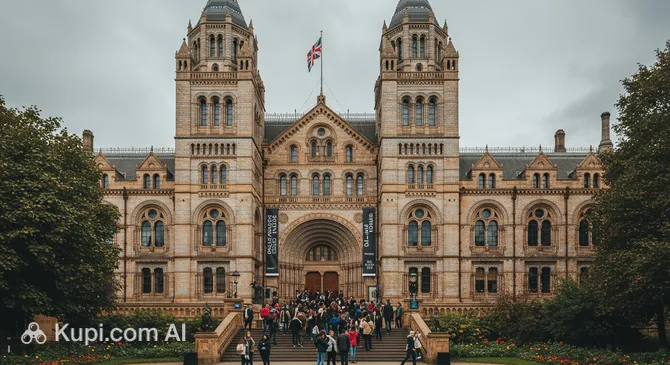
Traveler photos:
In addition to its exhibition activities, the Natural History Museum is a major research institute. In its laboratories and scientific departments, scientists from around the world study global issues, from biodiversity conservation to the study of space bodies. The museum regularly hosts lectures, workshops, and educational programs, turning science into an exciting adventure and inspiring a new generation of researchers.