Support

Royal Albert Hall

About

The Royal Albert Hall of Arts and Sciences, more commonly known simply as the Albert Hall, is one of the most prestigious and recognizable concert venues in the world. Located in London, this hall is a true symbol of the United Kingdom's cultural life and a must-visit for art lovers. Originally conceived by Prince Albert as a center for the promotion of arts and sciences, it was opened in 1871 and has since hosted the most iconic events.
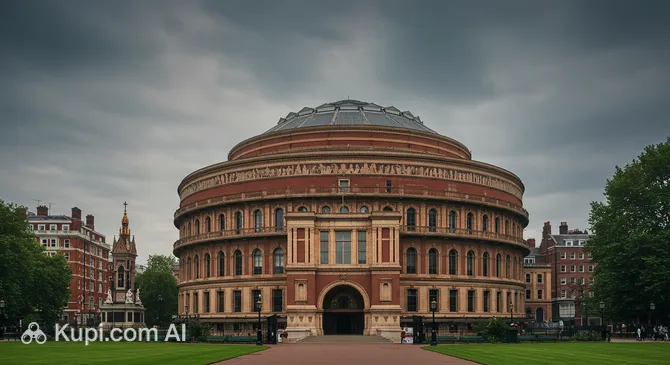
Royal Albert Hall. Illustration.
Source: Kupi.com AI

Traveler photos:

The building, constructed in the Victorian style, is instantly recognizable due to its unique oval shape, inspired by ancient amphitheaters, and its impressive mosaic frieze encircling the facade. The Albert Hall is located in the prestigious South Kensington district and is the center of the cultural quarter known as "Albertopolis," which was envisioned as far back as the 19th century as a hub for science and the arts.

Thanks to its rich history and magnificent acoustics, the Albert Hall hosts a wide variety of events: from classical music concerts and ballet productions to performances by world rock stars and film premieres. Over 350 events take place here annually, including the famous BBC Proms summer festival of classical music. A visit to this legendary place allows you not only to enjoy a world-class event but also to touch living history.

Contacts

To check the current event schedule, book tickets, or ask other questions, you can contact the representatives of the Albert Hall. All necessary information is also available on the concert hall's official website.

How to contactContact
AddressKensington Gore, South Kensington, London SW7 2AP, UK
Phone number+44 20 7589 8212
Websitewww.royalalberthall.com

What to Do

A visit to the Albert Hall is an opportunity to immerse yourself in a world of high art and world-class cultural events. The main reason thousands of spectators come here is, of course, the performances. The hall's repertoire is strikingly diverse: here you can hear both classical music and performances by modern rock and pop artists. The schedule regularly features opera and ballet productions, theatrical performances, award ceremonies, and even sporting events. The famous BBC Proms summer concerts, which have become the venue's hallmark, hold a special place.

Even if you don't have a concert ticket, the Albert Hall offers a unique opportunity to get closer to its history and architecture. Special guided tours are held for visitors, during which you can peek backstage and learn interesting facts about the building's construction and the legendary artists who have performed on its stage. As part of the tour, you can see the luxurious interiors, including the Royal Box, and enjoy an impressive view of the hall from the upper tiers. Sometimes, if you're lucky, you might even catch artists rehearsing before the evening show.

Besides spiritual nourishment, the Albert Hall offers more earthly pleasures. There are several restaurants and bars in the building where you can enjoy your time before or after a performance. Visiting this legendary hall is not just going to a concert; it is a complete experience that combines enjoying art, touching history, and comfortable relaxation in one of the most beautiful concert halls in the world.

Getting There

Getting to the Albert Hall is quite simple, as it is located in the central London district of South Kensington. The most convenient way is to use the London Underground. The nearest stations, South Kensington and Gloucester Road, are served by the Piccadilly, Circle, and District lines. From both stations, you can reach the concert hall on foot in 10–15 minutes, enjoying the views of one of the city's most prestigious areas.

If you prefer surface transport, there are numerous bus routes at your service that stop in the immediate vicinity of the Albert Hall. A ride on a famous double-decker bus is not only a convenient way to get there but also an opportunity to see the iconic streets of the United Kingdom's capital.

For those traveling by car, there are paid parking lots near the concert hall. However, it's worth remembering that the number of spaces is limited, and they can be quickly taken on days with popular events. Therefore, it is recommended to consider using public transport or a taxi to avoid difficulties finding a parking spot.

Nearest city: London

History & Facts

The history of the Albert Hall is inextricably linked to the royal family and is a tribute to Prince Albert, the husband of Queen Victoria. The idea of creating a grand hall to promote the arts and sciences belonged to the Prince himself, inspired by the success of the 1851 Great Exhibition. Unfortunately, he did not live to see his dream realized, and after his death, Queen Victoria took the project under her personal control. On May 20, 1867, she personally laid the foundation stone of the future hall, which was officially opened in 1871 and named after her late husband.

Captain Francis Fowke was responsible for the architectural design of the hall, drawing inspiration from ancient Roman amphitheaters, which determined the building's unique oval shape. Funding for the construction was made possible by the profits from that same Great Exhibition held in neighboring Hyde Park. The Albert Hall became the centerpiece of an entire cultural quarter, unofficially known as "Albertopolis," which also included the Royal College of Music and the Royal Geographical Society.

About six million dark red bricks and 80,000 decorative terracotta tiles were used to construct this monumental structure, forming its recognizable facade. Initially, the hall was intended as a multifunctional space, meant not only for concerts but also for conferences and meetings. This versatility influenced its architecture and acoustic characteristics, which were subjects of debate and refinement for decades until they were perfected with the help of the famous acoustic diffusers ("mushrooms") suspended from the ceiling.

Time Needed

When planning a visit to the Albert Hall, it is recommended to set aside 2 to 4 hours. This time is usually enough for a full exploration of the hall, which can include both a tour of the historic building and attending a performance. Depending on your interests and chosen program, the duration of the visit may vary.

If your goal is only a guided tour, it will take approximately one hour. During this time, you can appreciate the magnificent interiors, learn about the hall's history, and see it from unusual angles. For complete immersion in the atmosphere of this iconic place, it is worth combining the tour with attending a concert or show, which will increase the total stay to 3-4 hours.

For those who want to treat themselves to an unforgettable evening in London, a visit to the Albert Hall can be topped off with dinner at one of the local restaurants. In this case, the visit can easily take up most of the evening. Thus, when planning your trip, decide whether you want a quick look at the attraction or to enjoy it to the fullest.

Working Hours

The Albert Hall's opening hours depend directly on the event and guided tour schedule, so it does not have standard visiting hours for tourists without a ticket. Generally, the ticket offices and the building itself are open to visitors daily from morning until late evening on performance days. However, to avoid any misunderstandings, it is highly recommended to check the exact start times for concerts, tours, and restaurant operations on the concert hall's official website in advance.

The Albert Hall welcomes guests year-round, offering a rich program of events. Given the venue's immense popularity, tickets for concerts by world stars, festivals like the BBC Proms, and even for tours of the hall should be booked well in advance. Guided tours, which allow you to go backstage, are usually held during the day and last about an hour. This is a great opportunity to learn about the history and architecture of this legendary place, even if you are not planning to attend an evening show.

9:00 – 21:00

Nearby

Visiting the Albert Hall is just one part of the cultural experience that the South Kensington district has to offer. A stroll through its surroundings will allow you to discover many world-famous museums, picturesque parks, and architectural masterpieces. This part of London is not called "Albertopolis" for nothing — it is a true museum town, conceived back in the 19th century as a center for science and art.

Exploring nearby attractions will enrich your impressions and make your trip even more fulfilling. The convenient location allows you to easily move between sites on foot while enjoying the elegant Victorian architecture. Below is a list of interesting places located in the immediate vicinity of the Albert Hall.

NameDistance
Natural History Museum0.5 km
Victoria and Albert Museum0.6 km
The Wallace Collection2.5 km
Trafalgar Square3.5 km
The National Gallery3.5 km
Covent Garden4 km
The British Museum4 km

Have you reached the end of the page?

So the route has been studied inside and out