Support

Imperial War Museum

About

The Imperial War Museum is one of the world's leading museums, located in London and dedicated to the study of military conflicts involving Great Britain and the Commonwealth from the First World War to the present day. It is not just an exhibition of military hardware, but a profound exploration of the impact of wars on society and the lives of ordinary people. The main museum building occupies the former Bethlem Royal Hospital, which adds a historical atmosphere to the site.
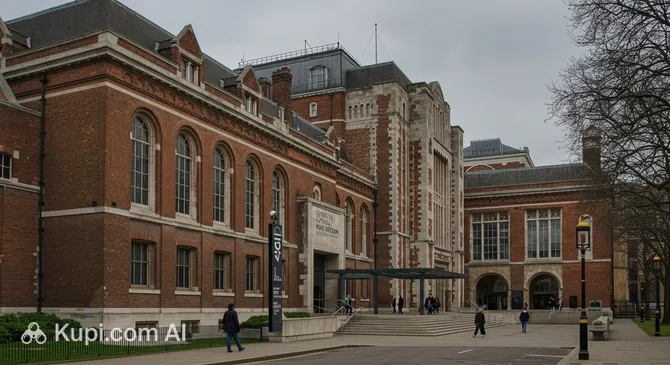
Imperial War Museum. Illustration.
Source: Kupi.com AI

Traveler photos:

The museum's collection is impressive in its scale, boasting over 10 million items. Visitors can see legendary examples of military technology, such as the Spitfire fighter, the T-34 tank, and even the German V-2 ballistic missile. In addition to large-scale exhibits, it features thousands of personal items, letters, photographs, and works of art that tell the touching and dramatic stories of people who lived through war. Special attention is given to immersive displays, such as the reconstruction of a First World War front-line trench.

The museum is part of a network of five branches located in different parts of England, highlighting its national importance. The London museum's exhibitions cover six floors and include galleries dedicated to the First and Second World Wars, as well as a Holocaust exhibition. This place offers visitors not only a chance to learn about history but also to truly reflect on the price of peace and the human sacrifices behind every conflict.

Contacts

To plan your visit to the Imperial War Museum, it is recommended to use its official website. There, you can find the most accurate and up-to-date information regarding opening hours, ticket prices for special exhibitions, and current events. This is the best way to get all the necessary details for your trip.

How to contactContact
AddressLambeth Rd, London SE1 6HZ, UK
Phone number+44 20 7416 5000
Websitewww.iwm.org.uk

What to Do

Visitors to the Imperial War Museum can expect a fascinating journey through six floors filled with unique exhibits and captivating installations. Here, you don't just see history; you can literally feel it. One of the most impressive parts of the exhibition is the First World War trench reconstruction, where sound effects and sets transport you to the harsh conditions of front-line life. Equally impressive is the section dedicated to the Blitz in London during the Second World War, which helps visitors understand what the city's residents endured.

The museum's spacious halls house an impressive collection of military technology. You can get a close-up look at the legendary Supermarine Spitfire fighter, the Harrier jump jet, a Soviet T-34 tank, and German "wonder weapons" like the V-1 flying bomb and the V-2 ballistic missile. These massive exhibits, located in the central hall, clearly demonstrate the technological progress and destructive power of 20th-century weaponry.

Beyond the large machinery, the museum offers a glimpse into the personal stories of people whose lives were touched by war. Such exhibits include Winston Churchill's pocket pistol, a rifle belonging to T.E. Lawrence (Lawrence of Arabia), and the Union Jack flag lowered during the surrender of British forces in Singapore in 1942. Dedicated galleries cover the First and Second World Wars, as well as the Holocaust, where deep human tragedies are revealed through personal belongings and documents.

For those who want to dive deeper into maritime history, a visit to the cruiser HMS Belfast is highly recommended. This museum ship, launched in 1938, is a branch of the Imperial War Museum and is moored on the River Thames. Guests can explore nine decks of a real warship that participated in the Normandy landings and learn about the lives of Royal Navy sailors during the Second World War.

Getting There

Getting to the Imperial War Museum is quite easy, as it is located in central London, on Lambeth Road. Thanks to its convenient location, it is easily accessible by public transport, which is the most recommended way to get around the city. The museum is within walking distance of several tube stations and bus stops.

The most convenient way to reach the museum is by using the London Underground. The nearest station, Lambeth North (Bakerloo line), is just a 7–8 minute walk away. Slightly further, about a 10–15 minute walk, are major transport hubs — Waterloo and Elephant & Castle stations, which are served by several tube lines and rail routes. Additionally, numerous buses stop near the museum, including routes 3, 59, 159, 344, and 360, making it reachable from almost anywhere in the city.

If you prefer to travel by car, you can use taxis or ride-sharing services. However, please note that the museum is located within the London Congestion Charge zone, and there is no on-site parking for visitors. A limited number of parking spaces are available only for disabled visitors and must be booked in advance. It is also important to remember that other branches of the museum, such as the cruiser HMS Belfast, require a separate trip as it is moored on the Thames in a different area.

Nearest city: London

History & Facts

The history of the Imperial War Museum began during the First World War. The idea for its creation was proposed in 1917 by Sir Alfred Mond, who sent a letter to the then Prime Minister David Lloyd George. He suggested founding a National War Museum to commemorate the war and the nation's contribution. The War Cabinet quickly approved this initiative, and on March 5, 1917, the decision to establish the museum was made, marking an important step in preserving the national memory of the events.

From the very beginning, the museum's creators set an ambitious goal. A special committee was formed to collect materials illustrating Great Britain's war efforts. Particular attention was paid not only to weapons and equipment but also to personal stories, so that the exhibits would not become "dead relics." The committee collected items related to the army, navy, munitions production, and even women's work on the home front. The first exhibition of the new museum opened to the public with great success in 1920 at the famous Crystal Palace.

The museum found its permanent home in 1936, moving into the monumental building of the former Bethlem Royal Hospital on Lambeth Road. Initially, its displays were entirely dedicated to the events of the First World War. However, over time, the museum's mission expanded. Today, it covers all military conflicts involving Great Britain and the Commonwealth, including the Second World War and later events, offering visitors a deep understanding of 20th and 21st-century history.

Time Needed

When planning a visit to the Imperial War Museum, it is worth setting aside at least 3–4 hours. This time is necessary to explore the extensive main collection without rushing, which spans six floors and includes a vast array of exhibits. This duration will allow you not only to see key items but also to delve into the details of the interactive exhibitions and personal stories presented in the museum.

If your time is limited, you can focus on specific galleries, such as those dedicated to the First or Second World Wars, and fit your visit into 1.5–2 hours. However, for full immersion, especially if you are interested in military history, it is recommended to plan at least half a day. This will allow you to study the sections that interest you in detail and truly feel the atmosphere of this unique place.

It is important to remember that the Imperial War Museum in London is just one part of an entire network of museums. If your plans include visiting its other branches, such as the famous cruiser HMS Belfast moored on the Thames, you will need additional time. A trip to the museum ship and its exploration is a separate full-scale excursion that should be planned in advance.

Working Hours

The Imperial War Museum in London is pleased to welcome visitors year-round. The museum is open daily from 10:00 to 18:00. It is only closed during the Christmas holidays from December 24 to 26. This makes it easy to include in any travel itinerary.

Admission to the main collection is free, and advance booking is usually not required. However, some temporary or special exhibitions may require a paid ticket. To avoid crowds during peak hours and stay informed about current events, it is recommended to check the museum's official website before your visit. There, you can find details about holiday hours and special events.

10:00 – 18:00

Nearby

Visiting the Imperial War Museum leaves a profound impression, but a trip to London would be incomplete without a stroll through its surroundings. The area where the museum is located is rich in interesting spots — from bustling markets to world-famous landmarks. A short walk will allow you to see different facets of this amazing city.

Exploring nearby locations will not only help you relax after diving into the museum's serious themes but also provide a more holistic view of the cultural and historical diversity of Great Britain's capital. Many iconic sites are just a couple of kilometers away, making them easily accessible for a walk or a short public transport ride.

NameDistance
Mercato Metropolitano0.8 km
Salsa Temple1.7 km
Trafalgar Square1.9 km
Covent Garden2 km
The National Gallery2 km
Sky Garden2.4 km
Tower of London2.6 km

Have you reached the end of the page?

So the route has been studied inside and out