Support

Tower of London

About

The Tower of London is more than just an attraction; it is the true historical heart of London, located on the north bank of the Thames. This majestic fortress, founded nearly a thousand years ago, is one of the main symbols of Great Britain and a UNESCO World Heritage site. Throughout its long history, the Tower has served as a royal residence, a formidable prison, an arsenal, a mint, and even a zoo.

The architectural ensemble of the Tower is a complex of several buildings surrounded by two powerful fortress walls with towers. The central and oldest structure is the White Tower, built during the reign of William the Conqueror. It stands 30 meters high with walls nearly 4 meters thick, making it a prime example of Norman military architecture. The entire complex is a unique monument reflecting almost all the architectural styles that have existed in England.
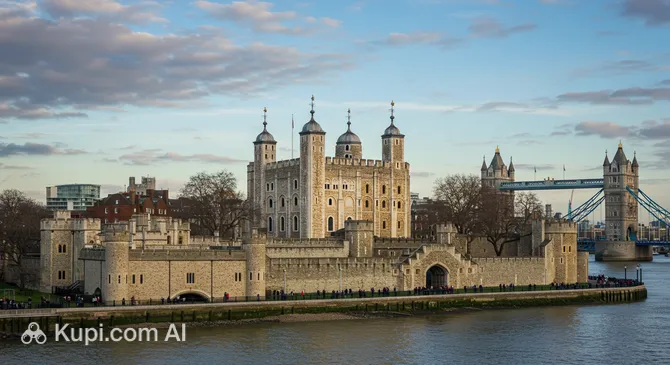
Tower of London. Illustration.
Source: Kupi.com AI

Traveler photos:

Today, the Tower of London functions as a museum, attracting millions of tourists from all over the world. One of the main reasons for its popularity is the opportunity to see the famous Crown Jewels—a collection of royal regalia kept in the Jewel House. Despite its status as a museum, the Tower officially remains one of the royal residences, and there are still private apartments on its grounds where staff live.

Contacts

To plan your visit to the Tower of London, you can use the contact information provided below. The most up-to-date information regarding opening hours, ticket prices, and special events is always available on the official website of the attraction.

We recommend checking the website before your visit, as opening hours may vary depending on the season and official ceremonies.

How to contactContact
AddressLondon EC3N 4AB, UK
Phone number+44 333 320 6000
Websitewww.hrp.org.uk

What to Do

A visit to the Tower of London is an immersion into centuries of history, where every corner holds its secrets and treasures. One of the main magnets for tourists is the Jewel House, where the famous royal regalia are displayed. Here you can get a close look at the crowns, sceptres, and orbs still used in ceremonial events, and admire the brilliance of one of the world's largest diamonds—the "Cullinan I". Equally interesting is the oldest part of the fortress, the White Tower, which houses the extensive collection of the Royal Armouries with its displays of ancient weapons and knightly armor.

The Tower's legendary inhabitants, the black ravens, cared for by a special keeper known as the Ravenmaster, give the site a special atmosphere. According to an old legend, if the ravens leave the fortress, the monarchy will fall, so the birds are carefully looked after. In contrast to these living symbols, a memorial plaque at the site of the former scaffold serves as a silent reminder of the darker chapters in the Tower's history.

For those who want to imagine how monarchs lived, the Medieval Palace is open to visitors. This complex includes several towers, including St Thomas's Tower and the Wakefield Tower. The latter is the second largest in the Tower and was built in the 13th century as the living quarters of King Henry III, allowing visitors to glimpse the daily life of medieval rulers.

Getting There

Getting to the Tower of London is quite simple thanks to its central location and London's excellent transport network. The most convenient and popular way is to use the London Underground. The nearest station, Tower Hill, is just a five-minute walk from the fortress entrance. District (green) and Circle (yellow) line trains arrive at this station, making it easily accessible from most parts of the city. Fenchurch Street and London Bridge railway stations are also nearby, within walking distance of the Tower.

In addition to the tube, you can reach the attraction on London's famous double-decker buses. Several routes, including 15, 42, 78, and 100, stop in the immediate vicinity of the Tower. A bus ride is not only convenient but also allows you to enjoy the city views along the way. For those who prefer comfort, taxis are always an option, though keep in mind this is a more expensive way to travel.

If you want to combine your journey with a scenic trip, river transport along the Thames is an excellent choice. River buses and high-speed catamarans regularly arrive at Tower Pier from Westminster, Charing Cross, and Greenwich piers. This allows you not only to reach your destination but also to see many of Great Britain's iconic landmarks from the water, turning an ordinary trip into a fascinating mini-excursion.

Nearest city: London

History & Facts

The history of the Tower of London is inextricably linked to one of the key events in English history—the Norman Conquest. Its foundation is attributed to William the Conqueror, who after 1066 began building defensive castles to intimidate the conquered Anglo-Saxons. The construction of the fortress, which spanned several decades, began as a wooden fort that was later replaced by a monumental stone structure.

The central and most recognizable building of the complex is the White Tower, erected in 1078. It is a classic example of Norman military architecture. The tower received its name later, when one of the kings ordered its walls to be whitewashed. Over time, the fortress expanded significantly, with new walls and towers built around it to create the complex concentric defense system that forms the Tower's modern appearance.

Throughout its more than 900-year history, the Tower of London has played many roles, witnessing the country's most significant events. It has served not only as an impregnable fortress and a luxurious royal palace but also as a grim prison for high-ranking captives. Furthermore, at various times, its walls have housed an arsenal, the Royal Mint, a menagerie, and, of course, the vault that still holds the famous Crown Jewels.

Time Needed

When planning a visit to the Tower of London, it is recommended to set aside at least 3–4 hours for your tour. This time is usually enough to see the main sights without rushing. During this period, you will have time to see the famous Crown Jewels, explore the ancient White Tower, and walk along the fortress walls. For a deeper and more leisurely immersion into the site's centuries-old history, you should plan for half a day to a full day.

The duration of your visit may depend on several factors. For example, the very popular Yeoman Warder tours (Beefeater tours) last about an hour and are a wonderful introduction to the history of the fortress. You should also take into account that the queue for the Crown Jewels, especially during peak tourist season, can take from 30 minutes to an hour. The remaining time can be spent exploring the numerous towers on your own, such as the Bloody Tower, viewing exhibits on prisoners and torture, and enjoying the views of the Thames.

Working Hours

The Tower of London is open to visitors year-round, but its opening hours change depending on the season. Generally, during the summer period (roughly March to October), the fortress is open longer, usually from 9:00 to 17:30 Tuesday through Saturday, and from 10:00 to 17:30 on Sundays and Mondays. In the winter months (November to February), hours are reduced, and the last admission is earlier. As the schedule may change due to public holidays or special events, we strongly recommend checking the official website for up-to-date information before planning your visit.

To avoid long queues, especially during peak tourist season, and to guarantee your entry, we highly recommend purchasing tickets online in advance. This will not only save you time but also allow you to choose a convenient time slot for your visit. The Tower of London is one of the city's most popular attractions, and pre-booking will make your visit more comfortable and predictable.

DayOpening hours
Monday10:00 – 17:30
Tuesday9:00 – 17:30
Wednesday9:00 – 17:30
Thursday9:00 – 17:30
Friday9:00 – 17:30
Saturday9:00 – 17:30
Sunday10:00 – 17:30

Nearby

A visit to the Tower of London is a wonderful opportunity to explore one of London's most historically rich areas. The fortress is an ideal starting point for a walking tour, as many other famous city landmarks are within walking distance. Exploring the surrounding area will allow you to immerse yourself deeper in the capital's atmosphere, where medieval walls sit alongside modern architecture.

To help you plan your onward route, we have prepared a list of interesting places located near the Tower. From iconic bridges and markets to panoramic viewpoints—all of this is right nearby and will help you form a complete impression of this multi-faceted district.

NameDistance
Sky Garden0.6 km
Coco Grill & Lounge0.6 km
Bermondsey Beach1.3 km
Mercato Metropolitano1.9 km
Imperial War Museum2.6 km
Salsa Temple2.7 km
Covent Garden3.3 km

Have you reached the end of the page?

So the route has been studied inside and out