Support

The British Museum

About

The British Museum is the main historical and archaeological museum of Great Britain and one of the largest in the world, located in the heart of London, in the Bloomsbury district. In popularity, it is second only to the Louvre in Paris, attracting millions of visitors annually. It is not just a repository of antiquities, but a true encyclopedia of human civilization, where every exhibit tells a unique story.

The museum's collection is striking in its scale and diversity, covering two million years of human history. Galleries with a total length of about 4 kilometers invite you on a journey through all corners of the globe — from Ancient Egypt and Classical Greece to Mesopotamia and prehistoric Europe. Here you can see world-famous artifacts, masterpieces of painting and sculpture, as well as unique books and manuscripts.
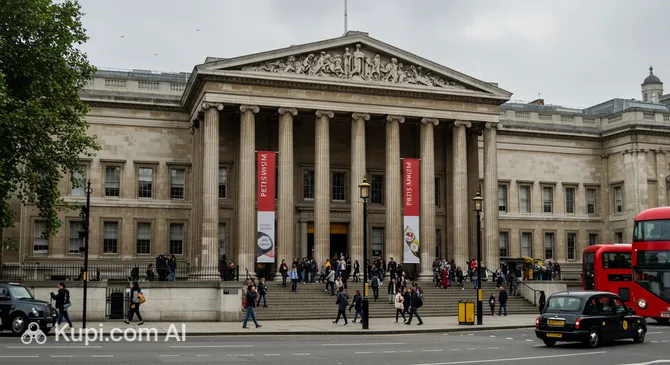
The British Museum. Illustration.
Source: Kupi.com AI

Traveler photos:

The basis of this grandiose exposition was formed largely thanks to objects brought into the country after numerous expeditions. A visit to the British Museum is a unique opportunity to see the treasures of different cultures and eras in one place, from the Rosetta Stone to the Parthenon sculptures and Assyrian winged bulls. It is a place where history comes alive, offering every visitor the chance to make their own discovery.

Contacts

There are several ways to contact British Museum representatives or check current information about exhibitions and opening hours. The most reliable source is the official website, where all news and changes are posted. Contact phone numbers and a physical address for visits are also available to visitors.

How to contactContact
AddressGreat Russell St, London WC1B 3DG, UK
Phone number+44 20 7323 8000
Websitewww.britishmuseum.org

What to Do

A visit to the British Museum is a true journey around the world through the ages. Here you can start your day in Ancient Egypt, studying sarcophagi and hieroglyphs, then move to the Classical world to admire masterpieces of Greek and Roman sculpture, and continue by exploring the cultures of Asia, Africa, and the Americas. The museum offers a unique opportunity to immerse yourself in human history in one place, exploring exhibits from numerous galleries dedicated to different civilizations.

Among the treasures not to be missed is the legendary Rosetta Stone, the key to deciphering Egyptian hieroglyphs. No less interesting are the monumental Parthenon Sculptures, which transport you to the atmosphere of Ancient Greece, and the impressive collection of Assyrian reliefs with hunting scenes. Particularly popular with visitors are the halls dedicated to Ancient Egypt, where you can see real mummies and richly decorated sarcophagi.

To make your visit as rich as possible, you can take one of the themed tours or use an audio guide that will tell you about the history of the most significant exhibits. The museum regularly hosts temporary exhibitions dedicated to various cultures and historical periods, as well as lectures and educational programs. In between exploring the galleries, it is worth taking a break in the famous Great Court with its impressive glass roof — it is a piece of architectural art in itself and the perfect place to plan your further route through this vast storehouse of knowledge.

Getting There

Getting to the British Museum is easy, as it is located in the very heart of London, in the academic and cultural district of Bloomsbury. Thanks to its convenient location, the main treasury of Great Britain can be easily reached by public transport, taxi, or even on foot from many central points of the city.

The fastest and most convenient way is to use the London Underground (The Tube). Several stations are within walking distance of the museum. The closest ones are Tottenham Court Road (Central and Northern lines), Holborn (Central and Piccadilly lines), Russell Square (Piccadilly line), and Goodge Street (Northern line). A walk from any of these stations to the museum will take no more than 5-10 minutes and allows you to soak up the atmosphere of one of the capital's most elegant neighborhoods.

If you prefer surface transport to see more of the city along the way, many bus routes are at your service. Famous red double-decker buses stop near the British Museum. Look for numbers 1, 8, 19, 25, 38, 55, 98, and 242 — all of them pass in the immediate vicinity of the entrance. The stop is aptly named "British Museum".

For those who value comfort, taxi services or ride-hailing apps are always available. A trip from most hotels in the center will be fast and not too expensive. Additionally, if you are staying nearby — for example, in the Covent Garden, Soho, or Fitzrovia areas — a walk to the museum will be a pleasant addition to your sightseeing program and will take only 15-20 minutes.

Nearest city: London

History & Facts

The history of the British Museum began with a unique gesture of generosity. Its founding in 1753 was made possible thanks to the will of Sir Hans Sloane, a renowned physician and naturalist. According to his wishes, his vast collection was offered to the British nation for a symbolic sum of £20,000, which was only a small fraction of its actual value. Interestingly, had it been refused, the collection could have gone to the academies of St. Petersburg, Paris, Berlin, or Madrid, but the Parliament of Great Britain gratefully accepted the offer.

To realize this ambitious project, a national lottery was organized, which raised an impressive sum of £100,000 for that time. About £10,000 of these funds were spent on purchasing a new home for the collections — Montagu House in London. At the time, it was considered one of the most beautiful private buildings in the capital and became the first home for the future museum. This step laid the foundation for housing the ever-growing treasures in a place worthy of their grandeur.

In addition to Hans Sloane's collection, the museum's initial fund was supplemented by two other significant collections: the collection of Earl Robert Harley and the priceless library of the antiquarian Robert Cotton. The latter subsequently formed the basis of the British Library. The museum officially opened to the public on January 15, 1759. From that day, its journey began toward becoming one of the most important cultural and historical institutions in the world, a status it proudly holds today.

Time Needed

When planning a visit to the British Museum, it is important to understand its colossal size — it is practically impossible to see the entire collection in one go. For a first introduction to the museum's main treasures, most visitors will need from 3 to 4 hours. This time is usually enough to see world-famous exhibits without rushing, such as the Rosetta Stone, the Parthenon sculptures, Assyrian reliefs, and the famous collection of Egyptian mummies. Such a visit will provide a general but vivid impression of the museum's grandeur.

If your time is limited, you can plan a shorter route. Even in 1-2 hours, you can manage to see several key masterpieces if you prioritize in advance. The museum itself offers routes designed for different durations, including a one-hour express tour. On the other hand, true history and art lovers who wish to delve deeper into specific eras or cultures should set aside a full day for the visit. This will allow you not only to see the main halls but also to look into less popular but no less interesting galleries.

Regardless of how much time you have at your disposal, the key to a successful visit is planning. Before heading to the museum, it is recommended to study its map on the official website and make a list of the halls or exhibits you want to see first. This will help you use your time efficiently and get the most out of your encounter with the treasures of world history and culture.

Working Hours

Entry to the British Museum to view its permanent collection is free, making its treasures accessible to everyone. However, it is highly recommended to book a free timed entry ticket in advance on the official website. This simple step is especially important during peak tourist periods and on weekends, as it allows you to avoid long queues and guarantees your entry.

It is important to remember that the museum's opening schedule can change, especially on public holidays, and some galleries may be temporarily closed. To ensure your visit goes smoothly and without surprises, the most accurate and up-to-date information regarding opening hours, available exhibitions, and booking requirements should always be checked on the museum's official website: www.britishmuseum.org.

DayOpening hours
Monday10:00 – 17:00
Tuesday10:00 – 17:00
Wednesday10:00 – 17:00
Thursday10:00 – 17:00
Friday10:00 – 20:30
Saturday10:00 – 17:00
Sunday10:00 – 17:00

Nearby

A visit to the British Museum is just the starting point for exploring the landmark-rich Bloomsbury district and its surroundings. A stroll through the adjacent streets will allow you to dive deeper into the atmosphere of London, discovering both world-famous sites and cozy corners hidden from the main tourist routes. By combining a visit to the museum with an exploration of the neighboring quarters, you can form a more complete and vivid impression of the cultural heart of the British capital.

Just a few minutes' walk from the museum lie vibrant theater and shopping districts, famous squares, and other outstanding galleries. This proximity makes the British Museum an ideal starting point for a walking tour of the city center. Below is a list of interesting nearby places that will help diversify your day.

NameDistance
Covent Garden0.9 km
The National Gallery1.2 km
Trafalgar Square1.3 km
Salsa Temple1.3 km
The Wallace Collection1.8 km
Imperial War Museum2.9 km
Mercato Metropolitano3 km

Have you reached the end of the page?

So the route has been studied inside and out