Support

Victoria and Albert Museum

About

The Victoria and Albert Museum (V&A) is not just a museum, but a true treasure house of world art and design, located in the heart of London. Founded in 1852, it became Europe's first and the world's largest museum of decorative and applied arts. Today, it is one of the most iconic cultural landmarks in the United Kingdom, attracting beauty lovers from all over the world.

The museum's collection is striking in its scale and diversity. Spanning a vast area of over 50,000 square meters, it houses 145 galleries featuring over two million objects. Here, you can embark on a journey through 5,000 years of human history and creativity, exploring unique items from Europe, Asia, North America, and North Africa. The exhibitions cover a wide range of fields: from sculpture and painting to fashion, jewelry, furniture, and photography.

The Victoria and Albert Museum consistently ranks among the most visited art museums in the world, confirming its exceptional significance. Visitors can expect both world-famous masterpieces and fascinating everyday objects from different eras, allowing them to trace the evolution of design and craftsmanship. It is a place where history comes alive in shapes, colors, and textures, inspiring and expanding horizons.
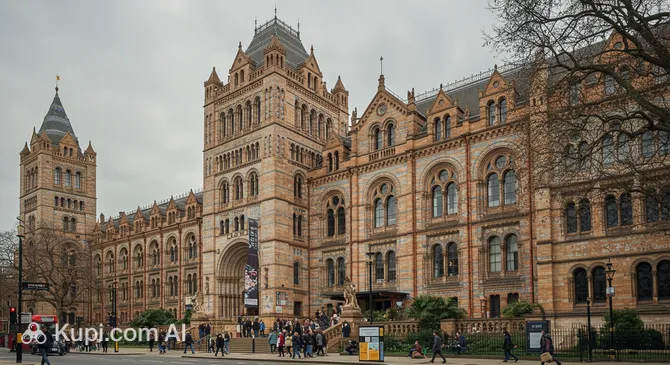
Victoria and Albert Museum. Illustration.
Source: Kupi.com AI

Traveler photos:

Contacts

To plan your visit to the Victoria and Albert Museum, you can use the following contact information. We recommend checking the official museum website for current schedules and information about temporary exhibitions before your visit.

How to contactContact
AddressCromwell Rd, London SW7 2RL, UK
Phone number+44 20 7942 2000
Websitewww.vam.ac.uk

What to Do

A visit to the Victoria and Albert Museum is a true immersion into the world of art and design, where you can discover collections representing different cultures and eras. Guests can explore the famous British Galleries, which house masterpieces of painting and sculpture, as well as browse galleries dedicated to European art. Here, you can trace the evolution of styles by studying antique costumes, exquisite furniture, and architectural models.

Special attention should be paid to the themed exhibitions. Fashion enthusiasts will be delighted by the section featuring Renaissance wardrobes and legendary creations by designers such as Dior, Chanel, and Cardin. Equally impressive is the magnificent ceramics collection and the exhibition dedicated to the art of the East. In addition, the museum features a unique collection of models of the world's most famous architectural structures, allowing you to appreciate their grandeur in miniature.

The museum also houses true rarities. In the book section, you can see unique exhibits such as Leonardo da Vinci's notebooks and the record of Joan of Arc's trial. For lovers of the performing arts, there is a theatre and performance department, and for those interested in design, there are displays dedicated to residential interiors. After a busy walk through the galleries, you can relax in the historic café—the first of its kind in the world to be opened within a museum—which makes your visit even more comfortable and memorable.

Getting There

The Victoria and Albert Museum is ideally located in the prestigious South Kensington district of London, at Cromwell Road, SW7 2RL. This area is known as the "museum quarter," and getting here is easy thanks to the city's well-developed transport network. No matter where you are staying, you can easily plan your route to this treasure house of art.

The most convenient and popular way to reach the museum is by using the London Underground (Tube). The nearest station, South Kensington, is just a few minutes' walk away. It is served by three lines: District, Circle, and Piccadilly, providing direct links to many parts of the city. A convenient pedestrian tunnel leads from the station to the museum, allowing you to reach the entrance without going outside—which is especially nice in rainy weather.

In addition to the Tube, you can reach the Victoria and Albert Museum by numerous buses. Routes running along Cromwell Road and Exhibition Road stop in the immediate vicinity of the entrance. This is a great option for those who want to enjoy the sights of London along the way. Of course, you can always use taxi services or ride-hailing apps for maximum comfort, especially if you are traveling with family or are short on time.

Nearest city: London

History & Facts

The history of the Victoria and Albert Museum is inextricably linked to one of the most magnificent events of the 19th century—the Great Exhibition of 1851, held in London. The grand success of this event inspired Prince Albert, husband of Queen Victoria, to create a national museum dedicated to art and design. Thus, in 1852, the "Museum of Manufactures" was founded, with the primary goal of serving as a source of inspiration for students, designers, and craftsmen by showcasing the best examples of decorative and applied arts.

Before finding its permanent home, the museum changed its location and name several times. Initially, its collection was housed in Marlborough House, then briefly moved to Somerset House. Soon after, the institution was relocated to an area then considered the outskirts of the city and was named the South Kensington Museum. The official opening ceremony at the new location took place in June 1857, attended by Queen Victoria herself.

The institution received its current, world-famous name—the Victoria and Albert Museum—much later. In 1899, Queen Victoria laid the foundation stone of the new main building. This event served as the occasion for the official renaming in honor of herself and her late husband, Prince Albert, whose contribution to the creation and development of this cultural treasure was truly invaluable. Thus, the museum became a lasting monument to their educational efforts and an important part of the cultural heritage of the United Kingdom.

Time Needed

When planning a visit to the Victoria and Albert Museum, it is important to take its colossal size into account. For a general introduction to the collection and to see the most famous exhibits, it is recommended to set aside at least 3–4 hours. This time will be enough to get a first impression and see the key masterpieces; however, it is worth understanding that even in a few hours, it is impossible to cover the full wealth of the museum.

The museum covers a vast area of over 50,000 square meters, with its displays spread across 140 galleries. Therefore, if you want to truly immerse yourself in the world of art and design, study the collections that interest you in detail, or simply enjoy the atmosphere at a leisurely pace, it is better to plan for half a day or even a full day. Many visitors return here repeatedly, as each visit to this treasure house reveals something new and wonderful.

Working Hours

The Victoria and Albert Museum is open to visitors year-round, making it accessible for a visit in any season. Standard opening hours are daily from 10:00 to 17:45. Special attention should be paid to Fridays, when the museum stays open longer—from 09:00 to 23:00, providing a wonderful opportunity for evening cultural leisure. It is important to remember that the museum is closed only a few days a year: December 24, 25, and 26.

Entry to the Victoria and Albert Museum to view the permanent collection is free, and advance booking is generally not required. However, the museum regularly hosts temporary exhibitions, for which tickets may be charged and may require advance purchase. Therefore, before your visit, it is highly recommended to check the museum's official website to confirm current schedules, prices, and conditions for visiting special exhibitions.

DayOpening hours
Monday10:00 – 17:45
Tuesday10:00 – 17:45
Wednesday10:00 – 17:45
Thursday10:00 – 17:45
Friday10:00 – 22:00
Saturday10:00 – 17:45
Sunday10:00 – 17:45

Nearby

A visit to the Victoria and Albert Museum is just the beginning of your acquaintance with the cultural wealth of London. The South Kensington area, where the museum is located, is often called the "museum town," and for good reason. A stroll through its elegant streets will allow you to discover other world-famous attractions, many of which are just a few steps away.

Exploring the surrounding area will enrich your experience and help you gain a fuller understanding of the cultural life of the British capital. By setting aside time to visit neighboring museums, parks, and concert halls, you will turn your visit into a rewarding cultural journey full of discoveries and vivid emotions.

NameDistance
Natural History Museum0.3 km
Royal Albert Hall0.6 km
The Wallace Collection2.6 km
Trafalgar Square3.3 km
The National Gallery3.3 km
Covent Garden3.8 km
The British Museum4 km

Have you reached the end of the page?

So the route has been studied inside and out