Support

Chincoteague

About

Chincoteague is a serene island town located on the Eastern Shore of Virginia, renowned for its pristine natural beauty and laid-back coastal atmosphere. Famous worldwide for its wild ponies and maritime heritage, this destination offers a perfect escape from the hustle and bustle of daily life. As a unique gem within the United States, it stands out as a community where nature and local culture are deeply intertwined.
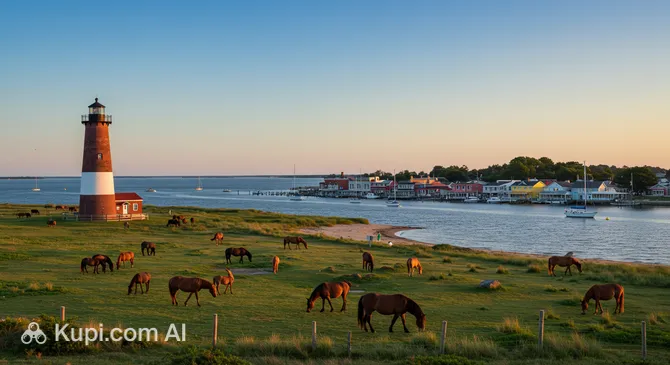
Chincoteague. Source: Kupi.Binoculars

Despite its modest size, with a population of approximately 2,800 residents, the town boasts a rich cultural tapestry rooted in the waters that surround it. The local economy and lifestyle have long been defined by fishing and oystering traditions. Visitors can delve into the fascinating history of Chincoteague to learn how this quiet fishing village evolved into a beloved vacation spot. The climate is typically mild and influenced by the Atlantic Ocean, creating a pleasant environment for outdoor exploration during most seasons.

The town serves as the primary gateway to the Chincoteague National Wildlife Refuge and the adjacent Assateague Island National Seashore. Nature enthusiasts flock here to catch a glimpse of the legendary Chincoteague Ponies, which roam wild in the marshes and were immortalized in the classic children's book "Misty of Chincoteague." Beyond the horses, the area is a haven for birdwatchers, beach lovers, and foodies eager to taste the famous local salt oysters.

Whether you are hoping to witness the annual Pony Swim, explore the scenic trails, or simply relax by the water, Chincoteague provides a welcoming and authentic experience. It is an ideal destination for families and travelers seeking to reconnect with nature and enjoy the charm of a classic American coastal town.
Weather Overview

The climate in Chincoteague is characterized by distinct seasons, offering a variety of conditions for travelers throughout the year. Summer is the peak season for warmth, particularly in July, which sees average temperatures of around 26.6°C and highs reaching up to 29.4°C. However, visitors planning a summer beach trip should be prepared for frequent precipitation, as July and August are typically the wettest months with approximately 14 rainy days each.

As the seasons change, the island cools down significantly. Winters are generally chilly, with January being the coldest month, averaging 4.9°C and seeing lows around 1.7°C. For those preferring milder conditions, spring and autumn are ideal; May and October offer comfortable average temperatures of 18.7°C and 17.8°C respectively. To ensure you pack appropriately for your specific travel dates, it is helpful to check the current weather in Chincoteague. Overall, expect warm summers with occasional rain and cool winters perfect for cozy coastal getaways.

Interesting Facts

Beyond the scenic views and famous ponies, Chincoteague holds a collection of fascinating stories that surprise many visitors. This island community is defined by unique traditions and legends that go far deeper than a typical seaside resort.

Chincoteague National Wildlife Refuge. Source: Kupi.Binoculars
  • The wild ponies that made the town famous are actually owned and managed by the Chincoteague Volunteer Fire Company. The local firefighters, known as "Saltwater Cowboys," have organized the annual pony swim and auction since 1925 to raise funds for fire equipment and veterinary care for the herd.

  • While they are globally known as Chincoteague Ponies, the wild herds actually live on the adjacent Assateague Island within the Chincoteague National Wildlife Refuge. The town itself is the gateway to their habitat, meaning the ponies you see in town are usually domesticated or there for special events.

  • A captivating local legend suggests that the ponies are descendants of survivors from a Spanish galleon, the La Galga, which shipwrecked nearby in 1750. Although some historians believe early settlers released livestock to avoid fencing taxes, recent DNA studies have shown that the ponies do share genetic markers with Spanish horses, keeping the mystery alive.

  • The town became a household name thanks to Marguerite Henry's classic book, Misty of Chincoteague. The real-life pony, Misty, was not just a character but a beloved local resident who once spent a hurricane inside the kitchen of the Beebe family home to stay safe.

How to Get There

Reaching this charming island destination typically involves a combination of air or rail travel followed by a scenic drive. Since there are no direct flights or trains onto the island itself, visitors usually arrive at hubs in nearby cities and rent a car or take a shuttle for the final leg of the journey. For a detailed breakdown of routes and tips, you can read more about how to get to Chincoteague.

The city of Chincoteague does not have its own airport, but the closest option for air travelers is the Wicomico Regional Airport (IATA: SBY) in the city of Salisbury, located approximately 46.6 km away. It is a smaller regional hub, offering a quicker connection to the island, with a travel time by taxi or rental car estimated at around 50 to 60 minutes. For those seeking more flight options, the Norfolk International Airport (IATA: ORF) in Norfolk is a significant alternative. Situated about 136 km from Chincoteague, it serves a larger volume of passengers. The ground transfer from Norfolk generally takes approximately 2 hours.

International travelers often opt for the Baltimore/Washington International Thurgood Marshall Airport (IATA: BWI) in Linthicum. Although it is further away—roughly 178 km from Chincoteague—it is a major international gateway with extensive connections. The drive from BWI to the island usually takes about 3 hours.

For clarity, here is a summary of the main airports:

Airport Name City Passenger Traffic Km from City
Baltimore/Washington International Thurgood Marshall Airport Linthicum Large 177.9
Ronald Reagan National Airport Washington, D.C. Large 177.2
Richmond International Airport Highland Springs Medium 177.6
Norfolk International Airport Norfolk Medium 136.2
Wicomico Regional Airport Salisbury Small 46.6

If you prefer traveling by train, please note that the city of Chincoteague does not have a railway station. The most significant rail hub in the wider region is Washington Union Station (IATA: ZWU) in The White House area of Washington, D.C., located about 178 km away. As a major station with high passenger traffic, it connects to many parts of the country. From there, you can rent a car, with the total travel time to the island taking approximately 3 hours. Another option closer to the coast is the Newport News Railway Station (IATA: ZWW) in Newport News, roughly 139 km away. The journey from this station takes about 2 hours by car.

Below is a list of the nearest railway stations:

Station City Passenger Traffic Km to Center
Washington Union Station The White House High 177.9
New Carrollton Station New Carrollton High 172.3
Baltimore Railway Station Linthicum Medium 180.8
Newport News Railway Station Newport News Small 138.7
Williamsburg Railway Station Newport News Small 138.2

Main Attractions

Chincoteague is a destination where nature takes center stage, but the town also offers delightful culinary experiences and deep-rooted history. Visitors can spend their days exploring untouched barrier islands, climbing historic lighthouses, and savoring fresh local flavors in this charming coastal community.

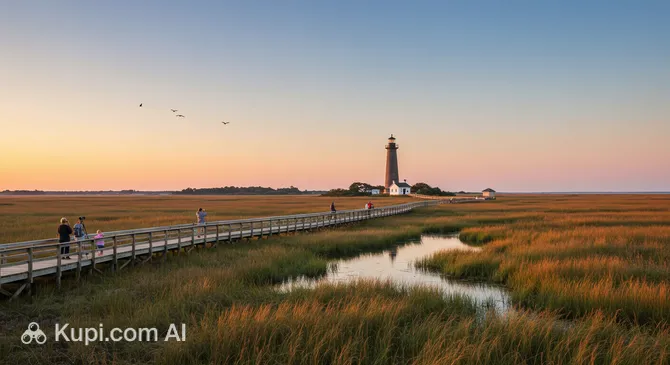
The crown jewel of the area is undoubtedly the Chincoteague National Wildlife Refuge. Located primarily on the Virginia side of Assateague Island, this vast protected area is a paradise for outdoor enthusiasts. It is most famous for its herds of wild ponies, but it also serves as a critical habitat for migratory birds, making it a premier spot for birdwatching. Visitors can explore miles of hiking and biking trails, relax on the pristine wild beaches, or join a boat tour to see the diverse wildlife from the water.

While exploring the refuge, you cannot miss the historic Assateague Lighthouse. Standing tall with its distinctive red and white stripes, this active aid to navigation has guided mariners since the 19th century. Tourists can climb to the top of the lighthouse for a breathtaking panoramic view of the barrier islands, the inlet, and the town of Chincoteague itself. It provides a unique perspective on the delicate ecosystem that defines the region.

For those interested in local heritage, the Museum of Chincoteague Island is a fascinating stop. It chronicles the people, culture, and history of the island, from its oyster industry roots to the famous story of the Misty of Chincoteague pony. The exhibits offer insight into the resilience of the community and its enduring connection to the sea.

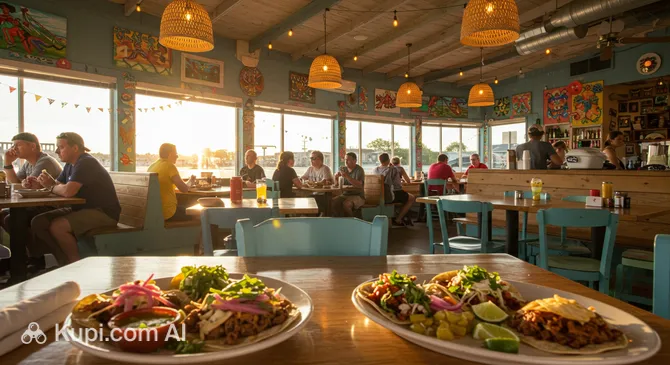
Pico Taqueria. Source: Kupi.Binoculars

After a day of adventure, the town’s culinary scene offers its own set of attractions. Pico Taqueria has become a local favorite for its creative approach to casual dining. Known for using fresh, locally sourced ingredients, this spot turns tacos into a gourmet experience, perfect for a relaxing meal after the beach. Another popular stop is AmaRin Coffee, a welcoming café that serves as an ideal starting point for the day. Whether you need a morning energy boost or a midday treat, it is a beloved gathering place for both locals and visitors.

Local Cuisine

The culinary identity of Chincoteague is inextricably linked to the surrounding waters. For generations, the local culture has revolved around the harvest of the tides, making this island a premier destination for seafood lovers. The dining scene here is authentic and unpretentious, focusing on freshness and flavor rather than elaborate presentation. Visitors can expect a "tide-to-table" experience where the catch of the day often arrives at the kitchen just hours after being pulled from the sea.

The undisputed star of the local menu is the world-renowned Chincoteague Oyster, often referred to locally as the "Salt." These oysters are prized for their distinctively briny flavor, a result of the high salinity in the waters surrounding the barrier islands. Whether served raw on the half shell, steamed, or lightly fried, they offer a true taste of the ocean. Oyster roasts are a beloved tradition, especially in the cooler months, bringing people together to enjoy buckets of these shellfish.

Beyond oysters, the island is famous for its clams and blue crabs. Steamed littleneck clams are a staple appetizer, often served with nothing more than melted butter to highlight their natural sweetness. During the summer, visitors flock to crab houses to feast on steamed blue crabs seasoned with spicy bay seasoning—a messy but delicious hands-on dining experience that is quintessentially Virginian. You will also find excellent clam chowder and golden clam fritters at various seafood shacks scattered across the island.

For those with a sweet tooth, the island has a celebrated reputation for homemade ice cream. It is a customary treat after a day at the beach or an evening meal, with local parlors offering a vast array of flavors made on-site using fresh ingredients. As for drinks, the local beverage culture embraces the coastal vibe. You can find locally brewed craft beers that pair perfectly with seafood, as well as refreshing cocktails like the Orange Crush, a regional favorite made with fresh-squeezed juice and vodka.

Dining in Chincoteague is largely a casual affair. While there are some upscale options, the heart of the food scene lies in its family-run seafood markets, food trucks, and rustic crab houses. Many locals and tourists prefer to eat at picnic tables overlooking the water or in relaxed dining rooms, enjoying the sunset while savoring the island's bounty. The atmosphere is always welcoming, reflecting the town's friendly, small-town spirit.

Travel Tips

A trip to Chincoteague promises a delightful blend of island relaxation and outdoor adventure, but a little preparation goes a long way. To ensure your visit is as smooth as the calm bay waters, here are some practical tips to help you navigate the local lifestyle and environment.

  1. Clothing and Gear: The vibe on the island is strictly casual. In summer, light and breathable clothing is best, but always pack a light jacket or hoodie for breezy evenings by the water. Comfortable walking shoes are essential if you plan to explore the trails in the wildlife refuge. Most importantly, bring high-quality insect repellent and consider wearing long sleeves when hiking near marshes, as mosquitoes and biting flies can be quite active.

  2. Transportation: While having a car is convenient for arriving, you might not need it constantly. The seasonal Pony Express Trolley is a charming, budget-friendly public transport option that loops through town and takes visitors to the beach, saving you the hassle of parking. Bicycles are also incredibly popular here, with flat, scenic paths connecting the town to the refuge.

  3. Finances: The local currency is the US Dollar (USD). Major credit and debit cards are widely accepted at hotels, restaurants, and shops. However, it is smart to carry some cash for small purchases at local produce stands, ice cream windows, or for tipping (customarily 15-20% for service). ATMs are easily accessible throughout the town.

  4. Health and Safety: Chincoteague is a safe destination, but nature requires respect. Be vigilant about ticks and mosquitoes when spending time outdoors. There is a medical center on the island for minor issues, but the nearest full-service hospital, Riverside Shore Memorial Hospital, is located on the mainland in Onancock, Virginia. Pharmacies are available but typically close in the evening, so plan accordingly.

  5. Communication: English is the primary language. As a well-developed tourist hub, you will find Wi-Fi in most accommodations and cafes. Mobile network coverage is generally good in the town center but can become spotty or non-existent once you venture deep into the Chincoteague National Wildlife Refuge or further down the beach.

  6. Local Etiquette: The island maintains a friendly, small-town spirit. It is common to greet passersby with a smile or a wave, and patience is a virtue here. Life moves at a slower pace, so relax and do not rush service personnel or other drivers.

  7. What to Avoid: Do not feed or touch the wild ponies. This is a strict federal law designed to protect both you and the animals; despite their appearance, they are wild and can bite or kick. Additionally, avoid speeding in town, as the streets are often filled with families, cyclists, and pedestrians.

  8. Local Insight: If you are visiting during the peak summer season, try to head to the beach or the wildlife refuge early in the morning. Parking lots at the National Seashore can fill up quickly by 10:00 AM, and early hours also offer the best opportunities for spotting wildlife before the heat of the day sets in.

By keeping these simple tips in mind, you will be well-prepared to fully enjoy the unique charm of this coastal community. Embrace the relaxed pace, respect the beautiful natural surroundings, and get ready for a memorable experience in Chincoteague.

Entertainment & Nightlife

Entertainment in Chincoteague reflects the town’s laid-back, coastal character. You will not find thumping nightclubs, neon-lit dance floors, or expansive party districts here. Instead, the nightlife is centered around relaxation, socializing, and enjoying the island atmosphere after a day in the sun. The evening scene is family-friendly and low-key, often revolving around a good meal, live acoustic music, and watching spectacular sunsets over the Chincoteague Bay.

The hub of activity is undoubtedly Main Street and the immediate waterfront area. This is where locals and visitors gather to stroll, grab an ice cream, or enjoy a drink with a view. The atmosphere is casually welcoming; the dress code rarely exceeds "island casual," meaning shorts, t-shirts, and flip-flops are perfectly acceptable almost everywhere. Most venues cultivate a rustic, pub-style vibe rather than a high-energy club environment.

For those seeking a drink and local flavor, Black Narrows Brewing Co. is a standout destination. As the first craft brewery on the Virginia Eastern Shore, it offers a rotating selection of beers brewed with local ingredients, such as oysters or corn, in a converted shucking house. It is a great spot to mingle with locals. Another popular venue is Chattie's Lounge, located at Don's Seafood. It is a classic waterfront bar where you can enjoy cocktails, listen to live bands on weekends, and look out over the channel.

Cultural entertainment also plays a role in the island's evenings. The historic Island Theatre on Main Street is a landmark that hosts movies and live performances. It is famous for having the hoofprints of Misty, the legendary pony, preserved in the cement out front. For a more active evening, families and groups often head to local amusement centers for rounds of mini-golf or go-karting, which remain popular past sunset during the summer season.

Practical planning is essential for a night out in Chincoteague. The town shuts down relatively early compared to big cities; many kitchens close by 9:00 PM or 10:00 PM, even on weekends, though bars may stay open a bit longer. Prices are generally moderate and approachable. In terms of transportation, the downtown area is very walkable, but if your accommodation is further away, you will likely need a car. Rideshare services like Uber or Lyft are often scarce or non-existent on the island, and the local trolley service usually stops running in the early evening.

Safety is one of the island's greatest assets. The streets are generally very safe for walking at night, though lighting can be dim in residential areas or near the refuge, so carrying a flashlight is a good idea. While the nightlife is quiet, the charm of Chincoteague lies in its peaceful evenings, where the entertainment is as simple as spotting a heron in the twilight or sharing stories under the stars.

During the daylight hours, the entertainment options shift towards exploration and heritage. Visitors can tour the Museum of Chincoteague Island to understand the region's history or visit the NASA Wallops Flight Facility Visitor Center nearby for a dose of science and space exploration. Whether it is a matinee at the theater or a sunset cruise, the island offers plenty of ways to stay entertained without the rush of a big city.

Parks & Museums

The charm of Chincoteague extends far beyond its famous ponies, rooted deeply in preserved natural landscapes and a rich maritime history. Visitors to the island can explore expansive wildlife refuges that protect the delicate coastal ecosystem or step into museums that narrate the story of the watermen and settlers who shaped this community.

The most significant natural area is undoubtedly the Chincoteague National Wildlife Refuge. Encompassing more than 14,000 acres of beach, dunes, marsh, and maritime forest, this refuge is a sanctuary for migratory birds and the famous wild ponies. It offers a variety of recreational opportunities, including hiking and biking on the Wildlife Loop, fishing, and photography. For tourists, it provides an accessible way to immerse themselves in the raw beauty of the Atlantic coast, with the historic Assateague Lighthouse standing guard over the landscape.

Chincoteague National Wildlife Refuge. Source: Kupi.Binoculars

For a more urban green space, the Robert N. Reed Downtown Waterfront Park is a gem located right on Main Street. This beautifully landscaped park overlooks the Chincoteague Channel and serves as a community hub for events and relaxation. With its iconic giant Adirondack chairs, fishing pier, and open grassy areas, it is a perfect spot for visitors to enjoy a picnic while watching the boats drift by. It offers a peaceful respite in the heart of the town’s activity.

To understand the cultural fabric of the island, a visit to the Museum of Chincoteague Island is essential. Located near the entrance to the refuge, this museum preserves the heritage of the people, from the indigenous populations to the Gilded Age tourists and modern-day watermen. Highlights include the First Order Fresnel Lens from the Assateague Lighthouse and the taxidermied remains of Misty and Stormy, the ponies made famous by Marguerite Henry’s books. It is a touching tribute to the island's resilience and traditions.

Just a short drive from the island, the NASA Wallops Flight Facility Visitor Center offers a fascinating contrast to the local history. As one of the oldest launch sites in the world, it provides an educational look at space exploration and atmospheric sciences. The center features interactive exhibits, viewings of sounding rockets, and an observation deck that offers views of the launch pads. It is particularly interesting for families and science enthusiasts curious about the intersection of nature and technology on the Eastern Shore.

History buffs should also seek out the Captain Timothy Hill House. Built around 1800, it is the oldest known house on the island and a rare example of log plank construction. The house has been carefully restored to reflect its original condition, offering a glimpse into the modest lives of the island's early settlers. The carvings of sailing ships found on the exterior logs are a unique feature that connects the home to the maritime trades of the past.

For a truly authentic experience, try visiting the Wildlife Loop in the refuge just before sunset. While most crowds gather at the beach during the day, the evening light brings out the Sika deer and diverse birdlife in the marshes, offering a quiet and magical perspective of the island's wilderness that many day-trippers miss.

Getting Around

Due to its small size and island geography, Chincoteague does not possess a complex public transport network like a metro, tram, or extensive city bus system. The town is compact and easily navigable, with a transportation infrastructure designed primarily for leisure travelers rather than high-volume commuting. For most visitors, getting around involves a mix of the local trolley service, cycling, and walking.

The primary form of public transportation is the Pony Express Trolley. This seasonal service is operated by the town and offers a convenient, nostalgic way to explore the island without the hassle of driving and parking. The trolleys typically run from late spring through early autumn, with routes covering the majority of the island. These routes connect major hotels, campgrounds, and restaurants with the historic downtown area and the Chincoteague National Wildlife Refuge, including the beach at Assateague.

Payment for the trolley is incredibly affordable and straightforward. The fare is nominal, often just a few coins per ride. It is essential to carry cash, specifically quarters or small bills, as the drivers usually require exact change and do not accept credit cards or travel passes. Tokens are sometimes available at local businesses or the town office. There are no complex zone systems or validation machines; you simply pay upon boarding.

For tourists relying on the trolley, it is important to check the current schedule, as operating hours vary by season. During the peak summer months, the service generally runs daily from morning until late evening, while spring and fall schedules may be limited to weekends. Trolley stops are clearly marked throughout the town with signs. Many visitors find it helpful to use the dedicated trolley tracking app provided by the town to see real-time locations and arrival estimates.

Cycling is widely considered the best alternative to motorized transport in Chincoteague. The island is flat and features extensive bike paths, particularly those leading into the wildlife refuge where cars are more restricted. Bike rental shops are plentiful, offering cruisers, mountain bikes, and child attachments. Many tourists choose to rent a bike for the duration of their stay as their primary mode of travel.

Regarding private hire options, taxi services are available but limited compared to larger cities. It is advisable to call and book a taxi in advance rather than expecting to hail one on the street. Travelers should be aware that rideshare apps like Uber and Lyft are often unreliable or non-existent on the island. Consequently, if you do not have a personal vehicle or a bicycle, the Pony Express Trolley remains the most dependable option for distances too far to walk.

Accommodation

Finding the perfect place to stay in Chincoteague is part of the island's charm, as the town eschews high-rise developments in favor of cozy, locally-owned accommodations. The options generally range from classic roadside motels and budget-friendly inns to charming bed and breakfasts and mid-range waterfront hotels. For those seeking a more home-like experience, there is a vast selection of vacation rentals, including cottages and bungalows, which are particularly popular for families planning extended stays.

When choosing a location, most visitors gravitate towards two main areas. Maddox Boulevard is often referred to as the "Beach Road" and is lined with numerous hotels and motels. Staying here offers the utmost convenience for beachgoers, as it is the direct route to the bridge leading to the Chincoteague National Wildlife Refuge and Assateague Island. Alternatively, the historic Main Street area runs along the channel and offers a more traditional village atmosphere. Accommodations here often provide lovely views of the sunset over the bay and place you within easy walking distance of local shops, restaurants, and the waterfront park.

While the island does not host massive luxury resorts, many of the local hotels offer comfortable amenities such as indoor pools, balconies with water views, and complimentary breakfasts. The hospitality here is distinctly warm and personal, with many establishments being family-run for generations. Camping is another popular option for nature lovers, with several well-equipped campgrounds offering sites for tents and RVs, often featuring their own recreational facilities like water parks and piers.

Booking Tip: Chincoteague is a highly seasonal destination. If you are planning to visit during the peak summer months, especially July and August, it is crucial to book your accommodation well in advance. This is particularly important during the annual Pony Swim week in late July, when hotels can sell out months—or even a year—ahead of time.

Price ranges vary significantly depending on the season. During the summer high season, prices reflect the demand and can be in the mid-to-high range, while the shoulder seasons of spring and fall offer excellent value with lower rates and milder weather. Most accommodations can be booked easily through major online travel platforms, but many local inns and rental agencies also welcome direct bookings, sometimes offering better specific room selections or package deals.

Nearby Cities

For those looking to explore the surroundings, Chincoteague serves as an excellent base for day trips to several interesting nearby locations:

City Population Distance (km)
Virginia Beach 1,500,764 131
Newport News 185,069 135
Hampton 136,748 132
Dover 125,931 137
Salisbury 108,982 51

Located just under an hour's drive north, Salisbury is the commercial hub of the Delmarva Peninsula and the most convenient destination for a quick change of scenery. It is home to the Salisbury Zoo, recognized as one of the best small zoos in North America, which offers free admission and is perfect for families. Visitors can also explore the Pemberton Historical Park or enjoy the shopping and dining options that are more extensive than those found on the quiet islands.

For a more bustling coastal experience, a trip south to Virginia Beach is well worth the drive. Although it takes about two hours to reach, the journey itself is scenic, often involving a crossing of the impressive Chesapeake Bay Bridge-Tunnel. Once there, travelers can experience a vibrant resort city atmosphere featuring a famous three-mile boardwalk, the Virginia Aquarium & Marine Science Center, and a wide array of entertainment options that contrast sharply with the peaceful nature of Chincoteague.

These nearby destinations offer a glimpse into the diverse culture and landscapes of the region.

Shopping & Souvenirs

Shopping in Chincoteague is a delightful, low-stress experience that mirrors the town's relaxed coastal vibe. Instead of sprawling commercial centers or high-end luxury brands, visitors will find a charming collection of independently owned boutiques, art galleries, and gift shops. The retail scene is heavily focused on local craftsmanship, maritime heritage, and beach essentials, offering a refreshing break from generic chain stores.

The shopping scene is primarily divided between two main corridors. Main Street serves as the historic heart of the town, offering a walkable strip of antique stores, bookshops, and galleries housed in vintage buildings. It is the perfect place to stroll with an ice cream in hand while browsing for unique home decor. Maddox Boulevard, often called the "Beach Road," offers a different energy. As the main route to the wildlife refuge, it is lined with surf shops, souvenir emporiums, and larger gift stores selling everything from t-shirts to beach chairs.

Travelers should be aware that Chincoteague is not a destination for mall shopping. There are no large shopping complexes or department stores on the island. The nearest large-scale shopping malls are located on the mainland in Salisbury, Maryland, about an hour away. On the island, "shopping centers" are typically small, open-air plazas with just a handful of local businesses.

For a taste of local flavor, the Chincoteague Island Farmers and Artisans Market is a must-visit. Held seasonally, typically on Saturdays from late spring through autumn, this market gathers local growers, artists, and crafters in one spot. It is an excellent venue to purchase fresh produce, handmade jewelry, photography, and other one-of-a-kind items directly from the islanders who create them.

When it comes to keepsakes, Chincoteague offers distinct options that reflect its culture. Hand-carved wooden decoys are the quintessential local art form, celebrating the region's waterfowl hunting history. You can find everything from expensive collector's pieces to affordable rustic carvings. Fans of the famous ponies often look for "Misty of Chincoteague" memorabilia, including books and plush toys. Additionally, locally made saltwater taffy and jars of preserves make for delicious edible gifts to bring back home.

Store operating hours in Chincoteague are often dictated by the season. During the peak summer months, many shops stay open late, often until 9:00 PM or 10:00 PM, to accommodate tourists. However, in the off-season (late autumn through winter), hours can be significantly reduced, with some businesses closing early or opening only on weekends. As for payment, major credit and debit cards are widely accepted, though carrying some cash is advisable for small purchases at the farmers market or roadside stands.

Regarding taxes, the United States does not have a national VAT refund system for international tourists. In Chincoteague, you will be charged the Virginia state sales tax and potentially a local tax on your purchases at the register. The price you see on the tag usually does not include this tax, so expect the final total to be slightly higher.

Reached the end of the page?

That means the route is fully explored