Support

Kake

About

Kake is a captivating and remote village located on the northwest coast of Kupreanof Island in the United States. Nestled within the stunning Alexander Archipelago of Southeast Alaska, this small community is surrounded by the dense, lush wilderness of the Tongass National Forest. With a population of approximately 700 residents, Kake offers a peaceful and authentic atmosphere, far removed from the bustle of major tourist hubs, making it an ideal destination for those seeking solitude and natural beauty.

The village is deeply rooted in Indigenous heritage and has been the home of the Kake Tlingit people for thousands of years. Travelers interested in the history of Kake will discover a community that proudly maintains its traditions and cultural identity. The local way of life is closely tied to the ocean and the land, offering visitors a unique glimpse into the enduring spirit of rural Alaska.

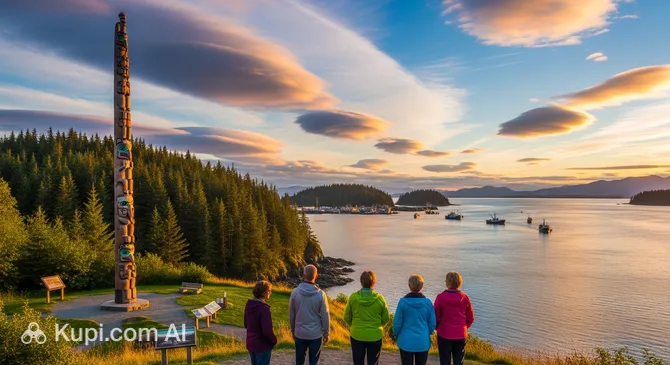
Kake. Source: Kupi.Binoculars

One of the town's most famous landmarks is the towering Kake Totem Pole. Standing at 132 feet, it is recognized as one of the tallest totem poles in the world and serves as a magnificent symbol of the area's Tlingit culture. In addition to its cultural significance, Kake is a premier destination for wildlife viewing. The surrounding waters and forests are teeming with life, offering opportunities to spot black bears, humpback whales, and bald eagles in their natural habitats.

Whether you are an avid angler looking for world-class salmon and halibut fishing or a traveler eager to experience the majestic landscapes of the Last Frontier, Kake welcomes you. We invite you to explore this hidden gem, where the quiet of the wilderness and the warmth of the community create an unforgettable travel experience.

Weather Overview

Kake experiences a cool maritime climate typical of Southeast Alaska, characterized by mild temperatures and consistent moisture throughout the year. The weather in Kake is heavily influenced by the ocean, which moderates the temperature extremes often found further inland. Visitors can generally expect cool, refreshing summers and chilly, damp winters, making layers essential for any trip.

During the warmest months of July and August, the average temperature settles around 13.5°C, with daily highs reaching approximately 15.5°C. These mild conditions are perfect for exploring the outdoors, though the air remains crisp. In contrast, the winter months are colder but rarely severe; January sees an average temperature of 1.1°C, with lows hovering just below freezing at -0.2°C.

Precipitation is a constant feature of the region's climate, supporting the lush rainforest environment. Rain is frequent regardless of the season, with the number of wet days ranging from a low of 15 days in June and July to a high of 22 days in January, October, and December. Travelers should be prepared for gray skies and rain, as even the driest months still see significant cloud cover and precipitation.

Interesting Facts

Beyond the quiet charm of its remote location, Kake holds several fascinating secrets and distinctions that even seasoned travelers to Alaska might not know. This small village is not just a gateway to the wilderness; it is a place where global history, deep cultural roots, and natural wonders converge in surprising ways.

  • A World-Traveling Totem Pole: Kake is home to one of the world's tallest totem poles, standing at an impressive 132 feet. Carved from a single giant red cedar tree, this monument has a unique passport: before being raised in Kake in 1971, it traveled across the Pacific to be displayed at the 1970 World's Fair in Osaka, Japan, symbolizing a bridge between cultures.

  • The "Mouth of Dawn": The name "Kake" is an Anglicized version of the Tlingit word Ḵéix̱ʼ (or Ḵéex̱ʼ), which poetically translates to "Mouth of Dawn" or "Opening of Daylight." This name reflects the village's location on the eastern horizon where the morning light first breaks over the mountains.

  • A Humpback Whale Superhighway: The waters surrounding Kake, particularly where Frederick Sound meets Chatham Strait, are recognized as having one of the largest concentrations of feeding humpback whales in the world. During the summer months, it is not uncommon to see these giants engaging in "bubble-net feeding," a complex cooperative hunting behavior seen in few other places.

  • The Dog Salmon Festival: While many Alaskan towns celebrate the King or Sockeye salmon, Kake honors the Chum salmon (often called "dog salmon") with a dedicated festival in late July. The Dog Salmon Festival is a vibrant local tradition featuring contests, food, and dances that celebrate the fish historically vital to the community's subsistence lifestyle.

How to Get There

Reaching the remote village of Kake is an adventure in itself, offering travelers a scenic introduction to the rugged beauty of Southeast Alaska. Since the community is located on Kupreanof Island with no road connection to the mainland, visitors must rely on air or water travel to arrive. For a detailed breakdown of routes and transportation options, you can read more about how to get to Kake.

The most convenient and direct air arrival point is the Kake Seaplane Base (IATA: KAE). Located just 0.4 km from the heart of the village, this facility handles small aircraft and seaplanes that are essential for local connectivity. Due to its proximity to the center, the transfer time is negligible, often taking just a few minutes. While the passenger traffic here is modest, serving around 3,000 people annually, it is the primary lifeline for direct flights into the community.

Most travelers coming from outside the immediate region will first fly into a larger regional hub. The most significant of these is Juneau International Airport (IATA: JNU), located in the city of Juneau, approximately 158 km from Kake. As a major transport node with an annual passenger volume of about 730,000, it offers connections to major US cities. From Juneau, visitors typically catch a connecting floatplane flight or take the Alaska Marine Highway ferry to reach Kake. Another option is Sitka Airport (IATA: SIT) in Sitka, roughly 86 km away, which also serves as a gateway for the archipelago.

For clarity, here is a summary of the main airports:

Airport Name City Passenger Traffic Km from City
Juneau International AirportJuneauLarge Regional158.0
Ketchikan International AirportKetchikanMedium227.6
Sitka AirportSitkaSmall86.3
Kake Seaplane BaseKakeLocal0.4

Kake does not have a railway station, and there are no rail connections on Kupreanof Island or the surrounding archipelago. The terrain and island geography make train travel impossible in this part of Alaska. Instead of trains, the "iron highway" of Southeast Alaska is the ferry system. Visitors looking for a scenic and relaxed journey often utilize the Alaska Marine Highway System, which functions similarly to a rail network on water, connecting Kake to Juneau, Sitka, and other coastal communities.

Main Attractions

Kake Totem Pole is undoubtedly the most iconic landmark in the village and a must-visit for any traveler. Standing at an impressive height of 132 feet, it is recognized as one of the tallest single-tree totem poles in the world. Carved for the 1970 World's Fair in Osaka, Japan, it was later erected in Kake as a symbol of the community's enduring Tlingit heritage. Visitors flock to this site not only to admire the intricate traditional carvings but also to enjoy the panoramic views of the coastline from the bluff where it stands.

For those interested in the industrial history of Southeast Alaska, the Kake Cannery offers a fascinating glimpse into the past. Designated as a National Historic Landmark, this site preserves the legacy of the salmon packing industry that drove the local economy in the early 20th century. Tourists can explore the exterior of the historic structures and learn about the labor and lifestyle of the era, making it a significant cultural stop that contrasts with the surrounding wilderness.

Nature enthusiasts should not miss Gunnuk Creek, a vital natural feature located conveniently near the town center. This creek is renowned for its seasonal salmon runs, where thousands of fish return to spawn. This natural event draws local wildlife, making it one of the best and most accessible places in the area to safely view black bears fishing in their natural habitat. It provides an excellent opportunity for photographers and wildlife watchers to observe the circle of life up close.

Just beyond the harbor lies Frederick Sound, which serves as the village's gateway to world-class marine wildlife viewing. While it is a body of water rather than a building, it is a primary attraction for visitors taking boat charters from Kake. The sound is famous globally as a summer feeding ground for humpback whales. Tourists travel here specifically to witness the spectacular phenomenon of bubble-net feeding, where groups of whales work together to trap schools of herring, a behavior rarely seen elsewhere.

Local Cuisine

The local cuisine in Kake is a direct reflection of its location in the heart of the Tongass National Forest and its rich Tlingit heritage. For visitors, the culinary experience here is defined by the "ocean-to-table" lifestyle, where seafood is not just a menu item but a staple of daily existence. Salmon is the undisputed king of the local diet, prepared in countless ways ranging from fresh grilled fillets to traditional smoked strips. Travelers should definitely try smoked salmon, often cured using alder wood according to generations-old methods, resulting in a rich, savory flavor that is distinct to Southeast Alaska.

Beyond salmon, the pristine waters around Kupreanof Island yield an abundance of other delicacies. Pacific Halibut is another favorite, typically served as fish and chips or hearty burgers in local eateries. Depending on the season, you might also find fresh Dungeness crab and spot prawns, which are renowned for their sweetness. On land, the wilderness provides ingredients for traditional dishes; venison from the Sitka black-tailed deer is a common protein, often featured in stews or roasts. For dessert, locals harvest wild berries such as blueberries, huckleberries, and salmonberries, which are transformed into delicious jams, jellies, and pies.

When it comes to beverages, the culture in Kake is centered around staying warm and energized in the cool maritime climate. Coffee is an essential part of the day for locals and visitors alike, often enjoyed strong and hot at community gathering spots. You may also encounter teas made from local plants, such as spruce tip tea, which offers a unique, citrusy flavor derived from the forest itself. It is important for tourists to note that Kake has historically had strict regulations regarding the sale of alcohol; it is often best to check current local rules, as the village focuses more on community and family-oriented gatherings than nightlife.

The food scene in Kake is humble and authentic, far removed from the commercialized dining of larger cities. There are very few restaurants or cafes, so dining options are often found within local lodges or general stores. The true "food culture" here is the subsistence lifestyle, where families gather and preserve their own food for the winter. For a tourist, the best way to experience this is often through community events, festivals like the Dog Salmon Festival, or by purchasing locally made preserves and smoked fish to enjoy as a picnic amidst the stunning scenery.

Travel Tips

Visiting Kake offers a rare opportunity to experience the authentic lifestyle of a remote Alaskan village, but the isolation requires travelers to be self-sufficient and well-prepared. To help you navigate the unique logistics of this island community, here are some essential practical tips for your journey.

  1. Dress for the Rainforest: The climate in Kake is cool and consistently wet, regardless of the season. Your most important gear will be high-quality waterproof rain layers (jacket and pants) and waterproof footwear, such as rubber boots, which are known locally as "Alaska sneakers." Avoid cotton; instead, pack synthetic or wool layers to keep warm even when the air is damp.

  2. Transportation Realities: There is no public transportation, metro, or ride-sharing service in Kake. The village is small and compact, making walking the primary way to get around the central area. Car rentals are virtually non-existent within the village itself, so if you require a vehicle to explore further afield, you generally need to bring one over on the ferry, though reservations for vehicle deck space must be made months in advance.

  3. Cash is Essential: While the United States Dollar (USD) is the currency, reliance on electronic payments can be risky due to potential internet outages. Bring enough cash to cover small purchases, tips, and emergencies, as credit card machines may be down, and ATM access is extremely limited compared to mainland cities.

  4. Wildlife Safety: Kake is located in prime bear country. When walking trails or visiting nearby creeks, always carry bear spray and know how to use it. Make noise while hiking to avoid startling wildlife. Medical facilities are limited to a local clinic for basic care; serious emergencies require air evacuation to a larger hospital, so travel insurance that covers medical transport is highly recommended.

  5. Connectivity Expectations: English is the primary language spoken by all residents. However, digital communication can be spotty. Cell phone coverage is often limited to specific carriers (typically those with strong Alaska networks), and Wi-Fi speeds are generally slower than what you might be used to. Download offline maps and entertainment before you arrive.

  6. Respecting Local Norms: The community is tight-knit and friendly; it is polite to wave or nod to passersby. Be mindful that Kake is a historic Tlingit village; always ask for permission before photographing locals, their homes, or cultural artifacts that are not clearly marked as public displays. Respect for elders is a cornerstone of the local etiquette.

  7. Alcohol Regulations: Be aware that Kake has historically been a "damp" or "dry" community regarding alcohol sales. There are no bars, and buying alcohol locally is often restricted or impossible. If you choose to bring your own for private consumption, do so discreetly and responsibly, and never consume alcohol in public spaces, as this is considered highly disrespectful and may be illegal.

  8. Be Flexible with Schedules: Weather in Southeast Alaska dictates everything. Flights and ferries are frequently delayed or canceled due to fog, wind, or storms. Always build a buffer day into your itinerary when leaving Kake to ensure you don't miss connecting flights in Juneau or Sitka.

By packing the right gear and embracing the slower, nature-dictated pace of life on Kupreanof Island, you will be well on your way to a memorable adventure. The residents of Kake are known for their hospitality, and a respectful, prepared visitor is always a welcome guest in this beautiful corner of Alaska.

Entertainment & Nightlife

Travelers accustomed to the neon lights, thumping bass, and bustling club scenes of major cities will find a very different definition of "nightlife" in Kake. As a small, remote village with a population of around 700, there are no nightclubs, discos, or commercial bar districts here. The atmosphere is tranquil and deeply connected to the rhythms of nature. Nights in Kake are defined by the profound silence of the wilderness, the sound of the ocean lapping against the shore, and, if the conditions are right, the spectacular display of the stars or the Aurora Borealis overhead.

Social life in Kake revolves around community and culture rather than commercial entertainment. Instead of hopping between pubs, evenings are often spent at local gatherings. The Kake Community Hall is frequently the center of activity, hosting events ranging from traditional Tlingit dance performances and potlucks to community bingo nights, which are a popular pastime in rural Alaska. Another hub of social interaction is the local school gymnasium, especially during basketball season, when the entire town often turns out to cheer on the local teams in a spirited, family-friendly environment.

For visitors staying in the village, the Keex' Kwaan Lodge often serves as a quiet place to unwind after a day of exploration. While it is not a "nightclub," the lodge provides a comfortable setting to swap stories with fellow travelers or locals. It is important to remember that Kake has historically been a "damp" community with strict regulations regarding the sale and possession of alcohol. There are no liquor stores or bars serving cocktails; entertainment here is about connection and relaxation rather than partying.

During the daytime, entertainment shifts to cultural and outdoor pursuits. Visitors can admire the world-famous totem pole, explore the historic cannery buildings, or embark on wildlife viewing excursions. For those interested in local heritage, seeking out opportunities to learn from local carvers or weavers offers a rich cultural experience that far outweighs the lack of a cinema or amusement park.

If you venture out at night, safety is paramount. The streets of Kake are not brightly lit like a city, and the surrounding wilderness is home to bears and other wildlife that are active after dark. Always carry a flashlight, travel in groups if possible, and stay alert to your surroundings. Walking is the main mode of transport, but for late hours or longer distances, arranging a ride with a local host or lodge staff in advance is recommended, as there are no roving taxis or ride-share services available.

Parks & Museums

In Kake, the concept of parks and museums is defined not by ticket booths and velvet ropes, but by the vast, living landscape and the deep-rooted traditions of its people. The entire village serves as a gateway to the Tongass National Forest, and the local culture is experienced through daily life and historic landmarks rather than static exhibits. Visitors here should expect to explore "green spaces" that are truly wild and "galleries" that are part of the built environment.

While there are no manicured city parks, the wilderness surrounding the village acts as an endless natural playground. Gunnuk Creek is the most accessible natural area for visitors, functioning effectively as a local park. A walk along the creek offers a serene escape with the sound of rushing water and the rustle of the dense rainforest. It is a prime spot for observing the salmon run in season and offers a safe vantage point for watching black bears, providing a raw and authentic nature experience just steps from the town center.

For those willing to venture slightly further, the network of logging roads and trails radiating from the village opens up the interior of Kupreanof Island. These routes are utilized by locals for berry picking, hunting, and hiking. Walking these paths immerses you in the grandeur of the temperate rainforest, with towering spruce and hemlock trees creating a natural cathedral. The shoreline along Keku Strait also offers miles of beachcombing opportunities, where the changing tides reveal diverse marine life and offer stunning views of the archipelago.

In terms of cultural heritage, the Kake Historic Cannery stands as the community's most significant "open-air museum." Designated a National Historic Landmark, this collection of buildings tells the story of the industrial boom that once shaped the region's economy. While it is not a traditional museum with guided audio tours, the architecture itself is a testament to the past. Visitors can walk around the exterior of the structures to appreciate the scale of the operation and the history of the labor force that worked here in the early 20th century.

The site of the Kake Totem Pole functions as a cultural plaza for the village. Perched on a high bluff, this area offers more than just a view of the world-renowned carving; it provides a panoramic outlook over the town and the ocean. It is a place of reflection where the connection between the Tlingit people, their art, and the land is visibly evident. Although there is no formal art gallery, the village is home to many skilled carvers and weavers. You may occasionally see artists working on projects in local sheds or community spaces, offering a glimpse into a living artistic tradition that has been passed down for generations.

For a truly authentic experience, take a moment to walk the Portage area if local conditions permit. This historic crossing point has been used for thousands of years by Indigenous people to navigate between waters. Standing there offers a profound sense of connection to the ancient history of the region, far more powerful than reading a plaque in a conventional museum.

Getting Around

Public Transport in Kake is virtually non-existent in the traditional sense. Due to the village's small population and remote location, there is no organized public transportation network. You will not find a metro system, public buses, trams, or trolleybuses operating here. The infrastructure is designed for a small, tight-knit community where residents rely on private vehicles or simply walk to their destinations.

Because there is no formal transit system, there are no travel passes, transport cards, or mobile apps for ticketing. The concepts of ticket validation, zones, and operating hours do not apply. Tourists should not expect to rely on public infrastructure to move around; instead, you must plan your mobility independently, often before you even arrive on the island.

The primary and most reliable mode of transport for visitors within the village is walking. The central area of the community is compact, and most key locations—such as the general store, the harbor, and the community hall—are within a reasonable walking distance of one another. Given the frequent rain and unpaved sections of roads, the best "transport advice" is to bring high-quality, waterproof footwear suitable for navigating wet and sometimes muddy terrain.

Alternatives such as taxis and ride-sharing apps like Uber or Lyft are not available in Kake. There is no local taxi fleet. However, some local lodges and accommodations offer shuttle services for their guests, particularly for pick-ups from the seaplane base or the ferry terminal. It is highly recommended to arrange these transfers with your host well in advance of your arrival. While formal car rental agencies are scarce or non-existent within the village itself, some visitors choose to rent a vehicle in a larger hub like Juneau and transport it over via the ferry, though this requires significant advance planning and expense.

Occasionally, you may find informal opportunities to rent a bicycle or get a ride from a local resident, but these are not guaranteed services. If you do manage to arrange an informal ride or a private transfer, be prepared to pay in cash, as electronic payment terminals are rare for such ad-hoc transactions. The charm of Kake lies in its slow pace, so be prepared to explore on foot and embrace the quiet atmosphere of a town without traffic jams or rush hours.

Accommodation

Finding accommodation in Kake requires a bit more planning than in larger tourist destinations, as the options are limited but deeply authentic. There are no sprawling luxury resorts or international hotel chains here. Instead, visitors will find a small selection of rustic lodges, guesthouses, and rental cabins that reflect the village's connection to the wilderness. The most convenient place to stay is typically near the waterfront or the small village center, which keeps you within walking distance of the harbor, the general store, and the seaplane base.

The primary accommodation provider in the area is the Keex' Kwaan Lodge. Known for its hospitality and comfortable amenities, this lodge is often the hub for visitors, including those coming for business or adventure tourism. It offers a cozy retreat with views of the ocean and easy access to local charter services for fishing or wildlife viewing. Staying here or in a local bed-and-breakfast allows travelers to experience the warmth of the community firsthand, often with hosts who are eager to share stories about life on Kupreanof Island.

Due to the very limited number of rooms available in the village, it is crucial to book your accommodation well in advance, especially if you plan to visit during the summer fishing and whale-watching season. You should not rely on finding a room upon arrival. In terms of pricing, costs are generally in the mid-range to higher end, reflecting the remote logistics of operating in Alaska. Booking methods are often traditional; while some information may be found online, it is frequently best to call or email the property directly to confirm availability and rates.

Nearby Cities

For travelers navigating the vast wilderness of the Alexander Archipelago, Kake is situated amidst several prominent regional hubs and destinations. While the village itself offers seclusion, it is part of a network of communities that define Southeast Alaska. Visitors often combine a stay here with exploration of neighboring towns to experience the diverse history and geography of the area, rather than attempting them as quick day trips given the logistics of travel in the region.

Located approximately 85 km away, Sitka is one of the most accessible and historically significant places to visit in the vicinity. Situated on the outer coast of Baranof Island, it is famous for its harmonious blend of Tlingit heritage and Russian colonial history. Travelers can walk the trails of a national historical park lined with totem poles or visit the iconic St. Michael's Cathedral, making it a culturally rich stop before or after visiting Kake.

To the north lies Juneau, the state capital and a bustling center of activity about 150 km from the village. Unlike the quiet streets of Kake, this city offers urban amenities set against a backdrop of towering mountains and the massive Mendenhall Glacier. It serves as the primary transportation gateway for the region, where visitors can enjoy museums, dining, and access to the Mount Roberts Tramway for sweeping views of the Gastineau Channel.

Further south, Ketchikan is another key destination, known globally as the "Salmon Capital of the World." Although it requires a longer journey of roughly 231 km, it is a fascinating place to witness the region's fishing legacy and vibrant arts scene. The city is renowned for having the world's largest collection of standing totem poles and the historic Creek Street boardwalk, offering a lively contrast to the tranquil wilderness of Kupreanof Island.

City Population Distance (km)
Juneau32240150
Ketchikan13948231
Craig9026174
Sitka851885
Haines2500267

These nearby destinations offer a glimpse into the diverse culture and landscapes of the region, each providing a unique perspective on life in Southeast Alaska.

Shopping & Souvenirs

Shopping in Kake is a unique experience defined by the village's remote island location and small population. Unlike larger tourist hubs, this community does not offer extensive retail districts, luxury boutiques, or souvenir shops on every corner. Instead, the shopping scene here is practical and community-focused, catering primarily to the daily needs of residents and the logistical requirements of outdoor adventures. Visitors should come prepared with essential gear, viewing any local purchases as a bonus rather than a guaranteed activity.

There is no designated "shopping district" or high street in Kake. The commercial activity is concentrated in the small village center near the waterfront. Here, you will find the general store, which serves as the lifeline for the community. This multi-purpose establishment stocks everything from groceries and fresh produce to hardware, fishing tackle, and rain gear. For a tourist, a visit here is less about retail therapy and more about observing the local way of life, where a single store meets nearly every need of the town.

Travelers looking for shopping malls or department stores will not find them in Kake. The village infrastructure is designed for a subsistence lifestyle, and the nearest large retail centers are a plane or ferry ride away in Juneau or Ketchikan. The absence of commercial chains preserves the authentic, small-town atmosphere, allowing visitors to disconnect from consumer culture and focus on the surrounding wilderness.

While there are no permanent daily markets, the spirit of trade is alive in the community. Occasionally, you may encounter informal sales or pop-up markets at the Community Hall, particularly during local festivals or events like the Dog Salmon Festival. These gatherings are excellent places to find homemade baked goods, jams made from local berries, and handcrafted items sold directly by the residents.

When it comes to souvenirs, the treasures of Kake are handmade and deeply cultural. The village is home to skilled Tlingit artists known for their traditional craftsmanship. Visitors should look for authentic Tlingit carvings, woven cedar bark baskets, and beaded jewelry. These items are rarely sold in a formal shop; instead, you might find them displayed at the local lodge or by asking around the community to connect with an artist. Another popular item to bring back is smoked salmon or jarred fish, prepared locally using traditional methods that capture the flavor of the region.

Store hours in Kake are generally limited compared to urban centers. The main general store typically operates from morning until early evening, but hours can vary, especially on Sundays or during the off-season. It is advisable to complete any necessary purchases during the day. regarding payment, cash is highly recommended. While the main store may accept credit cards, internet connectivity on the island can be unreliable, causing card machines to go offline. Having sufficient cash on hand for small purchases and tips is a practical necessity.

Regarding taxes, the United States does not have a national VAT refund system for tourists like many European countries. However, Alaska is one of the few states with no state sales tax. Be aware that local municipalities often levy their own city sales tax, which is added at the register. In remote communities like Kake, prices for goods are generally higher than on the mainland due to the significant cost of shipping freight to the island.
Reached the end of the page?

That means the route is fully explored