Support

History Museum of Armenia

About

Imagine a place where the heritage of millennia is gathered under one roof. The History Museum of Armenia is more than just an exhibition space; it is a true national "treasury" located in the very heart of Yerevan. Founded in 1919, it became the country's first state museum and today presents a majestic chronicle of how ancient Armenia lived and evolved.
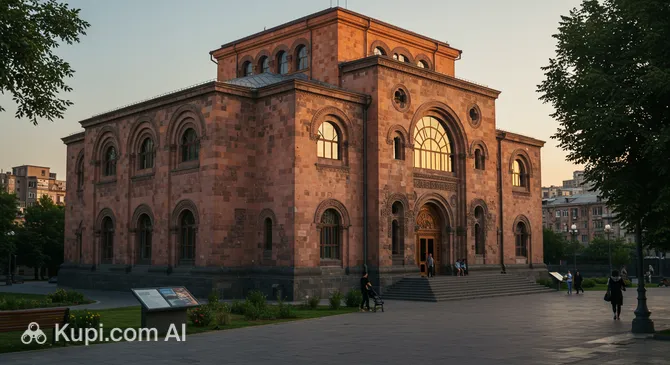
History Museum of Armenia
History Museum of Armenia. Иллюстрация. Источник: Kupi.com AI

Occupying a place of honor on Republic Square, the museum holds approximately 400,000 artifacts in its collection. Here you can see everything from primitive Paleolithic tools to exquisite Urartian jewelry and medieval manuscripts. It is a cultural and scientific hub where every item—from a tiny coin to a massive khachkar (stone cross)—bears witness to great historical events.

One of the collection's main "stars" is the oldest leather shoe in the world, which is over 5,500 years old. Such discoveries make the museum a must-visit for any tourist wishing to touch the origins of civilization and understand the depth of Armenian culture.

Contacts

To check the latest information about temporary exhibitions or to plan a group visit, you can contact the museum administration directly. The official website offers detailed descriptions of current projects and exhibition sections.

Below are the main contact details:

How to contactContact
AddressՀանրապետության հրապարակ 4, Yerevan 375010, Armenia
Phone+374 10 582761
Websitewww.historymuseum.am

What to Do

Visiting the museum is a fascinating journey through time, where each hall reveals a new era. Start by exploring the archaeology department to see unique bronze figurines and painted ceramics. Don't miss the famous cuneiform inscription by King Argishti I, which officially confirms the founding date of Yerevan—782 BC.

In the ethnographic section, you can examine traditional Armenian costumes (taraz), masterfully crafted carpets, and ancient wooden carriages. The medieval carved doors from monasteries are particularly noteworthy, showcasing the intricate skill of ancient craftsmen. Numismatics enthusiasts should definitely visit the coin hall, which displays currency used in these lands more than two thousand years ago.

In addition to the permanent exhibition, the museum often hosts temporary thematic displays and educational programs. It is an excellent place for a quiet, thoughtful visit, where interactive elements and updated displays help visitors better understand the context of each era and feel the connection between different times.

Getting There

Reaching the main repository of antiquities is easy, as it is located in the very heart of Yerevan, on the famous Republic Square. Your landmarks are the singing fountains and the majestic buildings made of pink tuff—the museum occupies part of this monumental complex.

The fastest way to get there by public transport is to use the metro. You need the "Republic Square" station (Hanrapetutyan Hraparak), which has an exit leading almost directly to the museum doors. Numerous bus and trolleybus routes also pass through the square, connecting the center with all districts of the city.

If you prefer comfort, you can take a taxi (for example, using the Yandex Go service)—the trip from most central hotels will take no more than 5–10 minutes. For those who enjoy walking, the route from Northern Avenue or Abovyan Street is a pleasant introduction to the capital's architecture and takes about 10–15 minutes.

Ближайший город: Yerevan

History & Facts

The official history of the museum began on September 9, 1919, when the parliament of Armenia decided to create a central repository for national relics. The foundation of the first collection consisted of valuable exhibits gathered by the Armenian Ethnographic Society of the Caucasus and materials from the ancient city of Ani.

The institution's first director was the prominent scholar Yervand Lalayan, whose efforts helped systematize the scattered findings. Despite challenging historical times, the museum opened its doors to its first visitors on August 20, 1921, laying the groundwork for modern scientific research in the region.

Over the decades, the collections have grown through large-scale archaeological excavations across the country. The uniqueness of the collection lies in its coverage of a colossal time span: from the Stone Age to the present day, allowing researchers to reconstruct the stages of Armenian civilization bit by bit.

Today, approximately 400,000 items are kept in the museum's vaults and halls. It is not just an exhibition of antiquities, but a vital scientific center that continues to reveal to the world the secrets of the ancient states that existed on the Armenian Highlands thousands of years ago.

Time Needed

To walk through all the halls at a leisurely pace and delve into the details of the rich collection, we recommend planning for at least 2–3 hours. This is enough time to explore the key archaeology and ethnography sections and see the most famous artifacts.

If you are a true history buff or plan to use a guide's services, the visit may last up to 4 hours. Keep in mind that the museum's collections are vast, and trying to see everything in one hour might leave you feeling rushed, so it is better to set aside a relaxed half-day for this visit.

Working Hours

When planning your visit to the museum, please check the current opening hours:

  • Tuesday – Saturday: 11:00 – 18:00
  • Sunday: 11:00 – 17:00
  • Monday: Closed

Please note that the ticket office usually stops selling tickets 30–45 minutes before closing. Monday is the traditional day off for museum staff.

DayWorking hours
ПонедельникЗакрыто
Вторник11:00 – 18:00
Среда11:00 – 18:00
Четверг11:00 – 18:00
Пятница11:00 – 18:00
Суббота11:00 – 18:00
Воскресенье11:00 – 17:00

Nearby

A stroll around Republic Square is a perfect complement to a museum visit. Since you are in the center of the capital's cultural life, you can find green spaces for relaxation and entertainment venues for the whole family just a few steps away.

Exploring the central streets will help you better feel the city's atmosphere and see how ancient traditions intertwine with the modern pace of life. Here is a list of some interesting locations nearby:

NameDistance
Republic Square0.2 km
Dalan Art Gallery and Café0.3 km
Vernissage Market0.5 km
Malkhas Jazz Club0.7 km
Ararat Tavern0.7 km
Blue Mosque0.7 km
Freedom Square0.7 km

Reached the end of the page?

That means the route is fully explored