Support

Iyezuitskiy Kollegium

About

In the heart of the ancient city of Orsha, located in the picturesque country of Belarus, lies a unique architectural monument — the Jesuit Collegium. This majestic Baroque complex served as a center of enlightenment for centuries and today is the landmark of the region and its primary historical and cultural treasure.
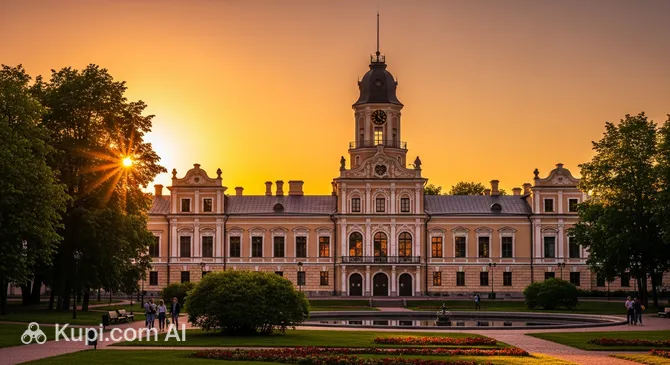
Jesuit College in Orsha
Jesuit College in Orsha. Иллюстрация. Источник: Kupi.com AI

The collegium ensemble is impressive in its scale: it includes academic buildings, residential quarters, and a restored 26-meter clock tower, which fills the surroundings with a melodic chime every hour. The architecture of the buildings has preserved characteristic features of the 17th–18th centuries — elegant pilasters, massive buttresses, and decorative vases on the pediments, all of which were carefully restored during a major renovation.

Today, this site attracts guests not only with its beauty but also with its rich history. The city's first pharmacy and laboratory once operated here, alongside a school theater and an extensive library. Now, the collegium is a living space where history meets the present, offering tourists a chance to immerse themselves in the atmosphere of past centuries.

Contacts

For those planning a visit, it is important to know the exact location of this architectural monument in the historical part of the city. The complex grounds are usually accessible during daylight hours, but you should refer to the official address to view the interior exhibitions.

How to contactContact
AddressZamkovaya 6A, Орша, Витебская область 211391, Беларусь

What to Do

Start your introduction to the collegium by admiring its facades to appreciate the refined elegance of White Stone Baroque. Be sure to wait for the top of the hour by the main tower: the built-in clock doesn't just tell time but plays famous melodies, creating a special atmosphere throughout the surrounding area.

While walking inside the complex, pay attention to the preserved architectural details: authentic vaulted corridors, the thick walls of former cells, and spacious halls that once housed a boarding school and a library. Science enthusiasts will be interested in the old laboratory and pharmacy, while art lovers should visit the former school theater, one of the first of its kind.

The area around the collegium is perfect for photo shoots, especially the views overlooking the confluence of the rivers and the historical center. In summer, cultural events and festivals are often held here, and a walk along the banks of the Orshitsa River provides a pleasant end to the tour, allowing you to enjoy the tranquility of this ancient site.

Getting There

The complex is located in the heart of the city at Zamkovaya, 6A, on the scenic banks of the Orshitsa River. If you are already in the center, the easiest way to reach it is on foot — a walk from the central square or the railway station takes very little time, as the distance is about 1–2 kilometers.

Travelers from other cities can conveniently use the railway. Trains from Minsk reach Orsha in about 2.5–3 hours, and from Vitebsk in just one hour. From the station, city buses No. 1 and No. 2 run to the collegium, or you can always use a taxi, asking to be taken to the historical center.

For those who prefer to drive, the route follows the M1 or P118 highway. You can leave your car in a parking lot near the complex and then continue exploring the site while enjoying the views of the ancient streets.

Ближайший город: Orsha

History & Facts

The history of this site began back in 1590, when Lew Sapieha, the Grand Chancellor of the Grand Duchy of Lithuania, purchased a plot of land from Calvinists to found a Jesuit residence. The official status of the collegium was confirmed by Pope Paul V in 1616, and King Sigismund III generously endowed the institution with land and surrounding villages for its development.

The first buildings were wooden and suffered from fires over time, so the construction of the stone ensemble began in the late 17th century. The foundation of the majestic Cathedral of St. Michael the Archangel was laid by King Jan III Sobieski himself. Distinguished architects like Fontana and Benedict Mezmer worked on the design and construction at different times, creating one of the finest examples of Baroque architecture in the region.

The building's fate was varied: after the Jesuits were expelled and the collegium closed in the 19th century, the complex served as a prison for 150 years. It was only at the end of the 20th century that its return to cultural life began. A major reconstruction in 2007–2008 allowed for the restoration of lost elements, including the famous 26-meter tower, which once again became the city's architectural centerpiece.

Time Needed

To leisurely explore the entire architectural ensemble, peek into the courtyards, and take memorable photos against the Baroque facades, most visitors need about 1–2 hours. This is plenty of time to soak in the atmosphere and hear the melodic chiming of the tower clock.

If you plan to visit temporary exhibitions or take a guided tour that reveals the secrets of the former monk cells and libraries in detail, you should set aside a bit more time. The surrounding area with river views also invites a quiet stroll after viewing the main buildings.

Working Hours

The complex's schedule may vary depending on the season or special cultural events. To ensure your visit goes smoothly and you can access the interior spaces, we strongly recommend checking the current schedule in advance on the official website or at the city's information center.

Nearby

Exploring the surroundings of the collegium can significantly enhance the experience for any tourist, as this site is the historical heart of the city. Landmarks from various eras are concentrated nearby — from ancient castle fortifications to memorials dedicated to local history.

NameDistance
Orsha City0.2 km
Centrum Shopping Center0.5 km
"Kazachnaya Kraina" Children's Park0.6 km
Tmin Pizzeria & Bakery1.2 km
Alley of Letchikov2.2 km

Reached the end of the page?

That means the route is fully explored