Support

Decew Falls

About

The picturesque Decew Falls is one of the most enchanting natural attractions tucked away in the outskirts of St. Catharines. It is a place where the power of water harmoniously blends with the industrial heritage of the past. Located on the slope of the Niagara Escarpment, the site features two main cascades: the majestic Upper Falls, about 20 meters high, and the more secluded Lower Falls.
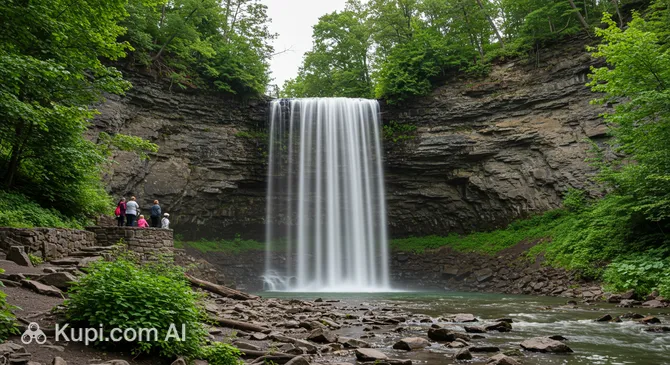
Decew Falls. Source: Kupi.com AI

In this part of Canada, nature is wonderfully intertwined with history. Besides the water itself cascading into a deep gorge, visitors are drawn to the historic Morningstar Mill, built in the 19th century. It still stands on the edge of the cliff, serving as a reminder of the times when the energy of Beaverdams Creek was harnessed for the needs of early settlers.

Decew Falls is considered a "hidden gem" of the region. Unlike its famous neighbor, Niagara Falls, it offers a more peaceful and natural atmosphere. The surrounding area is well-equipped with hiking trails and viewing platforms that offer breathtaking views of the rocky outcrops and lush forests characteristic of Ontario.

Contacts

To confirm current information about the museum's operation and upcoming events, you can use the official contact details.

Address 2714 Decew Rd, St. Catharines, ON L0S 1E6, Canada
Phone +1 905-688-5600
Website stcatharines.ca

What to Do

The main activity for visitors is hiking along the scenic trails. You can start your walk at the viewing platforms near the Upper Falls, which offer a classic view of the "ribbon" waterfall. For those who prefer more secluded routes, a trail leads down into the gorge to the Lower Falls, where you can feel the mist and enjoy the silence away from the popular tourist paths.

History buffs should definitely visit the Morningstar Mill. This stone mill now operates as a museum where you can see original equipment and learn how Wilson Morningstar established flour production here. Nearby are the ruins of DeCew House, accompanied by information plaques that explain the site's role in the region's defense.

Thanks to the unique microclimate of the escarpment, rich flora thrives here, making the location ideal for nature photography and ecotourism at any time of year. In winter, the frozen cascades transform into ice sculptures, and in autumn, the surrounding forest is painted in brilliant golden hues. The grounds also feature areas for quiet relaxation and outdoor picnics.

Getting There

The drive to this natural attraction from downtown St. Catharines takes very little time—simply follow DeCew Road. If you are coming from Niagara Falls or Welland, it is most convenient to use the QEW or Highway 406, then turn onto Merrittville Hwy.

For those traveling by private vehicle, there is a free parking lot (Decew Falls parking lot) located next to the historic Morningstar Mill. Keep in mind that public transportation to this area is infrequent, so using a car or ordering a taxi from the city center is the best option.

Marked trails lead directly from the parking lot to the upper and lower cascades. Please take note of the terrain: walking along the slopes of the Niagara Escarpment requires comfortable footwear, as the trails include stairs and sections of moderate difficulty.

History & Facts

The history of this site is inextricably linked to Canada's past. The nearby DeCew House served as the headquarters for British Lieutenant James FitzGibbon during the War of 1812. It was here that Laura Secord completed her famous journey to warn British forces of an impending American attack, which largely determined the outcome of the Battle of Beaver Dams.

The area began to be actively settled by Loyalists as early as the 1780s. Militia Captain John DeCou built the first house here, which was used as a military post and supply depot for the army. Later, in 1872, the Morningstar Mill was constructed of local stone on the site of an old blacksmith shop. For decades, the water from Beaverdams Creek powered its machinery.

The mill survived a devastating fire in 1895, after which it was restored by owner Wilson Morningstar and continued to operate until 1933. Today, it is one of the few surviving examples of industrial architecture from that era in the region, transformed into an open-air museum.

Although the DeCew House itself burned down in 1950, its ruins were carefully preserved and officially recognized as an important historic site. Walking here today, you can literally touch the stones that witnessed the early development of the province of Ontario.

Time Needed

To leisurely view both waterfall cascades, visit the historic mill, and explore the ruins of the old house, most travelers need about 1.5 to 2.5 hours.

If you plan to have a picnic or hike the longer trails along the gorge, it is worth setting aside half a day for your visit. This will allow you to fully enjoy the tranquility of nature and take high-quality photographs without rushing.

Working Hours

As the attraction is a natural site, access to the waterfalls and parking areas is generally open 24/7. However, please note that visits to the Morningstar Mill museum may be limited to specific hours depending on the season.

Since some facilities may be temporarily closed to visitors, it is recommended to check the current status in advance on the city's official website or by calling the contact number before your trip.

Nearby

The area surrounding the falls is rich in historical monuments and interesting locations that allow for a deeper dive into the region's atmosphere. Exploring these sites is a great addition to a nature walk.

Name Distance (km)
DeCou House Monument 1.2
First Nations Peace Monument 1.3
Lincoln and Welland Regiment Monument “Press On” 5.9
Knifeworks Historical Site 5.9
Harriet Tubman Statue 6.4
Lock 4 6.5
Biersach and Niedermeyer Mobil Directo air raid siren 6.9
3rd Welland Canal - Lock 5 8.7
3rd Welland Canal - Lock 4 8.8
Lakeside Park Carousel 10.4

Reached the end of the page?

That means the route is fully explored