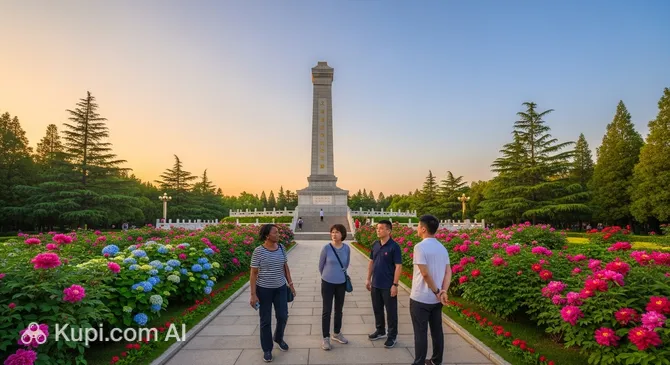
Hong'an is a colorful county town located in Hubei Province within the vast expanses of China. As part of the Huanggang prefecture-level city, this place represents a harmonious blend of traditional rural lifestyle and dynamically developing industry. The town is not a typical tourist hub, which makes it particularly attractive for those seeking an authentic atmosphere of everyday life in Central China without any artificial polish.
Hong'an. Illustration.
Source: Kupi.com AI
Geographically, the town is situated north of Wuhan, covering an area of approximately 1,782 km². The county's population is around 510,000 people, creating a rhythm of life typical of a medium-sized Chinese settlement. The rich history of Hong'an is reflected in its name: formerly known as Huang'an, it was renamed in honor of significant historical and political events that highlight its role in the region.
While there are no world-famous monuments here, Hong'an charms visitors with its bustling folk markets, authentic residential neighborhoods, and proximity to scenic river networks. This location is ideal for a deep dive into the culture of Hubei Province. We invite you to visit Hong'an to see the real China, hidden from the eyes of the mass tourist, and to feel the genuine hospitality of the local people.
Weather Overview
The climate of Hong'an is typical for Hubei Province and is characterized as humid subtropical. Travelers should prepare for distinct seasonality. Summers here are hot and muggy, with temperatures in July and August often rising to +31...+35°C. Winters, by contrast, are quite mild, but due to high humidity, they can feel chilly: average January temperatures hover around +1...+5°C, and light frosts are possible at night.
A significant portion of precipitation falls during the summer monsoon period, which lasts from May to August. Heavy rains and fog are common during this time, which is important to consider when planning your trips. If you want to know the more precise city's climate by month, pay attention to the spring and autumn periods—these are the most comfortable times to visit the region, when the weather is mild and pleasant.
The environmental situation in the county depends on the operation of local enterprises, so haze is possible on windless days. However, the abundance of rivers and greenery in the vicinity helps to clean the air. When packing, don't forget an umbrella if your trip falls in the summer, and warm, windproof clothing for a winter visit.
Average monthly temperature
Average monthly precipitation
Interesting Facts
Hong'an is a town with a fascinating destiny and hidden features that make exploring it an exciting endeavor. Here are a few facts to help you get to know this place better:
Name Change: The county was originally called Huang'an, but during administrative and historical reforms, it received its current name—Hong'an, which in Chinese is associated with the region's "red" revolutionary history.
Part of a Giant: The county is part of the Huanggang prefecture-level city, which is located in Hubei Province. For reference: the population of the entire province exceeds 66 million people, making it larger than many European countries.
Geographical Scale: The county covers an area of 1,782 square kilometers. This is a typical medium-sized county for China, located in a zone with a highly developed network of rivers and canals.
Demographic Nuance: Modern data indicates that the county's population is around 510,000 people, which significantly exceeds older statistical reports and highlights the rapid urbanization processes in the region.
How to Get There
The easiest way to reach Hong'an is through the region's largest transport hub—the city of Wuhan. The capital of Hubei Province is located approximately 100–120 kilometers south of the county. Regular intercity buses run between these points, with the journey taking about 1.5–2 hours. This is the most convenient and economical way to reach the town for most travelers.
If you are planning to travel by plane, the nearest major air hub is Wuhan Tianhe International Airport. From there, you can reach the city's bus stations, where buses depart for Hong'an. For more detailed route planning, we recommend checking out the detailed information on how to get there, including schedules and transport types.
Railway communication is another reliable option. Major lines pass through neighboring cities in the Huanggang prefecture, which are connected to China's largest metropolises by high-speed trains. After reaching one of the Huanggang stations, you can transfer to a local bus or use a taxi to complete your journey to Hong'an.
When planning your trip, consider rush hours: in the morning and evening, the roads can be congested with commuter and freight traffic. A taxi ride from Wuhan provides maximum comfort but will be more expensive. In any case, the province's transport network makes it easy to find a suitable option for visiting this colorful county.
Main Attractions
Hong'an is not one of those overhyped tourist destinations, and that is precisely its main charm. You won't find massive queues at monuments here; instead, you can see the authentic architecture and lifestyle of county-level China. The primary interests for travelers are the historical districts, where the layout characteristic of old Hubei has been preserved, and administrative buildings that reflect the architectural styles of different decades.
The heart of the town's social life lies in its central squares and folk markets. These are the best spots to observe daily activity: locals trade regional delicacies, handicrafts, and essential goods here. For those interested in regional culture, a stroll through the local market stalls will replace a visit to any ethnographic museum, allowing you to feel the living pulse of the town.
If you are looking for larger-scale sights, Hong'an serves as a convenient base for excursions to neighboring areas of the province, such as Huanggang or Wuhan. However, it is worth spending time in the county itself to appreciate its traditional temples and cozy squares, which often go unnoticed in guidebooks but hold the true spirit of Central China.
Local Cuisine
A gastronomic journey to Hong'an is an introduction to the vibrant culinary traditions of Hubei Province. Local food is characterized by an abundance of river fish, rice, and fresh vegetables grown in the Yangtze River valley. One of the main features is the skillful use of chili peppers and garlic, which gives the dishes a characteristic spiciness and rich aroma.
Be sure to try the local soups and stews, which are often prepared in traditional clay pots—this slow-cooking method allows the ingredients to remain juicy. Noodle dishes served with various meat and herb toppings are also popular. For drinks, look out for the local tea grown in the surrounding area and traditional rice wine (huangjiu), which perfectly complements a hearty dinner.
The dining culture here is simple and accessible: most residents prefer to eat in small family restaurants or buy food from street vendors. Prices in such places are minimal, and portions are substantial. Despite the potential language barrier, visiting a local market or eatery will be a great chance to experience the true "taste of China," which is rarely found in the tourist restaurants of big cities.
Travel Tips
A trip to Hong'an is a great opportunity to see the real, non-tourist China, but such a journey requires some preparation. These practical tips will help make your visit as comfortable and interesting as possible.
Language Barrier: Be prepared for the fact that English is virtually non-existent here. Be sure to install a reliable translator app on your smartphone with offline capability and save your hotel address in Chinese characters in advance.
Finances and Payment: Mobile payment systems Alipay and WeChat Pay dominate in China. Link your card to one of these apps before your trip. It is worth having cash in yuan for small purchases at markets, but international bank cards are rarely accepted.
Connectivity: To access your usual services and maps, you will need a local SIM card or eSIM. Wi-Fi is available in hotels, but mobile internet is essential for navigating the town.
Transport: The easiest way to get around is by taxi. Use the DiDi app (integrated into Alipay) to avoid problems explaining the route to the driver.
Clothing: The climate in Hubei is subtropical and humid. Bring light clothing made of natural fabrics in summer, and items that protect against piercing dampness in winter. Comfortable shoes are a must for walking through local markets.
Local Etiquette: Local residents are very friendly but may show curiosity toward foreigners. Greet people with a slight nod, be polite, and patient—this always opens doors.
What to Avoid: It is not recommended to drink tap water—use only bottled water. Also, try not to photograph administrative buildings or people without their explicit consent.
Health: Pharmacies are common in the town, but medicine names will be in Chinese. Bring a basic first-aid kit with the medications you are used to.
May your introduction to Hong'an be filled with bright discoveries and pleasant encounters in the heart of the Middle Kingdom!
Entertainment & Nightlife
Nightlife in Hong'an is quiet and local, typical of the Chinese countryside. You won't find massive techno clubs here, but the evening town offers its own unique ways to spend leisure time. The main centers of attraction after sunset are karaoke bars (KTV)—a favorite pastime for locals of all ages, where you can have a great time in the company of friends.
For those who prefer a more laid-back atmosphere, there are numerous small cafes, billiard rooms, and internet cafes. Evening activity is largely concentrated around street night markets. This is where the public gathers to enjoy a late-night outdoor dinner, try freshly prepared snacks, and simply socialize under the open sky. It is the safest and most colorful place for nocturnal strolls.
Daytime entertainment in the town includes visiting local parks and walking through shopping districts. If you are looking for a more intense program with world-class cinemas, theaters, or major concert venues, it is best to head to nearby Wuhan, which is just a couple of hours away. In Hong'an itself, it is worth enjoying the measured pace of life and the hospitality of local establishments.
Parks & Museums
Outdoor recreation in Hong'an centers around cozy city squares and green zones that stretch along the river canals. These are typical places for provincial China, where residents do gymnastics in the morning and gather for group dancing or chess games in the evening. A walk along these embankments allows you to see the living leisure culture of the local population.
The county's museum scene is represented by small local exhibitions and halls dedicated to the region's history. Of particular interest are the displays telling the story of agricultural development and the revolutionary past of the county, which gave it its current name. While there are no major art galleries here, these modest institutions carefully preserve the memory of Hubei's traditions.
For those craving large-scale cultural discoveries, it is recommended to head to neighboring Huanggang or Wuhan. The province's largest museums are concentrated there, offering rich collections of ancient artifacts and contemporary art. Nevertheless, the quiet parks of Hong'an are a great place for those who want to escape the noise of big cities for a while and enjoy some tranquility.
Getting Around
The public transport system in Hong'an is primarily represented by a well-developed network of buses and minibuses. They connect residential neighborhoods, industrial zones, and neighboring settlements within the county. The routes cover all key points of the town, making travel accessible to everyone. Keep in mind that during rush hours—from 7 to 9 AM and from 5 to 7 PM—transport can be very crowded.
There is no metro in the county, which is typical for towns of this level, so the main load falls on surface transport. Mobile payments, which have become the standard throughout China, are most commonly used to pay for bus fares, though in some cases, small change may be required. Taxis in Hong'an are available and inexpensive, but catching a car on the street during peak hours can be difficult, so it is recommended to use mobile apps to call a vehicle.
Many local residents prefer to get around on bicycles and electric scooters—this is the fastest way to bypass congestion on the narrow streets of the old center. For tourists, walking is convenient within the central districts, but for trips to the outskirts or industrial sites, it is better to use a taxi. Remember that bus signage and stop announcements are usually in Chinese, so it is helpful to have a map on your smartphone handy.
Accommodation
The hotel infrastructure in Hong'an is primarily oriented toward functionality and comfort for business trips and domestic travelers. You won't find massive skyscrapers of international chains here, but you will find many cozy mid-range and budget hotels. Most of them are concentrated in the central part of the county and near major transport interchanges, which is convenient for moving quickly around town.
The price range in Hong'an is quite attractive compared to megacities like Shanghai or Beijing. A room in a decent modern hotel will cost about 150–300 yuan per night. For this price, guests are usually offered clean, functional rooms with all necessary amenities, air conditioning, and internet access.
For booking accommodation, it is best to use platforms popular in China, such as Ctrip, or international services like Booking.com, which offer the most complete selection of available options. If your trip coincides with Chinese national holidays, it is highly recommended to book a room in advance, as domestic tourism spikes during these periods. Please note that in smaller hotels, the staff may not speak English, so it is worth preparing your booking confirmation in Chinese beforehand.
Nearby Cities
Hong'an is an excellent starting point for exploring the eastern part of Hubei Province, which is home to many interesting towns and natural areas. Thanks to a well-developed network of suburban buses, you can easily plan day trips to neighboring counties and major metropolises.
Just 39 kilometers away is the city of Macheng, known for its picturesque parks and historical sites. A bit further, about 83 kilometers to the south, lies the massive Wuhan—a modern metropolis where you can spend an entire day visiting world-class museums and walking along the Yangtze embankments. It is also worth noting the administrative center of the prefecture—Huanggang, which offers a great selection of entertainment and shopping.
Exploring the surrounding areas will allow you to see the contrast between quiet county life and the bustling activity of Chinese cities with millions of inhabitants. Each of these destinations will provide new impressions of the region's multifaceted culture.
Shopping & Souvenirs
Shopping in Hong'an primarily involves visiting traditional bazaars and busy shopping streets in the county center. You won't find global brand boutiques here, but you can immerse yourself in the atmosphere of a real Chinese market. This is the best place to purchase the freshest local tea, which is famous for its quality, as well as authentic spices and sauces characteristic of Hubei cuisine.
In local markets, pay attention to folk handicrafts: ceramics and woven items. Prices here are significantly lower than in tourist centers, and the purchasing process often turns into an engaging interaction with the sellers. Payment at most outlets is accepted via mobile apps like Alipay or WeChat Pay, but it is still useful to have some cash in yuan for small stalls at the markets.
For those seeking modern shopping centers with cinemas and food courts, it is best to head to the central districts of the county, where the main shopping complexes are located. Although their scale is smaller than in megacities, you can find high-quality locally produced clothing and electronics here. If you need a full branded shopping experience, the ideal option would be a trip to Wuhan, where all the world's leading brands are represented.