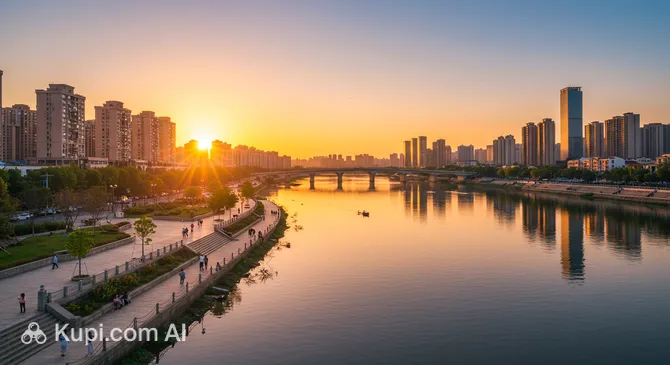
Located in the picturesque Hubei Province, Hanchuan is a harmonious blend of thriving industry and deep-rooted agricultural traditions. Situated near the majestic Hanshui River, this city serves as an important economic hub in central China. Home to over a million people, it offers the atmosphere of a vibrant yet cozy and welcoming metropolis.
The city's geographical location largely defines its unique character: endless rice fields give way to modern neighborhoods, while its proximity to the water lends a special softness to the landscape. If you are interested in the historical heritage of the region, Hanchuan offers an authentic experience of provincial culture, where family values and traditions still play a key role in everyday life.
Hanchuan. Illustration.
Source: Kupi.com AI
A visit to Hanchuan is a wonderful opportunity to see the real China without the usual tourist crowds. The city is famous for its textile production and its role as a "rice granary," inviting travelers to enjoy a peaceful pace of life and the sincere hospitality of the locals.
Weather Overview
The climate in Hanchuan is typical of central China and is characterized as subtropical monsoon. The city experiences a clear change of seasons: hot and humid summers with average temperatures around +29...+30°C and mild, relatively dry winters, when the thermometer stays around +5...+6°C.
The highest rainfall occurs in June and July (up to 237 mm per month), which should be taken into account when planning your trip. If you want to enjoy walking, the best time for a visit is spring (April-May) or autumn (September-October), when the most comfortable weather in Hanchuan sets in.
In winter, despite the above-freezing temperatures, the high humidity can make it feel chilly, and in summer months, the humidity combined with heat above +30°C creates a sauna effect. Winds in the region are usually moderate, around 2-2.5 m/s, providing slight relief on sweltering days.
Average monthly temperature
Average monthly precipitation
Interesting Facts
Geographical Center: Hanchuan is located in the central part of Hubei Province, in close proximity to the Hanshui River, which is the largest tributary of the Yangtze.
Rice Capital: The city is considered one of the key rice producers in the region; local rice fields have defined the landscape and the city's economy for centuries.
Textile Hub: Hanchuan has a well-developed textile industry, with products supplied to many regions of China, though this sector remains little known to the general public.
City Scale: Despite its status as a "medium-sized" city by Chinese standards, Hanchuan's population exceeds 1.09 million people, comparable to some of the largest cities in Europe.
Transport Significance: Due to its location, the city has historically served as an important link between the provincial interior and major trade routes.
How to Get There
Hanchuan's accessibility is ensured by its favorable location near major hubs in central China. Travelers find it easiest to plan their route via neighboring Wuhan, from where the city can be reached by high-speed train in just an hour. More detailed route information can be found in the section on how to get to Hanchuan.
For those who prefer rail travel, the main hub is Xiaogan Railway Station (GGX). Although it is located some distance from the center, it serves trains from megacities like Beijing and Shanghai, making the city part of China's extensive high-speed rail network.
The nearest international aviation hub is Wuhan Tianhe Airport. From there, Hanchuan is conveniently reached by taxi, intercity bus, or by taking a connecting train. Bus services are also well-developed, with regular routes connecting the city to all key points in Hubei Province.
While Hanchuan is not a typical tourist center packed with paid attractions, it charms visitors with its natural simplicity and sincerity. One of the main recreational areas is the well-maintained Hanshui River embankments. Here, you can take a leisurely stroll, watching the flow of the water and seeing how the river still serves as a vital transport artery for the city.
For those seeking inspiration in rural landscapes, the rice fields on the outskirts of the city are a must-see. Depending on the season, they transform from mirror-like sheets of water to emerald-green carpets, providing the perfect backdrop for authentic photos of traditional Chinese agriculture.
Local traditional markets are equally interesting. These are not just places to shop, but true centers of social life where you can observe the daily lives of residents, taste the region's freshest produce, and feel the unique flavor of Hubei Province. Walking through such places allows for a deeper understanding of the soul of Hanchuan and its people.
Local Cuisine
The culinary scene in Hanchuan is steeped in Hubei traditions, where local agricultural products and catches from the Hanshui River always take center stage. The cuisine here features moderate spiciness, rich flavors, and an abundance of freshwater fish dishes. Soups hold a special place in the diet, often simmered for a long time to achieve the perfect thickness and aroma.
Be sure to try signature dishes made from lotus root, which is prepared here in dozens of ways—from stewing it with meat to frying it in batter. Various versions of fried rice and spicy stewed beef are also popular. For breakfast, locals prefer hot noodles with sesame paste or fresh flatbreads bought from street vendors.
The food culture in the city is very casual: the best taste experiences often await you at busy markets or in small family-run restaurants that are always crowded. For drinks, opt for local varieties of green tea, which is perfectly refreshing on a hot day, or local beer, which complements spicy snacks well.
Travel Tips
Welcome to Hanchuan! To make your introduction to this city as comfortable and positive as possible, we have prepared some practical tips.
Clothing and Essentials: Depending on the season, bring light clothing made of natural fabrics for summer or windproof jackets for spring and autumn. Be sure to bring comfortable shoes for walking and a power adapter for Type A, C, or I sockets.
Transport: The primary way to get around is by bus or taxi. We recommend installing a ride-hailing app (such as DiDi), but be prepared that it may require linking a local card or account.
Finances: The official currency is the Chinese Yuan (CNY). Always carry cash, as international Visa/Mastercard cards only work at major ATMs, and shops most often accept payment via QR codes.
Health and Safety: The city is generally very safe. Pharmacies are common, but medicine names may differ, so it's better to bring a basic first-aid kit with you.
Communication: English is hardly spoken in the city. Be sure to install an offline translator on your phone and save your hotel and station addresses in Chinese characters.
Local Etiquette: Chinese people highly value politeness and respect for elders. A nod of the head as a greeting is quite appropriate. It is not customary to leave tips in restaurants.
What to Avoid: Try not to engage in heated arguments in public places and always ask permission before photographing locals in private settings.
Connectivity: For stable internet, it is best to buy a local SIM card at a China Mobile or China Unicom office immediately upon arrival in China.
Hanchuan is a city that reveals itself gradually. Be open to new experiences, and this trip will become one of the most memorable in your collection!
Entertainment & Nightlife
Entertainment in Hanchuan is primarily geared toward spending time with family or friends. The city's nightlife is centered around traditional Chinese karaoke bars (KTV), which are immensely popular here. This is a great way to immerse yourself in the local culture and see how modern residents spend their leisure time.
Night markets are another vital part of evening life. As dusk falls, the streets fill with the aromas of street food, and market stalls offer everything from household knick-knacks to local delicacies. The atmosphere is always lively yet safe for walking. For those who prefer a quieter pastime, numerous teahouses are open, where you can chat for hours over a cup of freshly brewed leaves.
Daytime activities include visiting local parks, where you can often see groups of people practicing Tai Chi or playing board games. The city is ideal for those who value relaxation and the chance to observe the slow pace of life away from the noise of multi-million-resident megacities.
Parks & Museums
For lovers of nature and peaceful relaxation, Hanchuan offers scenic green zones stretching along the banks of the Hanshui River. These parks are a favorite holiday destination for locals. Here, you can have a picnic in the shade of the trees, watch the fishermen, or simply enjoy the river breeze, which provides relief during the hot summer months.
City squares and parks in the center often become venues for folk festivities and impromptu performances. Despite the lack of large, world-class museum complexes, a stroll through local cultural centers will allow you to get acquainted with the region's applied arts, including the textile craftsmanship for which this area is so famous.
For those seeking authenticity, it is recommended to explore the rural outskirts. The natural areas here represent typical Hubei landscapes with an extensive network of canals and rice paddies. This style of exploration replaces classic museums, allowing you to see living history and the traditional way of life in real-time.
Getting Around
The public transport system in Hanchuan consists of an extensive network of bus routes covering both the central districts and the outskirts of the city. This is the most affordable and popular way to get around for locals. The fare is fixed and very low, making bus travel extremely budget-friendly for tourists.
There is no metro in the city, but this is more than compensated for by the large number of taxis and private ride-hailing services. Taxis can be hailed on the street or called via a mobile app. For short trips around the center, many prefer bicycles or electric scooters, which have become an integral part of the urban landscape.
When using buses, keep in mind that most signs and route maps are written only in Chinese. Tourists are recommended to carry a map with the names of key points in characters. Fares are usually paid either in cash via the coin slot near the driver or by using QR codes from local payment systems.
Accommodation
The hotel infrastructure in Hanchuan offers accommodation options primarily aimed at business travelers and transit tourists. In the city center and in areas adjacent to major transport hubs, you can find comfortable 3- and 4-star hotels offering modern services at quite affordable prices.
For those traveling on a budget, numerous guesthouses and small budget hotels are available. These allow for significant savings while providing the necessary basic amenities. When choosing accommodation, look for proximity to shopping streets or the embankment to enjoy walking to the city's most interesting spots.
It is recommended to book accommodation in advance, especially if your trip coincides with Chinese national holidays. For searching, it is best to use major Chinese booking platforms like Ctrip or Trip.com, which offer the most comprehensive selection of properties in Hanchuan.
Nearby Cities
Thanks to its location, Hanchuan serves as an excellent starting point for exploring the central part of Hubei Province. Just a few dozen kilometers away are major cultural and economic centers, each with its own unique character.
The most obvious destination for a trip is the majestic Wuhan. This massive metropolis offers modern skyscrapers, historic colonial-era architecture, and the famous Yellow Crane Tower. It is also worth visiting Yingcheng, known for its hot springs and ancient traditions, as well as Xiantao, which will delight lovers of water landscapes.
Traveling around the surrounding area will allow you to see the many facets of China: from futuristic cityscapes to the quiet charm of smaller towns like Tianmen or Anlu. All these destinations are easily reachable as day trips by high-speed train or bus.
Shopping & Souvenirs
Shopping in Hanchuan is primarily about discovering local products and everyday essentials. The city is famous for its textiles, so you can find great deals on high-quality fabrics and locally produced clothing. Central shopping streets offer a wide range of goods from Chinese brands, which can be attractive for their price and quality.
To find authentic souvenirs, it is best to head to the traditional markets. Here, look for high-quality local rice, which is considered the pride of the region, as well as various types of green tea. You can often find handmade items from local artisans at the markets, reflecting the cultural characteristics of Hubei Province.
Most shops stay open late, usually until 9:00 PM or 10:00 PM. Large retail outlets accept payment via popular mobile apps like WeChat Pay and Alipay; however, when visiting small shops and food markets, it is always wise to have cash in Yuan (CNY), as international bank cards are rarely accepted.