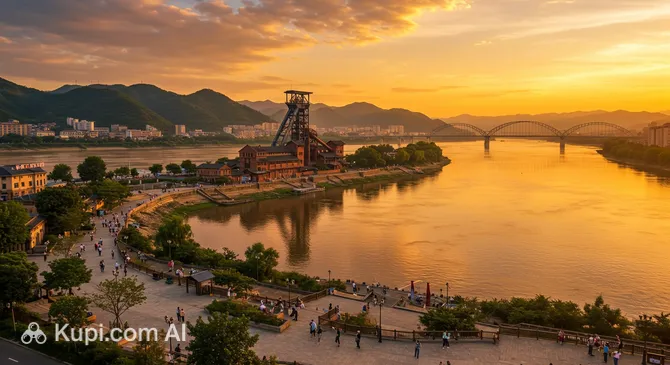
Situated on the picturesque northern bank of the Yangtze River, Huangshi is a fascinating blend of industrial grandeur and natural harmony. This city in Hubei Province deservedly holds the title of China's "pearl of mining and metallurgy." Here, modern urban landscapes stand alongside ancient mines dating back thousands of years, creating a unique atmosphere where the past and present are inextricably linked.
Huangshi. Illustration.
Source: Kupi.com AI
The city's geographic location at the foot of the mountains and its abundance of water resources have defined its mild climate and rich biodiversity. With a population of about 2.5 million, Huangshi remains an important industrial hub while offering tourists tranquility along the shores of Lake Cihu and breathtaking panoramas from Mount Xisai. The region's rich heritage is reflected in numerous monuments and museums, making the city a significant cultural center in the middle reaches of the Yangtze.
Travelers are drawn here by the opportunity to see the grand National Mining Park with its colossal open-pit mine and the ancient Tonglushan copper mine. Huangshi is a destination for those seeking authentic China, away from overcrowded megacities, yet with the comfort of modern infrastructure. We invite you to discover this hospitable land of mountains, lakes, and industrial legends.
Weather Overview
Huangshi features a subtropical monsoon climate, which gives the city clearly defined seasonal changes. Summers here are hot and humid—between June and August, temperatures often rise to +30...+35°C. Winters, conversely, are cool and mild: in December and January, the thermometer usually fluctuates between 0...+10°C, though high humidity can make the weather feel harsher.
Precipitation is unevenly distributed, with the spring and early summer months being the rainiest. April and May often bring abundant warm rains that awaken the lush greenery around the lakes. Autumn is considered the most pleasant time to visit, as sunny and moderately warm weather sets in. This is when the famous Acacia Festival takes place, and the city's climate becomes ideal for long outdoor walks.
When planning your trip, keep in mind that heavy downpours are possible in July and August, typical of the monsoon period. Nevertheless, the abundance of sunny days in September and October (averaging more than 20 dry days per month) makes autumn the "golden season" for tourists wishing to explore the mountains and ancient mines of Huangshi without the whims of the weather.
Average monthly temperature
Average monthly precipitation
Interesting Facts
Ancient Technologies: The Tonglushan copper mine in Huangshi is considered one of the oldest and best-preserved mining and metallurgical sites in the world, having functioned since the Shang Dynasty (about 3,000 years ago).
Industrial Scale: The city's National Mining Park features Asia's first man-made open-pit mine, reaching an impressive depth of 444 meters.
Three Kingdoms Heritage: In the waters of the Yangtze near Huangshi, historical traces can still be seen—remnants of iron chains used during the Three Kingdoms era to block enemy fleets.
City of Acacias: Huangshi is famous for its acacia forests; an annual festival dedicated to the blooming of these trees attracts thousands of nature lovers and photographers.
Recent City Status: Despite its ancient mining history, Huangshi only officially received city status in 1950, when several industrial districts were merged.
How to Get There
Huangshi boasts a well-developed transport network, making it easily accessible for travelers exploring central China. Due to its proximity to major megacities and its location on the vital Yangtze River waterway, the city is integrated into the region's key logistical routes. You can find more information about planning your trip on the page how to get to Huangshi.
While the city itself does not have a major international airport, the nearest aviation hub is Wuhan Tianhe International Airport, located about an hour's drive away. It receives flights from all over the world and is connected to Huangshi via expressways and railways. The city's own airport, with the code HSY, serves regional needs, but Wuhan remains the primary point of arrival by air.
The railway is the most convenient way to reach the city. Huangshi Railway Station (HSD) is a modern hub served by high-speed trains. The journey from Wuhan takes only about 1 hour, and direct services link the city with Shanghai and other major economic centers in Hubei Province.
For those who prefer traveling by car, the G50 Expressway passes through the city. Regular bus services connect Huangshi with neighboring cities such as Ezhou and Huanggang. River transport on the Yangtze is primarily used for freight, though cruise ships occasionally make stops at this industrial port.
Main Attractions
One of the city's most breathtaking attractions is the Tonglushan Ancient Copper Mine. This unique archaeological site is often called the "Ninth Wonder of the World" due to its preserved shafts and furnaces, which are over 3,000 years old. Visitors can descend into ancient tunnels and visit the museum, which displays bronze swords and artifacts demonstrating the skill of ancient metallurgists.
Equally impressive is the Huangshi National Mining Park. Its centerpiece is a giant open-pit mine 444 meters deep, created by decades of ore mining. The park offers not only industrial landscapes with an exhibition of vintage steam locomotives and mining equipment but also beautiful acacia alleys, which are particularly stunning during the autumn blooming season.
For nature lovers, Xiandao Lake, known as "Thousand Island Lake," is a must-visit. Its crystal-clear water and scattered emerald islets create ideal conditions for boat trips. It is also worth climbing Mount Xisai, which offers a majestic view of the Yangtze River. In the evening, the best place to relax is Weisuwan (Weisu Bay), where colorful light shows take place along the modern waterfront.
Local Cuisine
Huangshi's culinary traditions are closely linked to the region's aquatic wealth and its historical past. The city's gastronomic scene offers simple yet incredibly fragrant dishes, where the freshness of ingredients and the balance of spices play the leading roles. The hallmark of local cuisine is "Tonglin" rice noodles—a hearty dish with meat and vegetables, especially popular as an evening snack in the old quarters.
Thanks to its location on the Yangtze River and an abundance of inland lakes, Huangshi is famous for its fish delicacies. Be sure to try steamed fish with ginger and green onions, or braised river seafood dishes. A unique feature of the region is the use of acacia flowers in desserts and snacks, which lend the dishes a subtle, sweet aroma.
The dining culture here is democratic: the best flavors can be found both in restaurants by Lake Cihu and at bustling night markets. It is customary to accompany a meal with local green tea or regional liqueurs. The average budget for tasting a set of local snacks is about 50–80 yuan, making a gastronomic journey through Huangshi both affordable and exciting.
Travel Tips
Preparing for a trip to Huangshi will be easier with our practical recommendations, which will help you navigate this unique industrial and natural center with confidence.
Clothing and Essentials: Choose your wardrobe based on the subtropical climate. In summer, lightweight clothing and sun protection are necessary, and for visiting mines and mountain parks—mandatory comfortable closed shoes with good grip. In winter, a warm jacket will come in handy, as humidity increases the sensation of cold.
Transport: The most convenient way to get around is the Didi app (the local equivalent of Uber). For short rides near the lake, use the municipal bike rental.
Finance: The primary currency is the Chinese Yuan (CNY). We recommend setting up and linking a card to the Alipay or WeChat Pay apps in advance, as cash is not accepted everywhere, and international cards work mainly in large hotels.
Health and Safety: Huangshi is a safe city for walking. Pharmacies are common, but medicine names are usually in Chinese, so it's better to carry a basic first-aid kit with you.
Communication: English is not widely spoken. Install an offline translator and download cards with the names of your hotel and key locations in Chinese. It is best to purchase a SIM card upon arrival at Wuhan airport.
Local Etiquette: Greet people with a slight bow or nod. It is customary to wait your turn in public places. Tipping is not expected in restaurants—it may even confuse the staff.
What to Avoid: Do not litter in natural zones or at heritage sites—this is strictly monitored. Avoid discussing political topics in conversations with locals.
Extra Tip: Try to buy tickets for the National Mining Park online in advance to avoid queues, especially on weekends.
Following these simple rules will allow you to focus on the beauty of Huangshi and get the most out of your trip to this amazing region!
Entertainment & Nightlife
Evening life in Huangshi is characterized by a calm and contemplative nature, centered around relaxation by the water. The main attraction after dark is Weisuwan, where the embankment is transformed by large-scale light shows. It is an ideal place for strolls, where modern illuminations reflect in the waters of the Yangtze, creating the atmosphere of a high-tech fairy tale.
For those who prefer active recreation, evening bike rides along the specially equipped "green paths" around Lake Cihu are a popular activity. Locals and tourists gather here to enjoy the cool breeze and picturesque views of the illuminated park zones. The lake area also hosts numerous cozy cafes and restaurants that stay open late.
Cultural leisure is represented at the Huaxin 1907 park, where old industrial spaces have been converted into modern art galleries and creative clusters. Exhibitions and intimate events are frequently held here. While the city lacks a boisterous club scene, traditional night markets and walks through the lit streets of ancient districts allow you to fully experience the authentic rhythm of life in this region.
Parks & Museums
Huangshi pleasantly surprises with an abundance of green zones, among which Tuanchengshan Park stands out. It is a favorite spot for locals to stroll and take photos, where well-maintained alleys blend harmoniously with views of the water. Another unique site is the Huaxin 1907 Cultural and Historical Park, created on the grounds of an old cement factory, where industrial architecture serves as a backdrop for modern art galleries.
For those who want to dive deeper into the region's history, a visit to the Tonglushan Ancient Copper Mine Museum is a mandatory part of the program. Rare bronze artifacts and tools found during archaeological excavations are exhibited here. The museum clearly demonstrates how metal mining technology evolved over three millennia and is one of the most important specialized museums in China.
The city's natural beauty is concentrated in the Xiandao Lake area. This is not just a body of water but a large-scale natural park with thousands of islands featuring hiking trails. The combination of educational tourism at the National Mining Park and the aesthetic pleasure of walking in the gardens makes Huangshi an excellent destination for fans of both history and nature.
Getting Around
The transport system in Huangshi is focused on the convenience of moving between industrial zones, residential neighborhoods, and tourist sites. The main form of public transport is buses and minibuses. The route network covers the entire city, making it easy to get from the center to remote attractions such as ancient mines or national parks. Fares are low, and payment is possible both in cash and via popular mobile services.
Although Huangshi does not currently have a metro, the city compensates for this with a well-developed infrastructure for individual trips. Taxis and ride-sharing services (such as the Didi app) are very popular, working quickly and being relatively inexpensive. For tourists, this is often the most comfortable way to get around, especially when needing to reach the Huangshi Railway Station with heavy luggage.
Particular attention is paid to eco-friendly ways of getting around. Modern bike lanes are laid along the shores of Lake Cihu, and bike rental stations operate in popular recreation areas. This is a great alternative to motorized transport for those who want to see the urban landscapes at a leisurely pace. Keep in mind that public transport starts early in the morning, which is convenient for trips to nature parks before the afternoon heat sets in.
Accommodation
Tourists in Huangshi are offered a decent choice of accommodation options, capable of satisfying both budget travelers and those who appreciate comfort. The most popular area to stay is around Lake Cihu. This area is home to mid-range and high-end hotels, offering picturesque views of the water and park zones.
If your goal is proximity to the main attractions and natural sites, consider hotels in the Tuanchengshan and Huaxin districts. In these areas, you can find both modern hotel complexes and more modest apartments. Prices for budget accommodation and hostels start at 100–200 yuan per night, while rooms in four- and five-star hotels on the banks of the Yangtze will cost significantly more.
During peak tourist seasons, especially during the Acacia Festival in autumn or during China's national holidays, it is recommended to book accommodation in advance. Major international booking systems and local Chinese services offer a wide range of options with detailed reviews and photos, making it easy to find the perfect place to stay.
Nearby Cities
Huangshi is an excellent starting point for exploring the eastern part of Hubei Province, where interesting cities with rich histories are located within a one-hour drive. By exploring the surroundings, you can better understand the cultural diversity of the region, transitioning from industrial landscapes to ancient shrines and picturesque riverbanks.
Just 13 kilometers away is the city of Daye, which is historically and inextricably linked to Huangshi through shared mineral deposits. A bit further away is Ezhou, known for its ancient pagodas and temples. It is also worth visiting Huanggang, which offers informative walks through historical sites along the Yangtze and an introduction to the traditional architecture of the province.
If you have a free day, you can head to Wuhan—a massive metropolis and cultural center reachable in just one hour by high-speed train. Short trips to places like Wuxue or Fanzhuang will allow you to see the more tranquil life of the Chinese province. The surroundings of Huangshi are full of hidden gems waiting for the inquisitive traveler.
Shopping & Souvenirs
Shopping in Huangshi offers tourists a unique opportunity to purchase items that reflect the city's centuries-old metallurgical history. Handmade copper products, inspired by findings at the Tonglushan mine, are rightfully considered the primary souvenir. These can be elegant replicas of ancient swords and mirrors, as well as modern decorative items made using traditional casting techniques.
The main shopping areas are concentrated in the city center and in the districts adjacent to the Yangtze embankment. Here you can find both large shopping malls with international brands and small shops selling local goods. Acacia products deserve special attention: local acacia tea and acacia-based sweets make for an excellent and inexpensive gift (prices start at 50 yuan).
For a more authentic experience, it is worth visiting the markets in the ancient city area. Shops usually operate from 9:00 to 21:00, and payment is most often made via the WeChat Pay or Alipay mobile apps, although large shopping centers also accept cards. Don't forget to look for local handmade crafts that highlight the uniqueness of this industrial yet very cozy region.