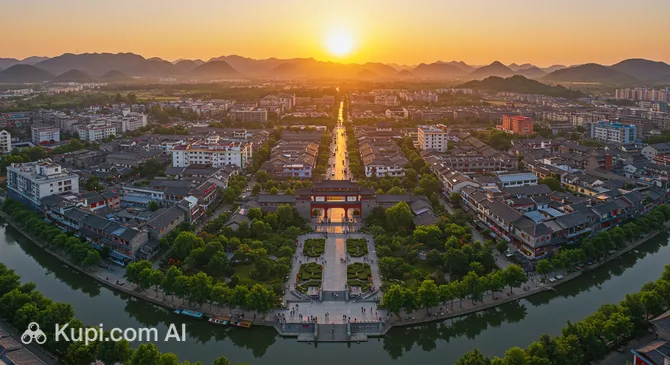
Located in the heart of Hubei Province, Anlu is a harmonious blend of ancient history and the steady rhythm of modern China. Situated just 80 kilometers from the metropolis of Wuhan, this county-level city serves as an important administrative and industrial hub for the region while retaining the charm of provincial comfort.
The city's geography in the northeastern part of the province, near the majestic Tongbo and Dahong mountains, defines its landscape. With a population of approximately 583,000, Anlu is a prime example of a developing regional hub where urban infrastructure coexists with vast rural territories. Anlu. Illustration.
Source: Kupi.com AI
Although the city is not a traditional tourist hub, it possesses a rich heritage. It is worth exploring the city's centuries-old history if only because it was founded during the Qin Dynasty (221–206 BC). This makes it one of the oldest administrative entities in this part of the country.
The atmosphere here is calm and grounded, allowing travelers to see the authentic, non-touristic China. We invite you to visit Anlu to feel the spirit of the genuine province and enjoy the views of the surrounding mountain peaks.
Weather Overview
The weather in Anlu is shaped by a subtropical monsoon climate, typical of east-central China. This region typically experiences hot, humid summers and relatively mild but cool winters. Precipitation is unevenly distributed, with most rain falling during the summer months when humidity rises significantly.
When planning your trip, you can study the city's climate in more detail. In the hottest month, July, temperatures often rise to +31–32°C, while in January, the thermometer hovers around +4–8°C during the day, occasionally dropping to light frosts at night. Expect a sunny and hot summer with frequent showers and a fairly dry, calm winter.
Average monthly temperature
Average monthly precipitation
Interesting Facts
Ancient Heritage: Anlu County holds the status of one of the oldest administrative centers in the region, having been founded during the Qin Dynasty (221–206 BC).
Geographical Neighbors: The city is set in the picturesque surroundings of the Tongbo and Dahong Mountains, which gives its outskirts a special natural flair.
Transport Hub: Major national transport arteries pass through Anlu, including National Highways 316 and 107, as well as the Hanshi Expressway.
Demographic Balance: Despite its city status, nearly half of the population (about 473,000 people) lives in rural areas, preserving a traditional way of life in the region.
Proximity to the Metropolis: Anlu is located just 80 kilometers from Wuhan, one of China's largest cities, making it a convenient transit point.
How to Get There
Thanks to its location near major transport arteries in Hubei Province, reaching Anlu is quite simple. The main flow of travelers arrives via the neighboring metropolis of Wuhan, which is connected to the city by a network of expressways and railways. You can choose the most suitable option by exploring detailed route information.
The city does not have its own airport. The nearest air gateway is Wuhan Tianhe International Airport (WUH), located about 74 kilometers away. From the airport terminal, you can reach the city center by taxi or intercity bus in 1–1.5 hours. This is the most convenient route for those arriving from other provinces or from abroad.
Railway communication is key for the region. Anlu Station serves trains running along the Handan line. High-speed trains run regularly from Wuhan, with a travel time of about one hour. This is a fast and budget-friendly way to travel between the cities.
It is also convenient to reach the city by car or bus via Highways 316 and 107. A trip from Wuhan via the Hanshi Expressway usually takes a little over an hour, though travel time may increase during peak hours due to traffic jams at the exits of the metropolis.
Main Attractions
While Anlu is primarily an industrial and administrative center, it offers interesting locations that reflect the spirit of Hubei Province. Within the city itself, life buzzes in the central squares and bustling markets, which serve as the main meeting and trading spots for local residents. These are the best places to observe the daily lives of the townspeople.
For nature lovers, the main interest lies in the surroundings. Not far from the city rise the Tongbo and Dahong mountains. These mountain ranges provide a picturesque backdrop and attract those who prefer wild nature over organized parks, as there is currently no mass tourist flow or well-trodden trails here.
An important piece of infrastructure is the historical district near the railway station. Since the county has existed for over two thousand years, a walk through the old quarters can reveal details of ancient architecture hidden behind modern facades to an observant traveler. This is a place where history literally meets modernity at transport hubs.
Local Cuisine
The gastronomic scene in Anlu is a celebration of traditional Hubei cuisine. The main feature of the local menu is the abundance of dishes made from fresh river fish caught in local waters. Travelers should definitely try fried or braised fish in a spicy sauce, the flavor of which is enhanced by aromatic spices and fresh herbs.
Street food plays an important role in the city's food culture. In local markets, especially in the evening, you can find many stalls serving spicy soups, stewed vegetables, and various rice-based snacks. The overall character of the cuisine can be described as piquant and hearty, with an emphasis on preserving the natural taste of the ingredients.
As for drinks, Anlu residents prefer green tea, which is served everywhere. Traditional locally produced rice wine is also popular. For the most authentic experience, we recommend stopping by small family-run diners or hotel restaurants that offer the classic Hubei provincial menu.
Travel Tips
A trip to Anlu will reveal the authentic life of the Chinese province. To ensure your trip is comfortable and leaves only pleasant impressions, check out our practical tips.
Clothing and Essentials: Anlu has a subtropical climate, so bring light cotton clothing for summer and a warm jacket for winter. Be sure to bring comfortable walking shoes and a universal adapter for Chinese sockets (Type A, C, or I).
Transport: There is no metro in the city, so use buses or taxis. To call a car, it is best to install the Didi app, but be prepared for the interface to be in Chinese.
Finance: The main currency is the Yuan (CNY). Visa and MasterCard are rarely accepted, so be sure to set up WeChat Pay or Alipay and keep some cash on hand for small shops.
Health and Safety: The city is very safe. Pharmacies can be found in the center and near the station, but it is better to bring specific medications with you. Drinking tap water is not recommended—always buy bottled water.
Communication: English is practically not spoken here. Download an offline translator and save your hotel address in Chinese characters in advance.
Local Etiquette: Chinese people are very friendly. A slight nod is sufficient when greeting. It is not customary to leave tips in restaurants—it may even offend the staff.
What to Avoid: Do not plan important travel during peak hours, as the roads to Wuhan can be heavily congested. Also, try to avoid walking in unlit rural outskirts late at night.
Additional Tip: If you plan to take the train to Wuhan, buy tickets in advance through official services, as they sell out quickly on weekends.
Enjoy your trip to Anlu! May this ancient city provide you with a unique experience and many discoveries.
Entertainment & Nightlife
Entertainment and nightlife in Anlu are intimate and primarily local in character. The city is not geared toward mass tourism, so you won't find loud nightclubs or large-scale concert venues here. The main centers of evening activity are karaoke halls (KTV) located in major hotels and small, cozy establishments in the central part of the city.
Local residents prefer to spend their evenings strolling through parks or at the lively markets near the railway station, where they can grab a snack and socialize. The atmosphere in the city is calm and safe, making it ideal for a leisurely rest after a busy day.
If you are looking for more vibrant experiences, movie premieres, or large-scale shows, it is worth heading to neighboring Wuhan, which is just over an hour away. In Anlu itself, leisure is focused on simple pleasures: tasting street food and visiting local parks, which become centers for family recreation during the day.
Parks & Museums
In Anlu, park zones and natural sites serve as the main places for rest and walks. City squares, concentrated in the central part and near the station, are centers of social life where local residents gather in the evenings. Although there are no large-scale landscaped parks, cozy green corners provide a respite from urban noise.
For those seeking grander natural beauty, the best choice is a trip to the foothills of the Tongbo and Dahong mountains. These areas serve as natural parks. The lack of formal tourist infrastructure is compensated for by the authenticity of the landscapes and the opportunity to enjoy the silence among the mountain slopes.
There are few specialized museums in Anlu, as the region's main cultural treasures are concentrated in larger centers like Xiaogan or Wuhan. However, the architecture of the old quarters and the layout of the county, which retains the features of an ancient administrative center, can be seen as a kind of open-air museum for those interested in the history of ancient Chinese urban planning.
Getting Around
The public transport system in Anlu is simple and straightforward. The core of inner-city transportation consists of bus routes that connect the city center with the railway station, industrial zones, and suburbs. Buses run regularly, though it's worth noting they can be crowded during peak hours due to the flow of passengers working in neighboring districts.
For quick trips around the city, taxis are ideal. You can catch a car on the street or call one through popular Chinese apps. The fare in Anlu is significantly lower than in large metropolises, making taxis an affordable and convenient option for tourists.
Bicycles and electric scooters are popular alternatives to public transport among local residents. The city is quite compact, so many interesting locations in the center can be explored on foot. When planning your trips, keep in mind that there is no metro here, and the main transfer hubs are the intersections of Highways 316 and 107.
Accommodation
Accommodation options in Anlu are primarily geared toward business travelers and transit guests. Classic mid-range city hotels and budget guesthouses predominate. There are no luxury resort complexes in the city, but the available stock offers a decent level of comfort for a reasonable price.
One of the most notable establishments is the Anlu Fengda International Hotel, which offers cozy rooms and a standard set of services for the international traveler. Most hotels are concentrated in the central part of the city and near the railway station, which is convenient for those planning a short stop.
If you are planning a visit to Anlu, it is recommended to book your accommodation in advance, especially if your trip coincides with Chinese public holidays. For longer stays, you might consider renting apartments in modern residential quarters. For booking, it is best to use popular Chinese services or international aggregators focused on the Asian market.
Nearby Cities
The city of Anlu is a convenient base for exploring the northeastern part of Hubei Province. Thanks to developed rail and bus connections, you can easily take interesting trips to neighboring cities, each possessing its own unique character.
Just 38 kilometers away is Yingcheng, known for its thermal springs and salt deposits. Another great option for a trip is Guangshui, located 42 kilometers away, where you can enjoy more mountainous landscapes. If you have the time, it's worth visiting Hanchuan; the road there offers views of the region's typical agricultural landscapes.
Of course, the main destination for a day trip remains Wuhan. This massive metropolis offers endless opportunities for shopping, visiting world-class museums, and strolling along the Yangtze River embankment. Exploring the surroundings of Anlu will allow you to see the full diversity of Central China—from quiet county towns to glowing skyscrapers.
Shopping & Souvenirs
Shopping in Anlu lacks metropolitan glitz, but it is fascinating in its own way for those who want to purchase authentic local goods. Main commercial activity is concentrated on the central streets and markets in the railway station area. Here you will find clothing stores, household goods, and small shops offering everyday items at affordable prices.
For food purchases and souvenirs, head to the local food markets. Here you can buy the region's famous tea, as well as products made by local artisans from bamboo or ceramics. There are few large shopping and entertainment centers in the Western sense; their functions are served by modern supermarkets in the center.
Shops usually operate from early morning until late evening (from 9:00 AM to 9:00 PM). Payments are most conveniently made via mobile apps like WeChat Pay or Alipay, which are accepted almost everywhere. Cash is also still in use, especially at markets, while international bank cards may not be accepted in smaller retail outlets.