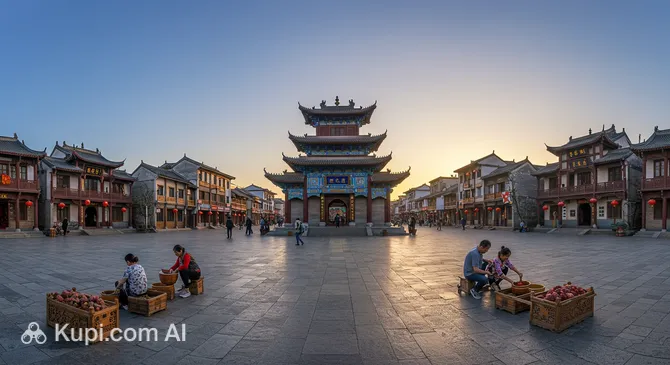
Yicheng is a cozy and welcoming city located in Hubei Province in the vast expanses of China. As an important administrative and economic center of the region, it maintains an atmosphere of authentic provincial life, offering travelers a rare opportunity to see the real everyday life of the Middle Kingdom far from the noise of giant megacities.
Yicheng. Illustration.
Source: Kupi.com AI
With a population of about 1.28 million people, the city harmoniously combines modern wide streets and traditional neighborhoods. Its geographical position in the central part of the country determines its significance as a connecting link, and the rich history of Yicheng is reflected in the preserved monuments of ancient civilizations and the calm, measured pace of life of the local residents.
Visitors are drawn here by the picturesque landscapes near the Yangtze River, authentic markets, and well-kept city parks. It is an ideal destination for those seeking inspiration in simplicity and sincerity, wishing to get acquainted with the cultural heritage of Hubei Province in a relaxed setting.
Weather Overview
The climate in Yicheng is characterized as humid subtropical with a pronounced change of all four seasons. Summer here is usually hot and humid: in July and August, the thermometer often rises to +31°C, while tropical rains bring temporary relief. Winter, on the contrary, is cool and relatively dry, with average temperatures around +4...+6°C, although light frosts are possible at night.
The most favorable time for visiting the city is considered to be spring and autumn. During these periods, the weather in Yicheng pleases with mild warmth in the range of +12°C to +22°C, which is ideal for long walks and sightseeing without exhausting heat or cold winds.
Average monthly temperature
Average monthly precipitation
Interesting Facts
Despite its location in the southern part of central China, Yicheng surprises with a clear change of the four seasons, which is not always characteristic of the subtropical latitudes of this region.
The city is an important part of the historical heritage of the great Yangtze River, which flows nearby and has defined the economy and culture of the region for centuries.
Yicheng is considered an exemplary "middle" city of China: with a population of over 1.2 million people, it maintains a cozy atmosphere that is difficult to find in giants like Wuhan or Shanghai.
How to Get There
The transport accessibility of Yicheng makes it a convenient point for routes through Hubei Province. Since the city itself does not have its own airport, most travelers use the nearest large aviation hubs. Detailed information about routes can be found on the page dedicated to how to get to this region.
The main air port of arrival is Wuhan Tianhe International Airport, located approximately 100–150 kilometers away. From there, Yicheng is easily reached by modern high-speed train or intercity bus in just one to two hours.
Railway communication is the pride of the region. Yicheng station is integrated into the national high-speed road network, providing direct and fast connections to Wuhan, Zhejiang Province, and other key centers of China. Traveling by train allows you to enjoy picturesque views of the country's rural areas.
The main charm of Yicheng lies in its authentic atmosphere and the opportunity to see the everyday life of China without embellishment. A walk through the central streets of the city allows you to appreciate typical regional architecture and peek into quiet, cozy courtyards where time seems to slow down.
Nature lovers should head to the banks of the great Yangtze River, which flows in the vicinity of the city. Views of the river expanses are especially beautiful at sunset, when the water is tinted with golden hues. In addition, ancient local temples can be found in the city and its outskirts, which, despite being absent from world travel guides, amaze with their tranquility and traditional decor.
For those who prefer a leisurely rest, Yicheng offers many green zones and squares. It is an ideal place for thoughtful contemplation of the Hubei provincial landscapes and getting to know the cultural code of central China away from noisy tourist crowds.
Local Cuisine
The gastronomic scene of Yicheng is inextricably linked with the traditions of Hubei Province, where product freshness and harmony of flavors are paramount. Given the proximity of major waterways, the basis of the local menu consists of dishes made from river fish and seafood, which are prepared here with the addition of piquant spices and aromatic herbs.
Be sure to try the spicy soups and various rice-based side dishes. Hubei cuisine is famous for its ability to emphasize the natural taste of ingredients while adding a characteristic "kick." Street food at local markets is an excellent way to get acquainted with the culinary preferences of the townspeople: here you can find freshly prepared snacks whose recipes are passed down from generation to generation.
As for drinks, in Yicheng, as in the whole region, high-quality green tea is highly valued. For more festive occasions, locals prefer traditional rice wines. Family restaurants in the city center offer guests not only a hearty meal but also sincere hospitality, making you feel like a welcome guest in this original land.
Travel Tips
Planning a trip to Yicheng requires attention to detail to ensure your acquaintance with Hubei Province is as comfortable and interesting as possible.
Clothing and essentials: Choose your wardrobe according to the season. Layered clothing is ideal for spring and autumn due to daily temperature fluctuations, and in summer don't forget light items and an umbrella. A modest dress code and comfortable shoes for long walks are recommended for visiting temples.
Transport: Getting around the city is most convenient by taxi or bus. Car-hailing apps popular in China will help avoid translation difficulties as the interface is often intuitive.
Finances: The official currency is the Yuan. International cards are rarely accepted, so it's better to have cash or set up payment systems (Alipay, WeChat Pay). ATMs are available in the city center and near railway stations.
Health and safety: Yicheng is a safe city, but standard precautions are advisable. Pharmacies are easy to find by the green cross, but it is better to have a basic set of medications with instructions.
Communication: English is rarely encountered here. Download an offline translator and save hotel and station addresses in Chinese (characters) in advance.
Local etiquette: Greeting with a slight bow or a nod of the head is the norm. Be polite and patient; locals value composure and a respectful attitude toward traditions.
What to avoid: You should not argue loudly in public places or point fingers at people—it is considered bad manners. Also, avoid discussing sensitive political topics.
Useful gadget: A portable battery (power bank) will be an indispensable assistant, as all life in modern China, from payment to navigation, is tied to the smartphone.
Observing these simple rules will help you fully immerse yourself in the atmosphere of the city and get only positive emotions from your journey!
Entertainment & Nightlife
Entertainment in Yicheng is focused on calm, traditional recreation. Unlike noisy megacities, you won't find an abundance of night clubs with loud music here. Life after sunset smoothly moves to cozy tea houses where locals gather for leisurely conversations and board games.
Evening walks along illuminated embankments and central squares are a popular leisure activity among citizens of all ages. A special atmosphere is created by evening markets, where you can not only buy souvenirs but also try fresh street food in a lively yet friendly setting. This is the best time to feel the rhythm of the city and its true character.
For those looking for a more active nightlife with concerts and bars, it is recommended to plan trips to neighboring Wuhan. However, it is precisely in Yicheng that you can enjoy the rare quiet for modern China and the safety of night walks, immersing yourself in an atmosphere of peace and cultural authenticity.
Parks & Museums
Despite the fact that Yicheng is an industrial and administrative center, the city pays great attention to landscaping. Local parks are oases of tranquility where you can see groups of people practicing tai chi or traditional dancing. A walk through the shady alleys in the central part of the city will allow you to take a break from the urban bustle and enjoy the landscape art of the Middle Kingdom.
The embankments by the Yangtze River deserve special attention. These are spacious recreation areas with beautiful panoramic views, which are particularly popular for family picnics and morning jogs. The natural charm of the surroundings completes the image of Yicheng as a city where nature and urbanism strive to coexist in harmony.
Cultural life is represented by museums dedicated to the history of the Hubei region. In such places, you can get acquainted with archaeological finds that tell about the ancient civilizations that inhabited these lands thousands of years ago. Although such museums are usually small, their exhibitions allow for a deeper understanding of the roots of local identity and the historical significance of the city for the entire province.
Getting Around
The public transport system in Yicheng is simple and efficient. The basis of urban communication consists of bus routes that cover almost all districts. The fare is minimal, and payment is usually made in cash (through the box next to the driver) or using popular mobile applications, making movement accessible to every tourist.
Taxi is the most comfortable way to move around, especially if you are traveling with luggage or in the evening. Cars are easy to recognize by their characteristic colors, and the presence of a meter guarantees transparent payment. It is recommended to have the address written down in Chinese so that the driver can quickly orient themselves on the route.
In recent years, bicycle and electric scooter rental services have become popular in the city. This is a great alternative for short trips around the center, allowing you to avoid traffic jams and see the city streets in detail. Yicheng Railway Station remains the main transport hub connecting the city with the country's major transport arteries.
Accommodation
For travelers who decide to stay in Yicheng, the city offers a decent selection of accommodation options. Most hotels are concentrated in the central areas, which is convenient for walking and access to local restaurants. Both modern mid-range hotels (3–4 stars) offering comfort at a reasonable price and more budget-friendly hostels for economical tourists are represented here.
If you are planning a transit trip, it is worth paying attention to hotels near the railway station. This will save time on travel and allow you to quickly continue your journey through Hubei Province. Although luxury five-star hotels of world chains are rare here, local hotels are famous for the cleanliness and hospitality of the staff.
During peak tourist seasons and national holidays, it is recommended to book accommodation in advance through specialized online services. This guarantees the availability of free rooms and the opportunity to choose an option with the best price-quality ratio, ensuring a pleasant stay in this distinctive Chinese city.
Nearby Cities
Yicheng serves as an excellent starting point for exploring the cultural and historical treasures of Hubei Province. Thanks to the developed railway communication and proximity to high-speed highways, guests of the city can easily plan exciting day trips to the surroundings.
Just 35 kilometers away is the majestic Xiangyang — a fortress city with a rich military history and impressive ancient walls. It is also worth visiting Fancheng, which together with Xiangyang forms a powerful cultural and economic hub of the region. For those who want to see the life of small settlements, Hejiaji will be an interesting destination.
Longer routes can lead you to industrial Zaoyang or the colorful Umayincun. Each of these destinations reveals new facets of the Chinese province, offering unique views and unforgettable impressions of the diversity of this region.
Shopping & Souvenirs
Shopping in Yicheng is primarily about getting to know the local flavor and traditional goods. In the central part of the city, shopping streets are concentrated, where modern shops coexist with artisan stalls. Here you can find high-quality locally produced clothing and a variety of souvenirs reflecting the spirit of Hubei Province.
Special attention should be paid to the city markets. These are noisy and lively places where everything from exotic fruits to handmade products is sold. It is in the markets that it is best to buy the famous local tea and silk products, which will become a wonderful reminder of the trip. Bargaining is appropriate here and often turns into an engaging process of communication with the sellers.
Shops usually operate from early morning until late evening, and payment in most large outlets is accepted via payment system QR codes. Although there are no giant world-class shopping malls in the city, the authenticity of local shops and the opportunity to purchase unique regional goods make the shopping process in Yicheng truly interesting and original.