Support

Laohekou

About

Laohekou is a bustling trade and industrial hub located in Hubei Province, China. The city's name, which literally translates as "old river mouth," comes from its strategic position at the confluence of waterways on the Han River. Historically, Laohekou became an important river port and a distribution center for agricultural products, earning it the nickname "Little Hankou."

The city's geographical location has shaped its destiny for centuries. Back in the Song Dynasty, it housed an important military district, highlighting the region's defensive significance. Today, it is a modern city with a population of about 471,000, where industrial rhythms blend harmoniously with traditional commercial hustle. If you are interested in a deeper dive into the region's heritage, it's worth checking out the city history section.
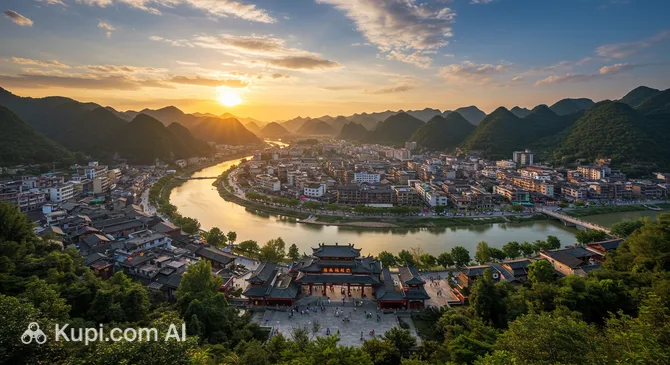
Laohekou. Illustration.
Source: Kupi.com AI

The atmosphere of Laohekou is permeated with the spirit of commerce and daily labor. You won't find the pretentiousness of major megacities here, but there is plenty of authentic life from central China: noisy markets selling medicinal herbs, cotton, and grain, as well as picturesque views of the river where cargo ships still ply the waters. Laohekou is an excellent discovery for those who want to see the "real" China, hidden behind the facades of popular tourist routes.

Visiting this city is an opportunity to touch a living logistical artery of the country and feel the pulse of a region that has linked northern and southern provinces for centuries. We invite you to explore this hospitable land and discover its hidden charm.

Weather Overview

Laohekou is located in a subtropical monsoon climate zone, typical of China's central regions. This means the city experiences a clear change of seasons: hot, humid summers and fairly cool winters. If you are planning a trip, keep in mind that the most comfortable conditions for walking are usually in spring and autumn.

Summer months, especially July and August, are characterized by high temperatures (averaging around 28°C, but often exceeding 32°C) and heavy rainfall. During this period, humidity increases significantly. Winter in Laohekou is cool and dry: in January, the average temperature is about 3.3°C, and light frosts down to -1°C are possible at night. A more detailed city climate will help you choose the ideal time for your visit.

Precipitation is unevenly distributed: most of it falls between June and September. The driest month is December, when rain is very rare. Due to the influence of the Han River, morning fogs are common in the city, which give the local landscapes a special atmosphere but may slightly affect the operation of river transport.

Average monthly temperature

Average monthly precipitation

Interesting Facts

The city of Laohekou hides many interesting details that help to better understand its historical and modern role in Chinese life.

  • Literal Translation: The city's name translates as "old river mouth," directly indicating its location at the confluence of important water arteries on the Han River.

  • Ancient Roots: The territory of the modern city has a rich past—in deep antiquity, it was part of the Yin Kingdom, which was absorbed by the powerful Chu Kingdom in 532 BC.

  • Commercial Title: Due to its immense importance for trade, comparable to the country's largest ports, the city received the honorary nickname "Little Hankou."

  • Military Proximity: Just a couple of kilometers from the city center is the Guangzhou MR Air Base (LHK), which, despite having an IATA code, is a restricted military facility.

  • Social Activity: Despite its industrial status, the city has a highly developed system of local communities—more than 50 groups for joint sports and hobbies are officially registered here.

How to Get There

Laohekou is an important transport hub in northern Hubei Province, connecting trade routes between the northern and southern regions of the country. The city boasts good road connectivity, making it accessible for travelers exploring central China. You can find more detailed information about routes in the section on how to get to the city.

The city's air travel has its own specifics. In the immediate vicinity is the Guangzhou MR Air Base (LHK), located just 2.6 km from the center. However, it should be noted that this is primarily a military facility, and civilian flights here are extremely limited. Most tourists prefer to use the airport of the neighboring city, Xiangyang, which is located about 57 km away and accepts regular domestic flights from the country's largest cities.

AirportPassenger trafficDistance
Xiangyang Airport1.8 mln64 km
Shiyan Wudangshan1.1 mln76 km
Nanyang Airport1.1 mln110 km
Shennongjia4 037151 km
Yichang Sanxia Airport3.0 mln192 km

Railway transport is the most reliable way to get to Laohekou. The city is included in the province's dense railway network, making it easy to reach by train from Wuhan or Xiangyang. Travel time by car or bus from Xiangyang is about an hour; however, delays are possible during peak hours due to active freight traffic on the highways.

StationPassenger trafficDistance
Shiyan Railway Station4.2 mln88 km
Jingmen Railway Station156 km
Yichang Railway Station194 km
Zhijiang Railway Station1 mln217 km
Jingzhou Railway Station1.8 mln229 km

Main Attractions

Laohekou is primarily a hardworking city where life is centered around trade and industry, so there are few classic tourist attractions. However, its very structure and historical role make visiting the city an interesting experience for those seeking authenticity. The main "protagonist" here is the Han River (a tributary of the Yangtze). A walk along its banks allows you to see the operation of the old river port, which for centuries served as the main gateway for goods from across the region.

For those who appreciate historical context, it will be curious to look for traces of the past in the city's layout. Laohekou is known as "Little Hankou" (the old name for part of modern Wuhan), and its commercial significance is felt in the central market districts. Even today, there is active trade in cotton, grain, and medicinal herbs. Despite the absence of grand monuments, the atmosphere of an old trading hub still lingers in the narrow streets near the water.

Another important landmark in the city is its modern squares and shopping zones. In the absence of large museums, it is the markets and shopping centers that become the centers of social life. Here, you can observe the locals, try street food, and feel the rhythm of a city that was an important military outpost during the Song Dynasty. Although almost no specific ruins from that time remain, the mere awareness of the place's ancient history adds special meaning to a walk.

Local Cuisine

The gastronomic culture of Laohekou is closely linked to the culinary traditions of Hubei Province. Fresh products play the main role here: rice, seasonal vegetables, and, of course, river fish, which the Han River provides in abundance. The local cuisine is characterized by moderate spiciness and an emphasis on preserving the natural flavor of ingredients, making it accessible and pleasant for most travelers.

It is definitely worth trying the simple "rural" dishes prepared in small eateries near the port. Laohekou is famous as a marketing center for medicinal herbs, so beneficial roots and plants are often used in the local cuisine, adding a unique aroma to the dishes. Street food at the markets is the heart of the city's gastronomy, where you can find the freshest steamed buns and various types of noodles.

Regarding beverages, locals prefer high-quality green tea and herbal infusions, with recipes passed down through generations. Restaurants in the city are mainly oriented toward business meetings and family dinners, offering hearty portions and a hospitable atmosphere. This is a place where food is perceived as an important part of daily life rather than a tourist attraction, which guarantees honest taste and high-quality products.

Travel Tips

A trip to Laohekou is a great way to see the real, non-tourist China, but such a journey requires some preparation. Here are a few practical tips to help you feel confident in this trading city.

  1. Clothing and Seasonality: The climate in the region is subtropical, so bring light clothing made of natural fabrics for summer and definitely windproof gear for the cool winter. Comfortable shoes are essential for walking through the market districts.
  2. Getting Around Town: The best way to move around is by taxi via the Didi app. Public buses are convenient, but navigating them can be difficult without knowing the language.
  3. Finances and Payment: Cash Yuan is gradually going out of circulation, so be sure to install and link a card to Alipay or WeChat Pay. In small shops near the port, this might be the only way to pay.
  4. Language Barrier: English is not widely spoken in Laohekou. Download an offline translator and carry a card with your hotel's name in Chinese characters.
  5. Connectivity: For stable internet, it is best to buy a local SIM card (e.g., China Unicom). Hotels have Wi-Fi, but you will need a VPN to access many familiar services.
  6. Local Etiquette: The city's residents are friendly but straightforward. Greet people with a slight nod. In shopping areas and markets, be polite but firm when discussing purchase terms.
  7. What to Avoid: Try not to plan important trips during peak hours when roads are clogged with freight transport, and avoid discussing political topics in public places.
  8. Specific Tip: Visit the Han River embankment at sunset—it is the best time to see the city in its most picturesque light without the unnecessary hustle.

May your introduction to Laohekou be filled with bright discoveries and pleasant encounters!

Entertainment & Nightlife

The entertainment scene in Laohekou is predominantly local in character, as the city is oriented toward the industrial sector and trade. You won't find noisy nightclubs or grand concert halls typical of megacities here. The evening life of locals often focuses on family dinners in restaurants or walks along the Han River embankment, where one can enjoy the cool air and the calm flow of the water.

For those seeking more active leisure, the city has numerous local interest groups—ranging from networking and sports to social coffee gatherings. The social life of Laohekou is very active, but it is hidden in small cafes and public spaces. If you crave a classic "nightlife drive" with bars and cinemas, experienced travelers suggest heading to neighboring Xiangyang, which is about an hour's drive away.

During the day, the main places for relaxation are the central shopping squares and markets. This is a great opportunity to observe the daily life of citizens in an informal setting. Safety in the city is at a high level, so evening walks along the central lit streets are quite comfortable. To call a taxi late at night, it is best to use the Didi app, which operates reliably in this region.

Parks & Museums

Laohekou is primarily an industrial city, so there are few classic park areas with amusement rides. The main place for outdoor recreation and walks for locals is the shoreline of the Han River. This natural space replaces parks for the townspeople, offering open views of the water and a chance to escape the urban bustle while watching the movement of ships.

As for cultural institutions, the city lacks large art galleries or famous historical museums. The region's main heritage, including artifacts from the Song Dynasty, is most often presented in the larger museums of neighboring Xiangyang. Nevertheless, a walk through the old trading quarters themselves resembles a visit to an open-air museum, where history comes alive in the architecture of warehouses and old piers.

Landscaping in Laohekou is concentrated around the central squares and administrative buildings. Although you won't find large-scale botanical gardens here, these small green oases provide necessary comfort on hot summer days. For a tourist seeking quiet, the best solution would be to visit the quiet streets away from the main transport arteries, where you can feel the calm rhythm of life in provincial China.

Getting Around

The transport system of Laohekou is highly functional and adapted to the needs of locals and the trade sector. The main form of public transport is buses, which connect residential areas with the river port, markets, and the station. Routes cover all key points of the city, and fares remain extremely low, making this method of travel very budget-friendly.

There are no metro or tram lines in the city, so mobility is provided by a dense network of taxis. The most convenient way to call a car is to use the Didi app (the Chinese equivalent of Uber). Taxis are inexpensive here, but it is worth considering that demand increases sharply during peak hours, and waiting times may lengthen. Also, bicycles are popular in the central part of the city, allowing for easy maneuvering in the flow of traffic.

Tourists should remember Laohekou's status as a major logistical hub. Due to the constant flow of freight trucks transporting goods to neighboring provinces, traffic jams can occur on main highways and approaches to the freeways. Plan your trips in advance, especially if you need to get to the station or to neighboring Xiangyang, and try to avoid traveling during hours of maximum road congestion.

Accommodation

The hotel infrastructure in Laohekou is primarily geared toward business travelers and people passing through the city. You won't find luxurious five-star resorts here, but you can find decent middle-class options and budget business hotels. In total, there are about 20 accommodation facilities in the city and nearby suburbs, most of which offer basic comfort at very affordable prices.

One well-known option for staying is the Laohekou Zhichengzhixing Business Hotel, which is often chosen by business travelers. Accommodation prices in the city start at very modest amounts (around 1,300 rubles per night), making a stay here very economical. The majority of hotels are concentrated in areas convenient for accessing transport hubs and central shopping zones near the port.

When planning a trip, keep in mind that during major agricultural fairs or holidays, vacancies in the best hotels can fill up quickly, so it is recommended to book accommodation in advance. For searching and booking, it is best to use popular Chinese services (such as Trip.com), as international aggregators may not display all available options in this region.

Nearby Cities

Laohekou is an excellent starting point for exploring the northern part of Hubei Province, offering travelers access to interesting cultural and historical centers of the region. Thanks to a developed road network, many neighboring cities are ideal for day trips, allowing you to expand your travel experiences.

Just 59 km from the city is Xiangyang—a large metropolis with a rich history and magnificently preserved city walls. It is a modern center with developed infrastructure, parks, and museums. Also noteworthy is the city of Danjiangkou, located just 23 km away. It is known for its natural beauty and proximity to the famous Wudang Mountains—the cradle of Taoism and martial arts.

CityPopulationDistance
Danjiangkou443 75523 km
Wumayingcun25 22029 km
Fancheng76 08858 km
Xiangyang5 062 00059 km
Shiyan3 398 00087 km

For those who prefer more secluded and quiet places, you can head to the small town of Umayincun or visit Shiyan, which is a bit further away but impressive for its industrial landscapes. Exploring the surroundings of Laohekou will give you the chance to see the diversity of the Chinese province in all its glory.

Shopping & Souvenirs

Shopping in Laohekou is, above all, an introduction to its historical heritage as a trading port. The city is not abundant in luxury boutiques, but instead offers a unique opportunity to purchase goods for which this region has been famous for centuries. Most commercial activity is concentrated around the port and central markets, where the atmosphere of a traditional Chinese bazaar prevails.

The main specialization of the local market is medicinal herbs, grain, and cotton. For a tourist, the most interesting items might be collections of healing plants grown in the vicinity. It is also worth paying attention to products made from local textiles, which are distinguished by high quality and natural materials. This is a great chance to bring home an authentic souvenir with practical value.

Shops in the city usually operate from early morning until 8–9 PM. WeChat Pay and Alipay are actively used for payments in large retail outlets, but it is always useful to have some cash Yuan on hand at the markets. Bargaining at local bazaars is not only appropriate but also part of the cultural code, so don't hesitate to discuss the price with sellers—it is a great way to experience the local flavor of Laohekou.

Reached the end of the page?

That means the route is fully explored