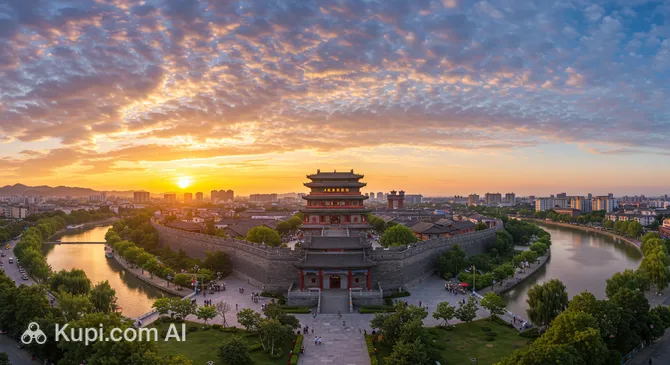
Zaoyang is a city with deep roots located in the northwestern part of Hubei Province, in the very heart of China. Surrounded by the picturesque foothills of the Tongbai and Dahong Mountains, this county-level city combines the charm of antiquity with the energy of a modern industrial center. With a population of over a million people, Zaoyang plays an important role in the region while remaining a place where the legends of great emperors come to life.
The city rightfully bears the title of the "cradle of Han culture." It was here that Liu Xiu was born, who went down in history as Emperor Guangwu, the founder of the Eastern Han Dynasty. This great heritage has shaped the unique character of the city: historical memory is carefully preserved here, turning the pages of ancient chronicles into modern architectural ensembles and memorials.
Zaoyang. Illustration.
Source: Kupi.com AI
Today's Zaoyang attracts travelers not only with its majestic past but also with its status as one of the centers of the automotive industry. The city's atmosphere is filled with contrasts: from quiet parks dedicated to the Han era to dynamic shopping districts. Visiting this city is an invitation to touch the origins of Chinese civilization and see how traditions are carefully woven into the fabric of progress.
Weather Overview
The climate of Zaoyang can be described as humid continental with a noticeable monsoon influence. The city is located in a zone where seasonal winds from the Pacific Ocean determine the nature of the weather. This means that summers here are usually hot and humid, while winters are relatively dry and cool. The wettest month is traditionally July, when a significant portion of the annual precipitation falls.
In the summer months (June–August), the air temperature often rises to +30°C...+33°C, creating a subtropical atmosphere. In winter, during January and February, average temperatures hover around +3°C...+6°C, with night frosts down to -1°C possible. Spring and autumn are considered the most comfortable periods for visiting, when the weather in the city pleases with moderate warmth and clear days.
When planning a trip, it is worth considering the high humidity in the summer period, which makes the heat feel more intense. In winter, despite the rare precipitation (the minimum of which falls in December), the air can feel cooler due to the humidity. Expect a warm summer with occasional downpours and a calm, dry winter, ideal for exploring historical monuments without the crowds.
Average monthly temperature
Average monthly precipitation
Interesting Facts
Birthplace of a Dynasty Founder: Zaoyang is the birthplace of Liu Xiu (Emperor Guangwu), who restored the Han Empire in 22 AD after a period of turmoil.
Peach Capital: The city is considered one of the largest producers of peaches in the region, and local varieties are famous for their exceptional taste throughout Hubei Province.
Ancient Roots: Archaeological finds confirm that people lived on these lands as far back as the Warring States period (over 2,300 years ago).
Industrial Leap: Despite its ancient history, Zaoyang only received the status of a county-level city in 1988, marking its transformation into a modern industrial hub.
Automotive Hub: Zaoyang is among China's significant centers for the production of automotive components, successfully combining history with high technology.
How to Get There
Zaoyang is conveniently located within the transport network of Hubei Province, making it accessible for travelers from different parts of the country. The city is integrated into the system of roads and railways connecting it with major regional centers. If you are planning a trip, it is worth checking the routes in advance to find the most comfortable way to get to the city.
Although there is no major international airport in Zaoyang itself, tourists often use the air hubs of neighboring metropolises. Nearby transport hubs, such as Wuhan or Xiangyang, receive many domestic and international flights, from where Zaoyang can be easily reached by high-speed train or intercity bus.
Railway communication is perhaps the most popular way to reach the city. Zaoyang's stations serve both regular and high-speed trains, which significantly reduces travel time. This is particularly convenient for those traveling from central or eastern provinces of China.
The main magnet for travelers in Zaoyang is its rich heritage from the Eastern Han era. The city has built its tourist identity around the figure of Emperor Guangwu. Large-scale theme parks and memorial complexes have been created here, transporting visitors back two millennia. Han-style architecture, traditional costumes, and interactive exhibits allow you to literally "immerse" yourself in the atmosphere of the golden age of Chinese history.
In addition to historical monuments, the city is famous for its natural landscapes. Its location between the Tongbai and Dahong mountain ranges opens up excellent opportunities for ecotourism. The surrounding mountains offer scenic hiking trails, panoramic views, and fresh air, making Zaoyang an attractive destination for those who want to swap the noise of the metropolis for the tranquility of Hubei's nature.
Special attention should be paid to local agricultural traditions, which have been turned into a real attraction here. Zaoyang is famous for its peach orchards. During the blooming and harvest periods, these orchards become a pilgrimage site for tourists wishing not only to enjoy the taste of the famous fruits but also to take beautiful photos against the backdrop of blossoming trees.
Local Cuisine
The gastronomic character of Zaoyang is steeped in the traditions of Hubei Province, where rich flavors and the masterful use of river fish and local vegetables are prized. One of the main culinary symbols of the city is the local peaches. In season, they are not only eaten fresh but also used to prepare desserts and light snacks. These juicy fruits are a true point of pride for local residents.
On the city streets and local markets, it is worth trying traditional Hubei street food, such as hot dry noodles (reganmian), which has its own flavor nuances here. Local dishes often feature moderate spiciness and aromatic spices, making them accessible to most tourists. In the city's restaurants, meat dishes prepared according to ancient recipes dating back to the Han Dynasty are popular.
As for drinks, Zaoyang offers a wide selection of Chinese teas grown on the slopes of the surrounding mountains. In the evening, you can try light rice wine or popular varieties of Chinese beer in local establishments. The dining culture here is very democratic: from bustling night markets with aromatic skewers to elegant restaurants serving exquisite Han-style sets.
Travel Tips
A trip to Zaoyang promises to be rich and interesting! To make your journey go as smoothly as possible, we have prepared some practical tips.
Clothing for the Season: Zaoyang has humid summers and dry, cool winters. In summer, be sure to bring an umbrella and light clothing made of natural fabrics, while for winter walks, a warm windproof jacket will be useful.
Transport Apps: Install the Didi app for calling taxis and Amap or Baidu Maps. This will significantly simplify navigation, as English is not frequently encountered here.
Payments: The main methods of payment are Alipay or WeChat Pay. Link your card to one of these apps in advance. Cash is accepted, but finding change can sometimes be difficult.
Health: Pharmacies are common in the city, but medicine names will be in Chinese. We recommend carrying a basic first-aid kit and using bottled water.
Language Barrier: Zaoyang is not the most touristy city for foreigners, so download an offline translator. A few basic phrases in Chinese (Nihao — hello, Xiexie — thank you) will earn the genuine sympathy of the locals.
Temple Etiquette: When visiting memorials and temples, choose modest clothing and maintain silence. Respect local traditions of honoring ancestors and imperial dynasties.
What to Avoid: You should not publicly criticize cultural sites or discuss political topics. Also, avoid photographing people without their consent, especially in rural areas.
Peach Season: If your trip falls in the summer, be sure to visit the local orchards—it is a unique experience available only in this region.
Zaoyang will welcome you with its hospitality and amazing history. We wish you unforgettable impressions and pleasant discoveries in this unique corner of China!
Entertainment & Nightlife
The entertainment scene in Zaoyang is closely intertwined with its cultural code. The main emphasis here is on theme parks dedicated to Han culture, where large-scale historical reenactments and theatrical performances take place during the day. In the evening, these venues are often transformed by spectacular lighting, creating the atmosphere of an ancient open-air festival.
For those looking for modern urban entertainment, Zaoyang offers the classic infrastructure of a large Chinese city. KTV bars (karaoke) are popular here, serving as the epicenter of nightlife for locals, alongside modern cinemas and shopping and entertainment complexes. In the city center, you can find cozy tea houses where life only quietens down late in the evening.
The level of safety in the city is high, allowing tourists to take peaceful walks along the central streets after sunset. If you are planning a night out, it is recommended to use official taxi apps, which operate around the clock and provide quick access to any part of the city.
Parks & Museums
The cultural heart of Zaoyang lies in its theme parks dedicated to the history of the Eastern Han Dynasty. The most significant site is the memorial complex of Emperor Guangwu. The atmosphere of the imperial court is recreated here: majestic gates, pavilions with traditional curved roofs, and well-kept gardens allow visitors to feel the scale and grandeur of the ancient empire.
For nature lovers, the city offers walks in parks located at the foot of the Tongbai and Dahong mountains. These green zones are ideal for relaxing after sightseeing. Picturesque landscapes and fresh mountain air create excellent conditions for leisurely strolls, and local trails often lead to hidden temples or observation decks with views of the city.
Zaoyang's museum exhibits, though not always large in size, are impressive for the value of finds from the Warring States period. Here you can see ancient ceramics, bronze items, and artifacts telling the story of the birth of statehood in these lands. Visiting such places provides a key to understanding why Zaoyang is considered one of the most important cultural centers of Hubei Province.
Getting Around
The public transport system in Zaoyang is designed to provide convenient access to all significant parts of the city and its surroundings. The core of the city's communication is the bus routes, which cover the central districts and lead to the main attractions, including the historical parks. Buses run regularly from early morning until late evening, and the fare remains very low.
For faster and more comfortable trips, tourists often choose taxis. Both regular city services and the popular Didi app operate in Zaoyang, allowing you to call a car and pay for the trip online. This is particularly convenient if you do not speak Chinese, as the destination can be indicated on the map within the app.
As Zaoyang is actively developing, the infrastructure is constantly being updated. Bike rentals are also becoming increasingly available, allowing you to explore the city's park areas at your own pace. To pay for travel on public transport, it is convenient to use universal transport cards or QR codes from payment systems, which are accepted almost everywhere.
Accommodation
A wide range of accommodation options is available for guests in Zaoyang, capable of satisfying the needs of both budget travelers and those who value comfort. In the city center and near historical parks, there are modern mid-range hotels offering quality service and convenient logistics. For business trips, there are business hotels with conference rooms and the necessary infrastructure.
If you want to dive deeper into the local atmosphere, it is worth paying attention to small guest houses. They are often decorated with elements of traditional Chinese style and allow you to feel the hospitality of Hubei residents. During peak tourist seasons, especially during peach festivals or national holidays, it is recommended to book accommodation in advance, as popular properties fill up quickly.
Accommodation prices in Zaoyang remain very affordable compared to metropolises like Shanghai or Beijing. Most hotels support booking through international and local online platforms. When choosing a place to stay, look for proximity to the main Han culture attractions or the railway station for ease of movement.
Nearby Cities
Zaoyang serves as an excellent starting point for exploring Hubei Province, which is rich in historical and natural treasures. The city's surroundings offer a variety of routes for day trips, allowing travelers to see the many faces of China—from ancient fortresses to ultra-modern metropolises.
Just an hour's drive away is the majestic Xiangyang, famous for its ancient city walls and deep connection to the history of the Three Kingdoms. It is also worth visiting the cozy Yicheng or the small Zanggang, each of which possesses its own unique provincial charm and allows for a break from the hustle and bustle of big cities.
For those ready for longer trips, the region offers an introduction to natural wonders, including the province's famous lakes. Exploring the surroundings of Zaoyang is a great opportunity to see the authentic way of life in central China and discover places hidden from the mass tourist flow.
Shopping & Souvenirs
Shopping in Zaoyang is primarily about discovering local specialties and souvenirs that reflect the spirit of the Han era. The main item worth bringing back is the famous Zaoyang peaches (in season) or products made from them. The city is also famous for its folk crafts: here you can find elegant ceramics and calligraphy executed in the traditional style characteristic of this region.
The main shopping activities are concentrated in the city center, where modern shopping centers sit alongside traditional markets. In the malls, you can find clothes from well-known Chinese brands and electronics, while in the markets, you can immerse yourself in the local color. Shops usually open from 9:00 to 21:00 or 22:00, and payment in most places is made via Alipay or WeChat Pay mobile apps, although large centers also accept bank cards.
Souvenir shops at the theme parks offer unique items: replicas of ancient coins, Han Dynasty-style jewelry, and traditional clothing. This is a great opportunity to purchase something special that will remind you of your trip to the "city of Han culture." Don't forget that light bargaining is appropriate in the markets, where it is seen as part of the social interaction.