Support

King's Garden

About

Sprawling in the heart of Odense, the picturesque Royal Garden (Kongens Have) is a magnificent example of landscape art. This historical Baroque park was founded in the 1720s, designed by the famous architect Johann Cornelius Krieger. The garden serves as a natural link between the modern transport hub and the city's rich cultural heritage.
King
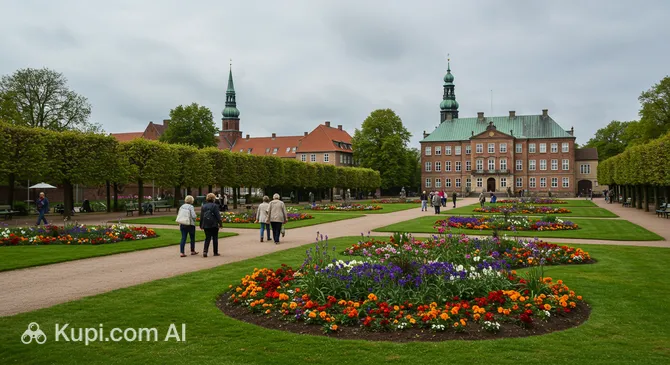
King's Garden. Иллюстрация. Источник: Kupi.com AI

In this green oasis of Denmark, the strict lines of classical alleys harmonize with cozy open spaces for relaxation. The Royal Garden adjoins the majestic Odense Castle and the theater, creating a unified architectural and park ensemble. Visitors are drawn not only by its historical significance but also by its calm, peaceful atmosphere, allowing one to momentarily forget the city bustle.

The preserved elements of the original Baroque layout and the collection of elegant sculptures scattered throughout its territory give the park special value. For tourists, this place often becomes their first introduction to the city's charm, as it is located right at the exit of the railway station, inviting a pleasant stroll toward the old quarters.

Contacts

For those planning a visit to the Royal Garden, it is useful to have the basic contact information at hand. The garden is a public space, so communication with the administration is handled through city services.

How to contactContact
AddressJernbanegade, 5000 Odense, Дания
Websitewww.odense.dk

What to Do

A visit to the Royal Garden offers guests many options for a pleasant pastime. First and foremost, it is an ideal place for leisurely strolls along shaded alleys where you can enjoy the symmetry of the Baroque landscape. Many locals and tourists come here for laid-back relaxation: the park's lawns are open for picnics, reading books, and quiet contemplation of nature right in the center of Odense.

Special attention should be paid to the art objects. Notable sculptures are installed in the garden, including the equestrian statue of King Christian IX and the dynamic composition "Lovers' Struggle" by Gottfred Eickhoff. These monuments add aesthetic depth to your walk and serve as excellent backdrops for photographs.

During the summer season, the Royal Garden transforms into a lively cultural venue. Open-air concerts, festivals, and city celebrations are often held here, filling the park with music and energy. If your path leads to the Hans Christian Andersen Museum, be sure to include a walk through the garden in your route — it is one of the most scenic ways to cross the city center.

Getting There

Thanks to its central location, getting to the Royal Garden is easy. The garden is located in Odense at Jernbanegade, 5000, literally across the street from the main railway station (Odense Station). For travelers arriving by train, this is the first attraction they will see upon entering the city.

If you are already in the city center, the walk to the garden will take about 10–15 minutes from St. Canute's Cathedral or the Hans Christian Andersen Museum. The city's public transport, including buses and modern trams, also has stops in the immediate vicinity of the station, making the site highly accessible.

For those who prefer to drive, parking areas are provided near the station. However, given the city's compactness and convenience for pedestrians and cyclists, a walk or a bike ride is the most pleasant way to reach the park and enjoy the Danish urban atmosphere.

Ближайший город: Odense

History & Facts

The history of the Royal Garden began in the 1720s. It was designed by order of the king by the outstanding architect Johann Cornelius Krieger, a master of the Baroque style. The original layout was characterized by the strict symmetry typical of that era, and although the park has undergone changes over the centuries, some elements of the original Baroque design can still be traced today.

The park is inextricably linked to Odense Castle, which was originally a 15th-century monastery and later became a royal residence. In the 19th century, the garden's appearance was complemented by the majestic equestrian statue of Christian IX, erected in 1888. This work by sculptor Axel Hansen became an important symbol of respect for the monarch and a landmark point in the park.

Throughout its history, the garden has faced challenges, such as Dutch elm disease, which altered the park's greenery. Nevertheless, careful restoration and maintenance have preserved the Royal Garden's status as a vital historical site in Denmark, where Baroque heritage meets modern urban culture.

Time Needed

For a standard introductory visit to the Royal Garden, 30–60 minutes is quite enough. During this time, you will be able to walk along the main alleys, examine the sculptures, and admire the view of Odense Castle.

If you plan to have a picnic on the grass, read a book in the shade of century-old trees, or catch one of the summer cultural events, it is worth setting aside 1 to 2 hours for your visit. This place is perfect for taking a break during a busy tourist itinerary.

Working Hours

The Royal Garden is hospitably open to visitors 24 hours a day, seven days a week. You can enjoy a morning walk in the rays of the rising sun or take a romantic promenade along the illuminated alleys late in the evening.

As the garden is a public city park, entry is free. However, if you plan to visit for a specific event or concert, it is recommended to check information about upcoming events on the official website of the city of Odense.

Круглосуточно

Nearby

Its location in the very heart of the city makes the Royal Garden an ideal starting point for further exploration of cultural heritage. Historic buildings and museums are within walking distance, helping you dive deeper into the city's atmosphere.

NameDistance
Danish Railway Museum0.3 km
Hans Christian Andersen's House0.4 km
TIME Museum for Odense0.5 km
Den Gamle Kro0.5 km
Odense Cathedral (St. Canute's Church)0.5 km
Papas Papbar0.6 km
Hans Christian Andersen's Childhood Home0.6 km

Reached the end of the page?

That means the route is fully explored