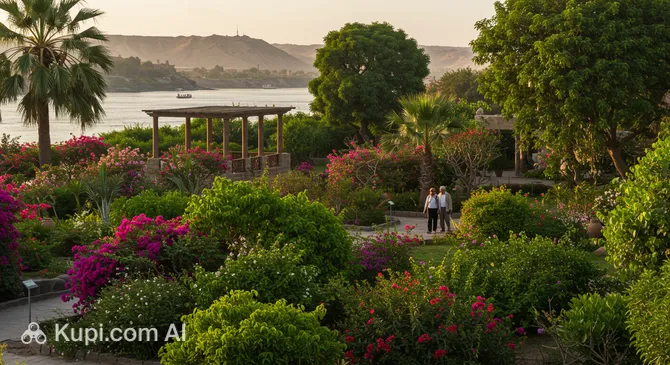
Located on a picturesque island in the middle of the Nile, the Aswan Botanical Garden is a true emerald treasure of the south. This unique spot, also known as Kitchener's Island, is situated in the heart of the city of Aswan in sunny Egypt. The garden covers an area of about 6.8 hectares and is completely isolated from the city noise by the waters of the great river.
Aswan Botanical Garden. Illustration.
Source: Kupi.com AI
Traveler photos:
This natural park is home to hundreds of species of exotic plants brought from all five continents—from the Far East to Africa. Of particular value is the palm collection, which includes over 100 species, including rare royal palms. The garden's territory is geometrically divided into 27 squares by straight paths, giving it the appearance of a green chessboard.
Beyond the flora, the garden attracts tourists with its landscapes: it offers magnificent views of the west bank of the Nile, where the rock-cut Tombs of the Nobles can be seen amidst the golden sands. This place is ideal for those seeking tranquility and wishing to enjoy the beauty of nature away from busy tourist routes.
Contacts
To contact the garden administration or clarify visiting details, you can use the following contact information:
The main reason guests visit is for meditative strolls along the shaded pathways. Here, you can spend hours studying plaques with the names of rare tropical trees and admiring the blooms of exotic shrubs. Because the island is cut off from the mainland, it has developed its own microclimate where not only plants but also numerous bird species thrive, turning the garden into a living orchestra.
For photography enthusiasts, the garden offers an endless array of subjects: from macro shots of unusual flowers to panoramic views of the river with the white sails of passing feluccas. The vertical and horizontal paths allow you to explore every corner of the park, finding cozy benches to relax with a view of Aswan's granite cliffs.
Many visitors choose this spot for a quiet family getaway or an outdoor picnic. The combination of a boat trip to the island followed by immersion in the tropical "jungle" creates a sense of true adventure. It is a great chance to feel like an explorer discovering the plant life of the entire planet, gathered on one small island.
Getting There
Since the garden is located on an island in the middle of the Nile, it can only be reached by water. The most popular and atmospheric way is to hire a traditional Egyptian felucca boat or a motorboat at the city's embankment. The trip from the main piers (for example, near the Nilometer) takes only 5–10 minutes and allows you to enjoy the river scenery even before your walk begins.
The embankment itself is easily accessible on foot from the city center (about a 10–15 minute walk from major hotels) or by taxi. Local microbuses also run along the main streets and can drop you off near the piers. Many tourists prefer to book a boat as part of a private tour to combine a visit to the garden with a tour of the neighboring Elephantine Island.
Nearest city: Aswan
History & Facts
The history of this site began with the Nubians using the island for agricultural purposes, calling it Jet Narti. In those days, it was used exclusively for growing fodder crops. Everything changed in 1899 when the island was gifted to Lord Horatio Kitchener. This prominent figure was a passionate amateur botanist and decided to create his own corner of the exotic here.
Kitchener began actively importing rare plants from all over the world, turning the island into a research nursery. During the British presence, his official residence and expedition base were located here. Thanks to his passion for flora, a real tropical forest with trees unique to this region grew on this desert patch of land over several decades.
In 1928, the Egyptian government nationalized the island, turning it into a state public park. Since then, it has been known as El Nabatat Island or the Aswan Botanical Garden. Today, the site carefully preserves Lord Kitchener's legacy, remaining an important scientific center and one of the most visited natural attractions in the region.
Time Needed
To leisurely walk through all the alleys, study the collection of exotic plants, and take beautiful photos against the backdrop of the Nile, 1–2 hours is sufficient for most travelers. The garden has a clear layout, making it easy to navigate and ensuring you don't miss any interesting corners.
If you wish to stay longer to read a book in the shade of ancient palms or have a short break while birdwatching, you can set aside about half a day for the visit. Keep in mind that a walk through the garden is often combined with a felucca ride, which itself can last anywhere from 30 minutes to an hour.
Working Hours
You can visit the Aswan Botanical Garden any day of the week. It operates on a consistent schedule, daily from 8:00 AM to 5:00 PM.
It is recommended to plan your visit for the morning hours or closer to closing time to avoid the strongest midday heat and enjoy the soft lighting, which is perfect for walks and photo sessions.
8:00 – 17:00
Nearby
Exploring the surroundings of the botanical garden allows you to discover the rich heritage of southern Egypt in a single day. The neighboring islands and the banks of the Nile hide ancient tombs as well as unique monuments of past engineering.
Many interesting locations are within walking distance or just a few minutes away by boat, making your itinerary as rich and convenient as possible.