Support

QV66 Tomb of Nefertari

About

Imagine a place called the "Sistine Chapel of Ancient Egypt" — this is the majestic Tomb of Nefertari. Located in the famous Valley of the Queens near the city of Luxor, it is one of the most precious treasures held by Egypt. This rock-cut sepulcher was created for the Great Royal Wife of Ramesses II and is considered the most beautiful and richly decorated tomb in the entire necropolis.
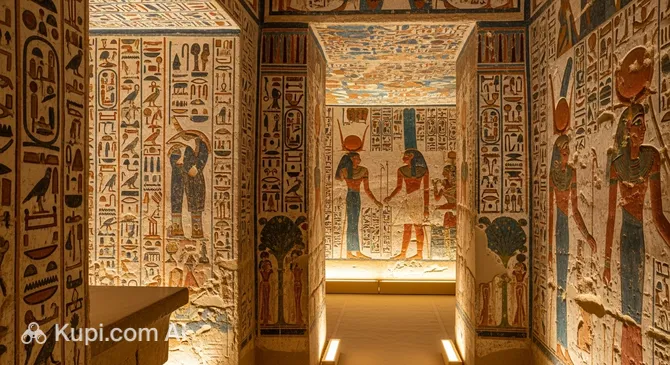
Tomb of Nefertari
Tomb of Nefertari. Иллюстрация. Источник: Kupi.com AI

The main pride of the tomb is its stunning wall paintings, which have retained incredible color vibrancy after millennia. The walls of the chambers are adorned with detailed images illustrating the queen's soul's journey through the underworld: from meeting deities in the west to a solemn resurrection in the east. Every scene here follows strict iconographic canons and is filled with deep mythological meaning.

The architecture of this place is unique for its time: here you can see massive columns inscribed with protective spells and an unusual chamber layout oriented along a north-south axis. The Tomb of Nefertari is not just a historical site, but a true masterpiece of world art, allowing modern visitors to peer into the mystical world of the ancient Egyptians and feel the greatness of the Pharaohs' era.

Contacts

To ensure your visit goes smoothly, it is worth checking the official location information in advance. The tomb is located within the famous necropolis and is easily accessible for tourists arriving on the West Bank.

How to contactContact
AddressPHHV+536 Valley of the Queens, AZ Zeineyah Bahri, Al Qarna, Luxor Governorate 1340410, Египет

What to Do

The main reason to descend into the vaults of this tomb is the opportunity to see masterpieces of Ancient Egyptian painting. A real visual narrative awaits you inside: the walls are decorated with scenes where Nefertari presents offerings to powerful goddesses — Isis, Hathor, and Maat. The delicate detailing of the queen's attire and the rich azure, gold, and ochre shades of the pigments create the feeling that the paintings were applied just recently.

Be sure to pay attention to the decor of the burial chamber. Here, four square columns are covered with sacred texts, and the ceiling mimics a night sky studded with golden stars. Examining scenes from the "Book of the Dead," you can trace the soul's path through magical gates and see images of the guardians of the underworld. This place is perfect for those interested in archaeology and mythology, allowing you to literally touch eternity.

Since photography inside is often restricted or requires a special permit, it is recommended to simply slow down and soak in the atmosphere. It is best to visit the tomb with an experienced guide who can decipher the meaning of each hieroglyph and explain the symbolism of the ritual gestures depicted on the walls. This will turn a simple tour into an exciting immersion into the culture of Ancient Egypt.

Getting There

Getting to this archaeological treasure, located in the Valley of the Queens on the West Bank of the Nile, is quite simple. If you are in the center of Luxor, you first need to cross to the other side of the river by local ferry or taxi. From there, continue by car or tour bus; the drive to the entrance of the Valley of the Queens usually takes about 20–30 minutes from famous landmarks like Medinet Habu or the Ramesseum.

For those arriving from the airport, it is most convenient to book a taxi or direct transfer, which takes about 30–40 minutes. Many travelers prefer to visit the tomb as part of an organized excursion, which already includes transport from the hotel and guide services. Please note that tickets are purchased at the ticket office at the entrance to the necropolis, and a separate pass may be required to visit the Tomb of Nefertari.

If you prefer independence, you can use the services of private taxi drivers who will wait for you in the parking lot while you explore the sights. The best time to leave is early morning (around 6:00 AM) to beat the intense heat and the arrival of large tour groups.

Ближайший город: Luxor

History & Facts

The history of this sepulcher, known in archaeology as QV66, is primarily a story of love. Pharaoh Ramesses II ordered the creation of this magnificent place for his most beloved wife, Queen Nefertari Meritmut. His feelings were so deep that he called her "the one for whom the sun shines," and the quality of the tomb's decoration surpassed many burials of the rulers themselves at that time.

This masterpiece was discovered in 1904 by the Italian archaeologist Ernesto Schiaparelli. Unfortunately, ancient looters had visited the interior long before him; however, the researcher managed to find fragments of the sarcophagus, ritual shabti figurines, and even the queen's elegant sandals. Today, these priceless artifacts are kept in the Egyptian Museum of Turin.

For decades, the vibrant frescoes suffered from humidity and salt crystallization, leading to the site's closure in the 1950s. It was only through a massive restoration carried out by the Getty Conservation Institute in collaboration with the Egyptian government between 1988 and 1992 that the unique paintings were saved. Experts carefully removed the salt deposits, returning the walls to their original brilliance, after which the tomb once again opened its doors to admiring visitors.

The architectural style of the monument, which dates back to the 19th Dynasty, is of particular value. The decoration was executed in a style that Ramesses II personally oversaw. The unique alignment of the tomb's axis and the presence of columns not previously seen in the Valley of the Queens make this site an exceptional monument of ancient Egyptian architecture and belief in the afterlife.

Time Needed

To leisurely enjoy the finest work of ancient masters, an average visitor usually needs 1 to 1.5 hours. This time is sufficient to examine the paintings in the halls in detail and study the symbolism on the columns of the burial chamber.

If you plan to explore the entire Valley of the Queens, you should set aside about 2–3 hours for the walk, especially if you are visiting with a guide. Remember that due to the fragility of the frescoes, the time spent directly inside the tomb may be limited by the administration to control humidity levels.

Working Hours

The attraction is open to visitors daily, making it easy to include in your travel itinerary. Usually, the gates of the necropolis are welcomingly open from 6:00 AM to 5:00 PM any day of the week, including holidays.

Please keep in mind that limits on the number of visitors per day may sometimes be in effect to preserve the microclimate inside the tomb. Before your trip, it is recommended to check the latest information on the official website of the Ministry of Tourism and Antiquities of Egypt or with your tour operator.

06:00–17:00

Nearby

The surroundings of Nefertari's tomb are literally steeped in history. Exploring the adjacent areas will allow you to see the full picture of the life and death of the great rulers and their families in Ancient Egypt. Proximity to other iconic monuments makes a visit to the Valley of the Queens an ideal starting point for a major sightseeing day.

NameDistance
Valley of the Queens0.1 km
Deir el-Medina0.9 km
Temple of Amun at Medinet Habu1.2 km
Valley of the Kings1.6 km
Valley of the Kings1.7 km
Tombs of the Nobles1.7 km
Mortuary Temple of Hatshepsut1.8 km

Reached the end of the page?

That means the route is fully explored