Support

Mummification Museum

About

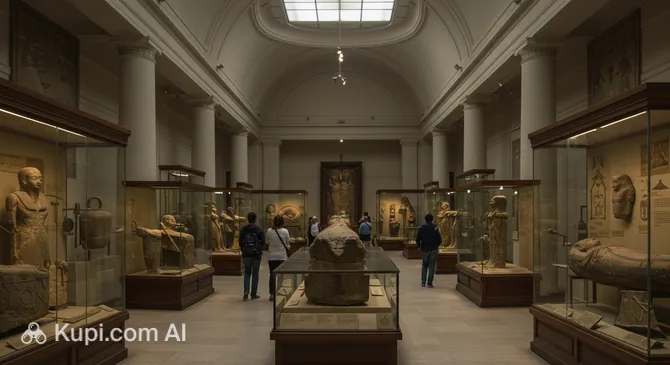
On the eastern bank of the majestic Nile, where the history of the ancient world literally permeates the air, lies the Mummification Museum. This specialized institution is located in the city of Luxor and offers guests visiting Egypt more than just a view of antiquities, but a deep immersion into one of the most mysterious arts of the past — the preservation of bodies for eternal life.
\n
Mummification Museum
Mummification Museum. Иллюстрация. Источник: Kupi.com AI
\n

Founded in 2005, the museum stands out for its narrow specialization and academic approach. Unlike vast archaeological complexes, the focus here is on the scientific and ritual side of embalming. The halls display unique tools: obsidian knives, spatulas, and instruments for extracting the brain that were used by priests thousands of years ago. You will see all the stages of turning a body into a mummy — from treatment with natron salts to complex wrapping in linen bandages.

\n

The exhibition is striking in its diversity: it houses not only the mummies of high-ranking priests, such as Padiamenet and Maserharti, but also mummified animals — crocodiles, cats, birds, and even fish. The Mummification Museum helps one understand that for the ancient Egyptians, this process was not a frightening rite, but a sacred path to eternal existence, filled with deep symbolism and care for the soul.

Contacts

For those planning a visit to the Mummification Museum, it is useful to have up-to-date contact information at hand. This will help you clarify visit details in advance or find the exact location on the Nile Corniche.

How to contactContact
Addressش Kornish Al Nile, Luxor City, Luxor, Luxor Governorate 1362501, Egypt
Websiteegymonuments.gov.eg

What to Do

A visit to the museum is an opportunity to see firsthand the tools of the ancient masters whose skills still amaze scientists today. You can examine canopic jars in detail, which were used to store organs, and learn why each had a lid in the shape of the head of a specific deity. Of particular interest are the amulets and shabti figurines, which, according to Egyptian beliefs, were meant to come to life and assist the deceased in the afterlife.

Be sure to pay attention to the collection of animal mummies. Crocodiles, cats, and falcons are on display here for a reason: they demonstrate the inseparable bond between the human world and the divine pantheon. Viewing the human mummies alongside their painted sarcophagi allows you to appreciate the skill of the artists who decorated the tombs with bright frescoes and hieroglyphs describing the rituals of transition to eternity.

Many tourists prefer to visit the museum with a professional Egyptologist guide. This allows you to hear fascinating stories about the lives of the embalmer-priests and understand the true meaning of every object in the collection. The museum's calm and intimate atmosphere is perfect for a thoughtful study of history, especially if you plan to combine this visit with a stroll to the nearby Luxor Museum.

Getting There

Finding the Mummification Museum is easy, as it occupies a prime spot on the city's main promenade — the Kornish Al Nile. If you are staying in the city center or near the Luxor Temple, a pleasant walk along the river will lead you straight to your destination.

For those traveling from further districts or from Luxor Airport (LXR), a taxi is the best option. The ride from the airport takes about 15–20 minutes. You can also use the services of local rickshaws or traditional horse-drawn carriages, which have become a symbol of tourist transport in the city. If you are on the West Bank, take the ferry, which regularly crosses the Nile and drops passengers off within walking distance of the museum.

Public minibuses (microbuses) also run along the waterfront. To ensure you reach the right place, look for the address ش Kornish Al Nile, Luxor City or show the driver the name of the attraction in Arabic. Modern navigation apps are excellent for routing to the exact coordinates in this area.

Ближайший город: Luxor

History & Facts

The art of preserving bodies in ancient Egypt was not merely a technique, but a complex philosophical and religious system that was perfected over millennia. The practice of mummification originated as far back as the Old Kingdom and reached its peak during the Middle and New Kingdoms, when even commoners sought to ensure their immortality.

The full embalming process took exactly 70 days. During this time, the embalming priests performed a series of complex procedures: they removed internal organs, carefully placing them in canopic jars under the protection of the four sons of the god Horus, dried the body using natural soda (natron), and treated it with precious oils and resins. Interestingly, the heart was almost always left inside, as it was believed to be the organ that would be weighed during the Judgment of Osiris.

Although the museum itself opened relatively recently, in 2005, its walls house authentic artifacts illustrating the evolution of funerary traditions. Among the highlights of the collection is the mummy of the High Priest Maserharti (Meseharti) from the 21st Dynasty, found in the Deir el-Bahari cache. The exhibits clearly show how tastes and technologies changed over time: from simple linen wrappings to the appearance of the famous Fayum portraits in the Roman period, which replaced traditional masks.

Time Needed

To leisurely browse all the displays and delve into the details of the complex embalming process, most travelers need 1 to 2 hours. Despite the fact that the museum occupies a relatively small area, its exhibition is extremely dense with information.

We recommend taking the time to carefully read the descriptions of the tools and amulets, as it is in the small details that the understanding of Egyptian rituals lies. A quick visit will allow you to see the main mummies, but if you are interested in Egyptology, set aside a bit more time to examine each canopic jar and the unique paintings on the coffins.

Working Hours

The museum follows a specific operating schedule split into two periods, which is convenient for tourists wishing to avoid the midday heat. You can visit the exhibition daily, including weekends and holidays.

Opening Hours: daily from 9:00 AM to 2:00 PM, and then after a break, the museum opens its doors again in the evening from 5:00 PM to 10:00 PM. This evening visiting format is very popular, allowing guests to enjoy the coolness and beautiful lighting of the Nile Corniche after exploring the museum.

9:00 – 14:00, 5:00 – 22:00

Nearby

Luxor is rightfully considered an open-air museum, and a visit to the Mummification Museum is just one chapter of your journey. The museum's surroundings are rich in historical monuments and interesting sites that will help you form a complete picture of the grandeur of this ancient civilization.

Just a few kilometers away are the grand temple complexes and mysterious necropolises of the West Bank. Exploring these locations will allow you to see not only how the Egyptians prepared for eternity, but also the colossal structures they built in honor of their gods and rulers.

NameDistance
Luxor Temple0.2 km
Luxor Temple0.3 km
Abu Haggag Mosque0.3 km
Thebes Restaurant0.7 km
Luxor Museum0.8 km
The King's Head Pub1.8 km
SunRise Bar & Restaurant1.8 km

Reached the end of the page?

That means the route is fully explored