Support

Tombs of the Nobles

About

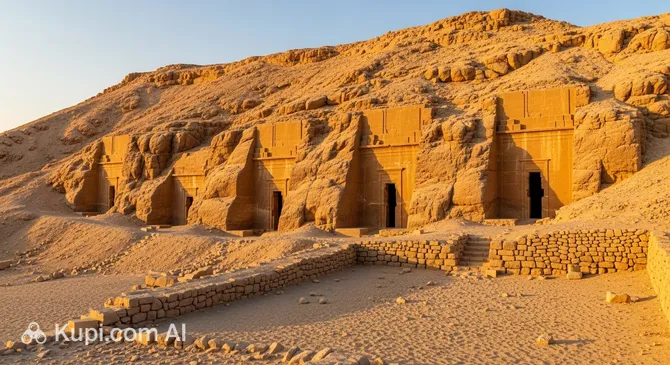
On the west bank of the Nile, in the heart of the ancient civilization that is today represented by modern Egypt, lies a unique archaeological complex — the Tombs of the Nobles. Unlike the monumental pyramids, these burials offer a glimpse behind the scenes of the daily life of ancient Egyptians. Located in the city of Luxor, this site is part of the vast Theban Necropolis, a UNESCO World Heritage Site.
\n\n
Tombs of the Nobles
Tombs of the Nobles. Иллюстрация. Источник: Kupi.com AI
\n\n

Here lie those who were the pillars of the pharaohs during their lifetime: priests, viziers, military commanders, and skilled craftsmen of the New Kingdom era. The main value of the complex lies in the stunning wall paintings, which have been preserved in amazing quality. The frescoes depict not only gods and rituals but also lively scenes of hunting, harvesting, and boisterous feasts, making a walk through the corridors of the tombs feel like a journey through time.

\n\n

The structures themselves are cut directly into the rocks of the Al-Qarna district and range from modest chambers to luxurious multi-level halls with columns. Thanks to recent restoration work, many burials have become more accessible to tourists, offering modern lighting and convenient walkways for viewing this incredible monument of human history.

Contacts

The ancient necropolis is located in the historical district of Al-Qarna on the West Bank, away from the bustling tourist quarters of the modern city. To make navigation and route planning easier, we have prepared the exact address details for you. Please note that specifying the particular district will help a taxi driver navigate the area more quickly.

\n\n
How to contactContact
AddressPJJ5+8P4, Al Qarna, Luxor Governorate 1340420, Египет

What to Do

The main reason to visit the Tombs of the Nobles is to closely examine the ancient frescoes. Visitors can spend hours looking at the images on the walls, which resemble comic strips from the past: here you can see how the Egyptians caught fish, how they celebrated important events, and even what their clothing and jewelry looked like thousands of years ago. Each burial has its own "highlight," so it's worth checking out several different chambers to compare artistic styles.

\n\n

For those who appreciate a deep dive into history, it is recommended to use the services of a guide or take an audio guide. You will learn the personal stories of the tomb owners, such as the priests of Amun, and understand the meaning of complex religious symbols. Don't forget to also pay attention to the architecture itself: the T-shaped floor plans of the halls and the skillful stone carving are no less impressive than the paintings.

\n\n

In addition to exploring the interior spaces, a walk around the necropolis territory offers breathtaking panoramas. From the heights of Al-Qarna, you can see the green Nile Valley and the majestic mountains of the West Bank. This is a great place for atmospheric photos (outdoors), and climbing the rock-cut steps will add a touch of real Indiana Jones-style adventure to your visit.

Getting There

The Tombs of the Nobles are conveniently located on the west bank of the Nile in the Al-Qarna area. To get here from the central part of the city, most tourists use a local ferry or small motorboats that ply between the banks. The crossing takes about 15–20 minutes and allows you to enjoy views of the river. After landing on the West Bank, you can use a taxi or minibus to cover the remaining 10–15 km to the necropolis.

\n\n

If you are heading to the attraction directly from the airport, a taxi ride will take from 30 to 45 minutes. Many travelers prefer to rent a car with a driver for the whole day, as this allows for comfortable travel between the scattered sites of the Theban Necropolis. GPS coordinates will help you find the exact entrance to the complex, which is often visited using a single ticket combined with other monuments in the region.

Ближайший город: Luxor

History & Facts

The history of this place is inextricably linked to the New Kingdom period (roughly 1550–1070 BC), when ancient Thebes reached the peak of its power. Unlike the famous Valley of the Kings, intended for pharaohs, this necropolis became the final resting place for the elite of Egyptian society. High-ranking officials, priests of the god Amun, military commanders, and overseers of the state granaries—whose influence at that time was colossal—are buried here.

\n\n

The walls of these tombs serve as a unique "stone book" of life in Ancient Egypt. For example, the burial of the priest Amenhotep or the overseer Baki has preserved paintings that have remained practically untouched by time. These images demonstrate not only religious rites but also diplomatic missions and the daily concerns of the subjects of a great empire. Even after thousands of years, the colors remain vibrant thanks to the unique dry desert climate.

\n\n

Archaeological research continues here to this day. Recently, joint missions from Egypt and the USA conducted a large-scale restoration of several tombs in the Dra' Abu el-Naga' area, restoring collapsed courtyards and cleaning frescoes of centuries-old soot. Every new find, whether jewelry or mirrors with the face of the goddess Hathor, lifts the veil of mystery over the private lives of the people who created the greatness of the pyramids and temples.

Time Needed

To leisurely explore the key burials and study the wall paintings in detail, it is recommended to set aside 2 to 4 hours. This time is sufficient to visit the most significant tombs and listen to guides' stories about the lives of their owners.

\n\n

If you plan to explore the entire complex, including remote areas like Dra' Abu el-Naga', it is better to plan for half a day. Keep in mind that the entrances to the tombs are often located on high ground, so climbing the steps may require additional physical effort and time to rest.

Working Hours

The attraction is open to visitors daily from 08:00 to 18:00. The complex is open seven days a week without lunch breaks, making it easy to fit into a busy Luxor excursion schedule.

\n\n

It is important to note that in the summer months, due to extreme heat, opening hours may be reduced, and staying inside the tombs can become tiring. It is recommended to plan your visit for the morning hours and check the current schedule in advance on the official resources of the Ministry of Antiquities.

08:00–18:00

Nearby

The West Bank of the Nile is a true treasure trove of ancient architecture, where every step opens a new chapter of history. Combining a visit to the Tombs of the Nobles with a tour of neighboring monuments will allow you to get a complete picture of the grandeur of ancient Thebes.

\n\n
NameDistance
Ramesseum0.3 km
Deir el-Bahari0.7 km
Deir el-Medina0.8 km
Mortuary Temple of Hatshepsut0.9 km
Luxor Hot Air Balloon Ride1 km
Colossi of Memnon1.2 km
Valley of the Kings1.3 km

Reached the end of the page?

That means the route is fully explored