Support

Gardens of Europe

About

The Gardens of Europe (Jardins de l'Europe) are a charming corner of tranquility and natural beauty spread across the heart of Annecy, in eastern France. This picturesque English-style park is cozily situated on the shores of crystal-clear Lake Annecy, where the Thiou canal flows into the lake, forming a scenic peninsula. The Gardens of Europe are one of the most beloved green spaces for both locals and numerous tourists, serving as a perfect place for leisurely walks and relaxation.
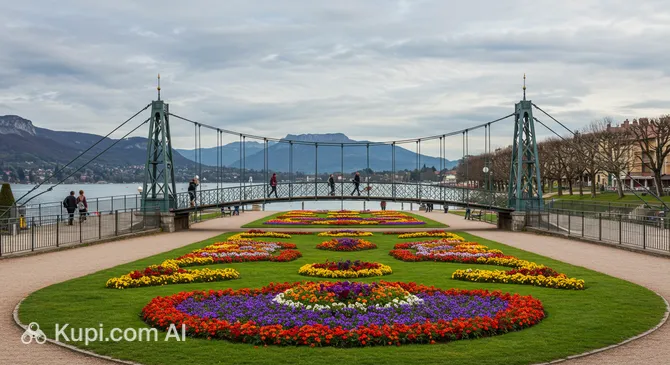
Gardens of Europe. Illustration.
Source: Kupi.com AI

Traveler photos:

The park is a magnificent example of landscape design in the traditional English style. Here, you can enjoy views of the lake with its small artificial island, stroll along shaded paths, relax by fountains, or sit on one of the many benches while admiring the surrounding landscapes and elegant statues. The park's atmosphere encourages peace and contemplation.

One of the distinguishing features of the Gardens of Europe is the impressive variety of trees. For the convenience and education of visitors, special plaques with names have been installed near many of them, making the walk not only pleasant but also informative. This is the ideal place to escape the city's hustle and bustle, enjoy the fresh air and the beauty of nature, and feel harmony and tranquility.

Contacts

Since the Gardens of Europe are a public park, there may not be specific contact information for them. If you have questions or need additional information, we recommend contacting the Annecy Tourist Office or the City Hall, located right next to the park.

The gardens themselves are located in the heart of Annecy, on the picturesque lakeshore, making them easily accessible to everyone wishing to enjoy their beauty.

How to contactContact
AddressQuai Napoléon III, 74000 Annecy, France
Websitewww.lac-annecy.com

What to Do

In the Gardens of Europe, visitors will find a peaceful atmosphere perfect for leisurely walks along well-kept paths. You can relax on benches cozily positioned in the shade of the trees and enjoy picturesque views of Lake Annecy. It is a wonderful place to escape the hustle and bustle of the city, relax, and contemplate the beauty of the surrounding nature.

For curious guests, the park offers the opportunity to get a closer look at its flora: informative plaques are installed next to many trees, describing their species. Furthermore, the Gardens of Europe offer magnificent panoramas of Lake Annecy itself and the mountains that frame it. This is an excellent spot for photo sessions, especially at sunset when the landscape takes on a special charm.

Next to the park is the Annecy City Hall. On one of the lawns in front of it, you can see an interesting detail—the city's coat of arms, skillfully crafted from live flowers. Interestingly, while the official coat of arms of Annecy depicts a fish in white on a red heraldic shield, on the flower bed it appears in green. This is likely due to the seasonal blooming of the plants used and adds a unique touch to this corner of the park.

Getting There

Getting to the Gardens of Europe in Annecy is quite easy, thanks to their excellent location in the very center of the city. The park stretches along the shores of Lake Annecy, in close proximity to the City Hall and at the point where the scenic Thiou canal meets the lake. This central position makes the gardens easily accessible on foot from the historic part of Annecy and most of the city's key points.

If you are exploring the old town of Annecy, a walk to the Gardens of Europe will be a pleasant addition to your itinerary, as they are located very close to the famous Palace on the Isle (Palais de l'Isle) and other attractions. Additionally, the park can be reached by Annecy public transport if you are in more distant areas. For those arriving in Annecy from other French cities, such as Lyon, there are convenient train connections, after which you can easily walk to the gardens or use local transport within the city.

Nearest city: Annecy

History & Facts

The history of the Gardens of Europe dates back to 1863, when the Annecy City Council made a visionary decision. Instead of marshy coastal areas by the lake, it was decided to create a public park. The project was undertaken by the talented architect Henri Porreaux, who brought the park concept to life in an elegant English landscape style. This significant event took place during a period when Annecy was preparing for an important historical step—joining France, which took place in 1860 under the Treaty of Turin during the reign of Emperor Napoleon III.

Officially, the Gardens of Europe appeared on the map of Annecy in the same year, 1863, quickly becoming an integral part of its appearance. Since 1874, as mentioned in some sources, a certain object appeared on the park's embankment, adding an element of mystery and intrigue to its history, though details about it remain not fully revealed. The gardens perfectly complemented the historic buildings of Annecy, creating a picturesque contrast and harmony with ancient structures such as the famous Palace on the Isle (Palais de l'Isle), whose history dates back to the end of the 12th century.

The creation of the Gardens of Europe was an important milestone in the overall development of Annecy, a city with a rich history. Its past extends from the Roman settlement of Boutae, founded in the 1st century BC, and covers periods of belonging to the Kingdom of the Burgundians, the Frankish Kingdom, the County of Geneva, the Duchy of Savoy, and the Kingdom of Sardinia. Thus, the park became not just a green zone, but a symbol of a new era in the life of the ancient city, seamlessly fitting into its centuries-old annals.

Time Needed

When planning a visit to the Gardens of Europe, you should allow for 1-2 hours. This time is usually enough to enjoy the park's main atmosphere: take a leisurely stroll through its picturesque paths, relax on one of the many benches while admiring the views of Lake Annecy, and, of course, take some memorable photos against the backdrop of the magnificent scenery.

If you want to delve deeper into the park's diverse flora by carefully examining the tree plaques or decide to have a small outdoor picnic, then you should set aside a bit more time for your visit to the Gardens of Europe. In that case, your stay here can pleasantly stretch out, allowing you to fully experience the peace and beauty of this place in Annecy.

Working Hours

Official opening hours for the Gardens of Europe in Annecy are not specified, as it is a public city park. Generally, such parks are open for visits throughout the day, especially during daylight hours, which is also recommended for a more comfortable and safe experience. Advance ticket booking or registration to visit the Gardens of Europe is usually not required, as entry to the park is free.

It is assumed that the Gardens of Europe are accessible for walks year-round. However, for the most up-to-date information on possible access restrictions or special events that may affect opening hours, it is recommended to check the official website of Annecy or local tourist information centers just before your planned visit.

Open 24 hours

Nearby

Visiting the Gardens of Europe in Annecy is a wonderful opportunity to enjoy nature and tranquility in the heart of the city. However, to make your trip even more fulfilling and memorable, don't limit yourself to just this beautiful park. Exploring nearby attractions will allow you to dive deeper into the atmosphere of Annecy and discover new facets of this charming corner of France.

There are many interesting places in the immediate vicinity of the Gardens of Europe that deserve your attention. A walk around the area won't take much time but will provide a wealth of vivid impressions and allow for a more complete understanding of the city's cultural and historical heritage.

NameDistance
Lovers' Bridge0.1 km
Le Pâquier0.2 km
Café des Arts0.3 km
Palace of the Isle0.3 km
Annecy Castle Museum0.4 km
Saint Peter's Cathedral0.4 km
Church of Our Lady of Liesse0.4 km

Have you reached the end of the page?

So the route has been studied inside and out