Support

Leonardo da Vinci Museum of Science and Technology

About

The Leonardo da Vinci National Museum of Science and Technology is one of Milan's most impressive attractions and the largest science and technology museum in all of Italy. Housed in a historic 16th-century Benedictine monastery, it offers visitors a unique immersion into the world of scientific discovery and engineering marvels. This is a place where history and innovation meet, creating an unforgettable experience for travelers of all ages.

The crown jewel of the museum is the world's most extensive collection of models of inventions created from the drawings of the genius Leonardo da Vinci. Here, his sketches and ideas come to life, allowing you to visually appreciate the scale of his contribution to science and technology. This is a must-visit for anyone who admires the legacy of the great Renaissance master.
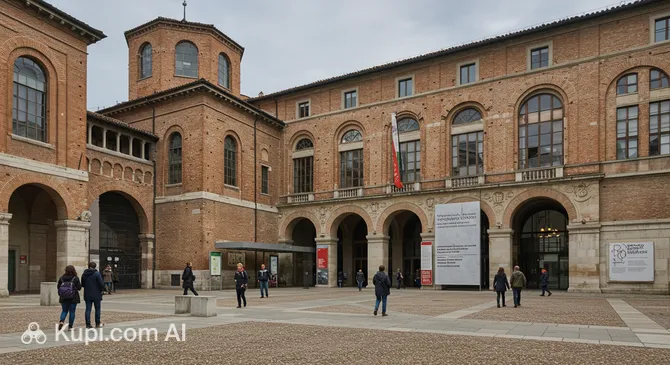
Leonardo da Vinci Museum of Science and Technology. Illustration.
Source: Kupi.com AI

Traveler photos:

The museum's exhibition is striking in its scale: covering an area of about 50,000 square meters, it houses more than 16,000 exhibits. Thematic halls are dedicated to various fields—from transport and energy to communications and materials science—where you can see vintage trains, planes, and even a real submarine. A visit to this museum is an exciting adventure for both adults and children interested in how the world works.

Contacts

To plan your visit to the Leonardo da Vinci National Museum of Science and Technology, check current opening hours, or find information about temporary exhibitions, you can use the official contact details. All the necessary information is provided below.

How to contactContact
AddressVia San Vittore, 21, 20123 Milano MI, Italy
Phone number+39 02 485551
Websitewww.museoscienza.org

What to Do

Immersing yourself in the world of Leonardo da Vinci's genius is the core part of the visit. Here, you can see the world's largest collection of machine and mechanism models based on the great inventor's drawings. Unique models of his creations are on display, alongside original sketches and reconstructions of inventions that were centuries ahead of their time. It's a rare opportunity to see in detail how Leonardo's ideas—from flying machines to ingenious mechanisms—are realized as physical objects.

Beyond da Vinci's legacy, the museum offers a journey through various fields of knowledge in 28 thematic galleries. The exhibits cover aviation, rail transport, seafaring, space, energy, and telecommunications. You can see vintage trains and planes, explore the evolution of materials, and even look at a real moon rock brought back by the Apollo 17 mission. Each hall tells a different story of discovery that will interest visitors of all ages.

A highlight for many guests is the chance to step aboard the real "Enrico Toti" submarine, located in the museum's courtyard. A guided tour inside the submarine, which once patrolled the Mediterranean Sea, is an unforgettable adventure. In addition to permanent exhibitions, the museum regularly hosts interactive workshops, science shows, and temporary exhibits, making each visit unique in its own way. It is an ideal place for an educational family outing where you can easily spend an entire day.

Getting There

The Leonardo da Vinci National Museum of Science and Technology is conveniently located in the central part of Milan, making it easily accessible for tourists. It is approximately a 20-minute leisurely stroll from the heart of the city—Piazza del Duomo and the famous Milan Cathedral. Walking to the museum is a great way to enjoy the city's architecture and atmosphere, passing by historic buildings and the charming streets of the San Vittore district.

The easiest and fastest way to reach the museum is by using Milan's extensive public transport system. The nearest metro station, Sant'Ambrogio, is just a few minutes' walk from the entrance. It is served by the M2 line (green line). Additionally, tram routes 16 and 19, as well as various local buses, stop near the museum.

If you are traveling by car, there are paid parking lots in the vicinity of the museum. However, it is worth noting that traffic in central Milan can be heavy, especially during peak hours. Therefore, to avoid traffic jams and save time, it is recommended to opt for public transport. A taxi ride from the city center is also a quick and comfortable alternative.

Nearest city: Milan

History & Facts

The history of the Leonardo da Vinci National Museum of Science and Technology began in 1953, when it was officially opened in Milan. The idea for its creation coincided with the 500th anniversary of the birth of the great Renaissance genius. The initiative belonged to the city's mayor and was enthusiastically supported by the municipality, laying the foundation for one of Europe's leading science museums.

A truly unique site was chosen for the exhibition—the ancient monastery of San Vittore al Corpo, built in the 16th century. Before the opening, the complex underwent a large-scale renovation led by the renowned architect Piero Portaluppi. He successfully adapted the historic premises to the needs of a modern museum, creating a unique blend of ancient architecture and cutting-edge scientific achievements.

Since its founding, the museum has quickly gained recognition and become an important cultural and educational hub. Its high international status was confirmed in 2003 when it joined ECSITE—the prestigious European Network of Science Centres and Museums. This membership fosters active collaboration with the world's leading institutions, sharing expertise and creating joint projects to continue the mission of popularizing science that began half a century ago.

Time Needed

When planning your visit to the Leonardo da Vinci National Museum of Science and Technology, you should allocate enough time to fully enjoy its extensive collection. For a general overview of the main halls and the most iconic exhibits, including the Leonardo Gallery, it is recommended to set aside at least 3–4 hours. This will allow you to walk through the key sections dedicated to transport, energy, and materials without rushing, giving you a complete impression of the museum's scale.

However, if you are traveling with children, are a big fan of science and technology, or simply want to delve deeper into the world of inventions, you should dedicate half a day or even a full day to the museum. Such a leisurely visit will allow you not only to see all the galleries but also to take part in interactive workshops, visit temporary exhibitions, and, of course, explore the famous "Enrico Toti" submarine, which is an adventure in itself. Many visitors find that even a whole day may not be enough for a detailed tour of the entire massive collection.

Working Hours

The Leonardo da Vinci National Museum of Science and Technology is open to visitors year-round, making it easy to include in any Milan itinerary. According to the official schedule, the museum's doors are open from Tuesday to Friday from 09:30 to 17:00. On weekends, Saturday and Sunday, the hours are extended from 09:00 to 18:30. Monday is the official closing day. Please note that during the summer period and on public holidays, opening hours may change, so it is best to check the official website before your visit.

To avoid queues, especially during the peak tourist season, weekends, or holidays, it is highly recommended to purchase tickets online in advance. This will not only save you time but also guarantee entry, as the number of visitors may be limited. Please note that visiting some exhibits, such as the famous "Enrico Toti" submarine, may require a separate booking for a specific time slot, which is also best done in advance online.

DayOpening hours
MondayClosed
Tuesday9:30 – 17:00
Wednesday9:30 – 17:00
Thursday9:30 – 17:00
Friday9:30 – 17:00
Saturday9:30 – 18:30
Sunday9:30 – 18:30

Nearby

Visiting the Leonardo da Vinci National Museum of Science and Technology is just the beginning of discovering the rich cultural heritage of Milan. The district where the museum is located is a historical treasure trove in itself, and it would be a shame not to explore its surroundings. Some of the world's most famous architectural and artistic monuments are just a short walk away, perfectly complementing your trip.

A walk through the nearby streets allows you to dive deeper into the atmosphere of Italy and see how harmoniously science, religion, and secular life coexist in the city. The museum's convenient location makes it an ideal starting point for a walking tour of iconic landmarks, each telling its own unique story.

NameDistance
The Last Supper0.4 km
Sforza Castle1.1 km
Arch of Peace1.4 km
Mudec – Museum of Cultures1.4 km
Gloria Osteria1.4 km
Galleria Vittorio Emanuele II1.5 km
Piazza della Scala1.6 km

Have you reached the end of the page?

So the route has been studied inside and out