Support

Calanques National Park

About

Calanques National Park (Parc National des Calanques) is one of the most impressive natural wonders in the south of France, located on the Mediterranean coast between vibrant Marseille and the charming town of Cassis. The main feature of the park is the calanques—picturesque narrow bays carved into high limestone cliffs and filled with crystal-clear turquoise water. These formations, often called the "Marseille fjords," create truly breathtaking landscapes.
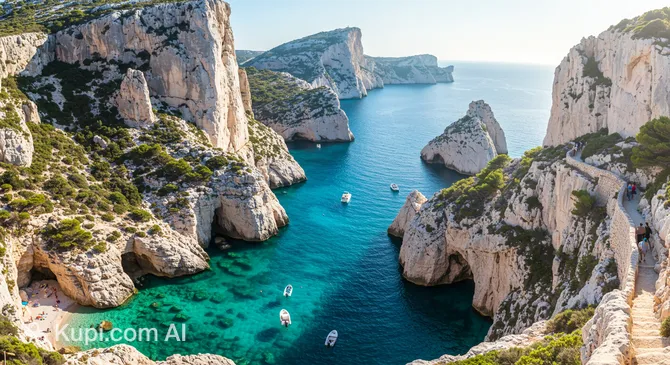
Calanques National Park. Illustration.
Source: Kupi.com AI

Traveler photos:

Created in 2012, the park is unique as it is the first in Europe to protect both land and sea territories in close proximity to a major city. It covers about 8,500 hectares of land and 43,500 hectares of marine area, making it home to incredible biodiversity, including many rare and protected species of flora and fauna.

For visitors, Calanques National Park offers numerous opportunities for outdoor activities and connecting with nature. Dozens of hiking trails of varying difficulty are laid out across its territory, offering stunning panoramic views. In the secluded bays, you can swim, relax on small pebble beaches, or go snorkeling. Boat trips are also popular, allowing you to appreciate the majesty of the rocky shores and look into the most beautiful bays, such as Sormiou, Morgiou, and En-Vau.

Contacts

To get the most up-to-date information on trail conditions, weather, or visiting regulations for Calanques National Park, it is recommended to contact the park administration directly. This is particularly important as access to some zones may be restricted due to weather conditions or for environmental conservation. All necessary details can be found on the official website or requested by phone.

How to contactContact
Address13008 Marseille, France
Phone number+33 4 20 10 50 00
Websitewww.calanques-parcnational.fr

What to Do

The main activity in Calanques National Park is, without a doubt, walking and trekking. Dozens of kilometers of marked trails of various difficulty levels are available for visitors, ranging from easy walking paths to challenging multi-hour hikes for experienced tourists. By traveling on foot, you can fully enjoy the breathtaking panoramas where sheer white cliffs plunge into the turquoise waters of the Mediterranean Sea. Routes will lead you to the most famous bays, such as Calanque d’En-Vau with its postcard views, the accessible Calanque de Sormiou, and the secluded Calanque de Morgiou.

For fans of active recreation on the water, the park offers many opportunities. The clarity of the water in the bays makes this an ideal place for diving and snorkeling, allowing you to explore the rich underwater world. Renting a kayak or paddleboard is a popular way to get to know the coastline—this way you can peek into hidden grottoes and find secluded beaches inaccessible from land. In addition, boat excursions regularly depart from the ports of Marseille and neighboring Cassis, allowing you to see the majesty of the calanques from the water without physical effort.

In addition to active pursuits, Calanques National Park is perfect for more relaxed recreation. Along some routes, there are small pebble or sandy beaches where you can swim in the crystal-clear water and rest. Many visitors come here for a picnic overlooking the sea, enjoying the silence and beauty of nature. For rock climbing enthusiasts, the local limestone cliffs offer many routes of varying difficulty, making the Calanques a popular destination for this sport.

Getting There

Getting to Calanques National Park is quite simple due to its convenient location in close proximity to Marseille. Depending on your preferences and chosen route, you can reach the park's entry points by public transport, car, or even bicycle. The main starting points for exploring the calanques are the districts of Marseille itself, such as Castellane, or the neighboring picturesque town of Cassis.

The most popular and eco-friendly way is to use city buses that connect the city center with the main trails and park entrances. For example, routes toward the Luminy university campus, which is one of the main entrances to the park, depart from the Castellane or Rond-Point du Prado metro stations. This helps avoid parking issues, which can be difficult during high season. Additionally, numerous boat excursions regularly depart from the Old Port of Marseille and the port of Cassis. These boat trips are a great opportunity to see the majesty of the rocky shores from the water and visit the most beautiful bays without the need for long hikes.

For those who want to explore more secluded and remote bays at their own pace, water transport is the ideal option. By renting a kayak or paddleboard, you can move freely along the coast, peek into hidden grottoes, and find small beaches inaccessible from land. This will provide you with an unforgettable experience and allow you to fully enjoy the beauty of the calanques.

Nearest city: Marseille

History & Facts

The history of Calanques National Park is a story of a long and persistent struggle by local residents to preserve this unique natural corner. Awareness of the fragility of this place emerged as early as the beginning of the 20th century. In 1923, when the threat of industrial development and limestone quarrying arose, a special Committee for the Protection of the Calanques of Marseille was created. Its main goal was to prevent the destruction of picturesque bays, such as Calanque d’En-Vau, and preserve them for future generations.

In the second half of the 20th century, the movement to protect the calanques gained new momentum. In the 1970s, the government officially recognized part of this territory as a protected zone, which was an important step towards its conservation. However, growing urbanization and proximity to a large city continued to pose a threat to the fragile ecosystem. In the 1990s, local activists and community groups began actively campaigning for the calanques to be granted national park status, which would provide them with the highest level of protection.

After many years of public discussion, consultation, and careful preparation, their efforts were successful. On April 18, 2012, by decree of the Prime Minister of France, Calanques National Park was officially established. This event was the culmination of nearly a century of struggle to preserve the "Marseille fjords." Today, the park is not only one of the country's youngest national parks but also the first in Europe to protect both land and sea territories in the immediate vicinity of a major metropolis.

Time Needed

When planning a visit to Calanques National Park, it is worth considering that it is a vast territory with many routes and picturesque bays. For a first introduction to the park, visiting its main highlights, and a leisurely walk along several popular trails, it is recommended to allocate at least one full day. This time will be enough to feel the unique atmosphere of the place, take stunning photos, and swim in one of the famous bays without going too deep into the wilderness.

If you want to get the most out of your experience and explore the Calanques more thoroughly, it would be optimal to set aside 2–3 days for the trip. This time buffer will allow you to complete several long hiking routes without rushing, discovering more secluded and less accessible calanques. Additionally, you can devote time to water sports—for example, going on a kayak trip, snorkeling, or simply relaxing on different beaches, which also requires extra time. A multi-day visit is especially recommended for trekking enthusiasts and those who want to truly immerse themselves in the natural majesty of this corner of France.

Working Hours

Calanques National Park does not have strict opening hours like a museum or gallery, as it is a vast natural territory. Entrance to the park is free and it is open to visitors year-round. However, this does not mean that access is unregulated. The main factor to consider is weather conditions, especially during the summer period (typically from June to September). Due to the high risk of wildfires, authorities may temporarily close access to certain hiking trails and entire massifs. Therefore, before planning a hike, it is strongly recommended to check the latest information and possible restrictions on the official park website.

While an entry ticket to the park itself is not required, visiting some particularly popular and vulnerable bays may require prior booking. For example, to access the famous Calanque de Sugiton during peak season, it is necessary to reserve a spot online for free in advance—this measure was introduced to control the flow of tourists and preserve nature. It is also worth remembering that the number of parking spaces at the park entrances is limited and they fill up quickly. For maximum comfort and guaranteed access, always check the official park website to clarify the need for booking for your chosen route.

Open 24 hours

Nearby

Visiting Calanques National Park is an immersion into a world of wild nature and breathtaking landscapes. However, to make your trip even more fulfilling and diverse, it is worth paying attention to its surroundings. Proximity to a major city like Marseille offers a unique opportunity to combine communion with nature with a visit to cultural and historical sites.

Just a few kilometers from the park's trails, completely different experiences await you: from architectural masterpieces to vibrant urban spaces. Exploring nearby attractions will allow you to better understand the multifaceted character of this region of France, where the rugged beauty of rocky bays coexists with the rich heritage of one of the country's oldest cities.

NameDistance
Unité d'Habitation6.1 km
Le Black Stone Pub6.4 km
Parc Borély6.8 km
Vélodrome Stadium6.9 km
Prado Beach7.5 km
Marseille Grand-Est Ice Rink7.9 km
SENSAS Marseille8.6 km

Have you reached the end of the page?

So the route has been studied inside and out