Support

Cosquer Cave

About

The Cosquer Cave is a unique prehistoric cave located in the picturesque Calanque de Morgiou on the Mediterranean coast, near the city of Marseille in France. Its main feature, making it one of the most unusual archaeological finds in the region, is its underwater entrance: to get inside, one must navigate a tunnel starting at a depth of about 36–37 meters below sea level.
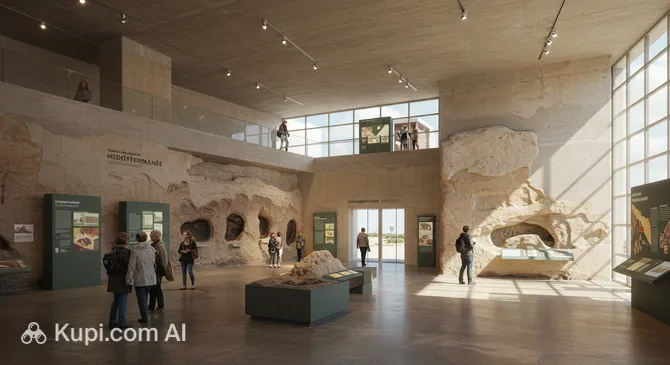
Cosquer Cave. Illustration.
Source: Kupi.com AI

Traveler photos:

The walls of the Cosquer Cave hold a priceless heritage—more than five hundred perfectly preserved Paleolithic rock paintings and engravings. Among them, you can see numerous hand stencils and outlines, various animal depictions, as well as mysterious abstract symbols. These works of art, created tens of thousands of years ago, are invaluable evidence of the lives and creativity of our distant ancestors.

These ancient images are not only an impressive example of prehistoric craftsmanship but also an important source of information about life, beliefs, and the environment of the time. The discovery and study of the Cosquer Cave sheds light on Europe's rich prehistoric past and underscores the importance of preserving such unique monuments for future generations.

Contacts

To get the most up-to-date information on visiting the Cosquer Cave, such as opening hours, ticket prices, and visit details, it is recommended to consult official sources. Below you will find the main contact details:

How to contactContact
AddressPromenade Robert Laffont, Esp. J4, 13002 Marseille, France
Phone number+33 4 91 31 23 12
Websitewww.grotte-cosquer.com

What to Do

Since the original Cosquer Cave is closed to the public due to its unique and inaccessible underwater location, the "Cosquer Méditerranée" multimedia museum was created in Marseille to introduce people to this amazing site. Here, visitors can immerse themselves in the prehistoric era thanks to a precise scientific reconstruction of the cave and modern technology.

At the "Cosquer Méditerranée" museum, you will have the opportunity to take a virtual journey through the cave halls and see detailed reproductions of the rock paintings. The exhibition allows you not only to view ancient art but also to learn many new things about the lives of Paleolithic people and how sea levels changed over millennia, eventually concealing the cave entrance.

The museum visit is enhanced by the use of audio guides, which provide detailed information about the exhibits. Interactive panels and themed exhibitions are also featured, making the visit engaging for both adults and children. It is a wonderful opportunity to connect with the distant past and appreciate the skill of prehistoric artists.

Getting There

It is important to understand that the Cosquer Cave itself, located in the Calanque de Morgiou near Marseille, is inaccessible to regular tourists. Its entrance is located underwater at a significant depth (about 37 meters), and access is granted only to professional divers and scientists for research purposes. This is due to the need to preserve unique prehistoric drawings and ensure visitor safety.

However, so that everyone can experience this amazing heritage, a magnificent replica museum—Cosquer Méditerranée—was created in the center of Marseille. Visiting this museum is the primary way to discover the Cosquer Cave, its history, and its rock art. The museum offers an exciting immersion into the cave's atmosphere through modern technology and precise reconstructions.

Getting to the Cosquer Méditerranée museum in Marseille is quite simple. It is located in the city center, near the famous Old Port (Vieux-Port), making it easily accessible for tourists. You can use public transport—many bus routes and metro lines pass through this popular tourist area. The museum is also within walking distance of many hotels and attractions in central Marseille, or you can take a taxi.

Nearest city: Marseille

History & Facts

The history of the Cosquer Cave is inextricably linked with Henri Cosquer, the professional diver who made this amazing discovery. In 1985, while exploring the picturesque Calanque de Morgiou near Marseille, he stumbled upon a submerged entrance leading into the unknown. After several daring dives, Henri Cosquer realized the scale of his find and reported it to the authorities, marking the beginning of extensive archaeological research into this unique underwater cave in France.

The uniqueness of the Cosquer Cave lies not only in its inaccessibility but also in the priceless evidence of the prehistoric era it holds. Scientists estimate the age of the rock paintings decorating its walls at approximately 19,000–27,000 years. This means they were created during the Upper Paleolithic period, a time when our ancestors were just beginning to master art and leave traces of their worldview for future generations.

A notable fact is that the entrance to the Cosquer Cave was submerged due to the significant rise in Mediterranean Sea levels that occurred after the end of the last Ice Age. This very circumstance, which cut the cave off from the outside world for millennia, played a key role in preserving its interior. Thanks to this natural "preservative," the ancient drawings and engravings have reached us in excellent condition, providing a rare glimpse into humanity's distant past.

Time Needed

To fully enjoy the exhibition at the Cosquer Méditerranée museum, which is a precise scientific reconstruction of the Cosquer Cave, visitors usually need about 1.5–2 hours. This time is generally sufficient to take a fascinating virtual journey through the reconstructed cave halls, carefully examine the copies of the rock paintings, and look through the multimedia materials presented.

Allocating 1.5–2 hours allows you to immerse yourself in the prehistoric atmosphere without rushing, learn about the history of the cave's discovery, the lives of ancient people, and the uniqueness of the artifacts found. The museum uses modern technologies, including audio guides and interactive exhibits, which make the visit engaging and educational.

Of course, the visiting time may vary slightly depending on your personal pace and level of interest in specific aspects of the exhibition. However, by planning for an hour and a half to two hours, you can get a complete picture of this amazing World Heritage site without feeling rushed.

Working Hours

As the original Cosquer Cave is not open to the public due to its underwater location, you can experience its heritage at the Cosquer Méditerranée replica museum in Marseille. The opening hours of the Cosquer Méditerranée museum may vary depending on the season. Generally, the museum is open daily from morning until evening. To find the exact schedule for your chosen dates, it is highly recommended to check the museum's official website before planning your visit.

For popular museums, especially during peak tourist season, it is often recommended to book tickets online in advance to avoid queues and guarantee entry. Please also verify this information on the official Cosquer Méditerranée website. Typically, such cultural sites are open year-round but may have special operating hours on holidays or during specific events.

9:30 – 19:30

Nearby

A visit to the replica museum of the Cosquer Cave in Marseille is undoubtedly a bright and memorable event. However, to make your trip even more rewarding and complete, it is worth paying attention to other attractions located nearby. Marseille is a city with a rich history and culture, and exploring its iconic sites will allow you to deeper experience the atmosphere of this Mediterranean port.

Exploring the surroundings will not only broaden your horizons but also provide new impressions. Many interesting sites are within walking distance of the Cosquer Méditerranée museum, which houses the Cosquer Cave exhibition, making them a convenient and pleasant addition to your main program. Below is a list of some of them, along with approximate distances.

NameDistance
Museum of European and Mediterranean Civilisations0.1 km
Fort Saint-Jean0.2 km
Place d'Armes0.3 km
Marseille Cathedral0.3 km
Le Panier0.6 km
Fort Saint-Nicolas0.6 km
La Vieille Charité0.6 km

Have you reached the end of the page?

So the route has been studied inside and out