Support

Vélodrome Stadium

About

The Vélodrome stadium, officially known as the Orange Vélodrome, is not just a sports arena but the true heart of football life in Marseille and all of France. As the home stadium for the legendary club Olympique de Marseille, it attracts fans from around the world and is considered one of the country's key sporting landmarks. For many travelers, visiting this site is on par with exploring the city's historical monuments.
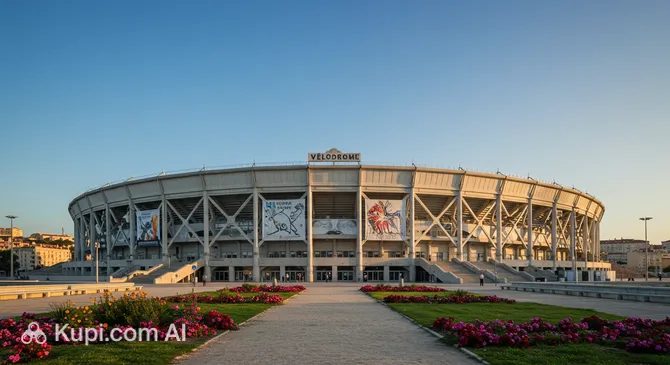
Vélodrome Stadium. Illustration.
Source: Kupi.com AI

Traveler photos:

This is the largest club stadium in France, capable of seating over 67,000 spectators, second in size only to the Stade de France in Paris. The scale of the arena is impressive, allowing it to host not only national championship matches but also international games, including World Cup and European Championship fixtures. The atmosphere during matches here is truly electric, making it a must-visit for any football fan.

The stadium is located in the southern part of Marseille, near the picturesque Mediterranean coast. Its modern appearance, featuring a unique wave-like roof, has become one of the city's most recognizable architectural symbols. This structure not only gives the stadium a futuristic look but also protects spectators from the famous local wind—the mistral. Tours are available for tourists, allowing a look behind the scenes: walk through the dressing rooms, visit the press center, and step out to the edge of the pitch, feeling like a part of great sporting history.

Contacts

Finding direct contact details for the Vélodrome stadium can be tricky, as all organizational matters, including ticket sales and stadium tours, are handled by the home club, Olympique de Marseille. To get the most up-to-date information on tour schedules, purchasing match tickets, or other events, it is recommended to consult the club's official resources.

The primary source of information is the official website of Olympique de Marseille (om.fr). Additionally, tickets for tours and matches can often be found on the websites of authorized ticket operators and travel services that offer behind-the-scenes tours of the famous arena.

How to contactContact
Address3 Bd Michelet, 13008 Marseille, France
Phone number+33 4 84 45 38 00
Websitewww.orangevelodrome.com

What to Do

Visiting the Vélodrome stadium is an opportunity to touch the sporting soul of Marseille. The main reason thousands of people flock here is, of course, for the football matches. Getting to a game featuring "l'OM" means immersing yourself in the incredible atmosphere created by devoted fans. However, even if you don't catch a game, the stadium offers plenty of experiences. Engaging tours are organized for travelers, allowing a peek into the very heart of the arena. You can walk through the stands, sit on the substitutes' bench, visit the dressing rooms where football stars prepare for matches, and head out to the edge of the famous pitch through the players' tunnel.

Beyond football, the Vélodrome is a multifunctional venue for major cultural and entertainment events. World-class concerts, festivals, and other large-scale events are regularly held here, making it a hub for more than just sports fans. Inside the stadium, there are official shops where you can purchase Olympique de Marseille merchandise as a souvenir. Visitors can also enjoy numerous cafes and restaurants offering both quick snacks and local cuisine.

For connoisseurs of modern architecture and photography, the Vélodrome is of particular interest. Its massive reconstruction culminated in the addition of an impressive wave-like roof, which has become a new symbol of the city. This futuristic design not only protects spectators from the elements but also creates a unique aesthetic. Guided tours often include a visit to the trophy room, where you can see the club's major awards, including France's only Champions League trophy.

Getting There

The Vélodrome stadium is conveniently located within the city of Marseille, making it easily accessible for both fans and tourists. The most convenient and fastest way to reach the arena is by public transport. The nearest metro station, Rond-Point du Prado, is on line M2 and is just a few minutes' walk from the stadium entrance.

In addition to the metro, several bus routes serve the Vélodrome, connecting it to various parts of the city. This is a good option if you are not traveling from the center. For those who prefer to drive, there are parking lots near the stadium. However, keep in mind that on match days or during other major events, parking spaces may be limited and traffic around the arena can be heavy. Therefore, using public transport is highly recommended on such days.

If you are staying in the center of Marseille and enjoy walking, the journey to the stadium will take approximately 30–40 minutes. It is a great opportunity to get to know the city better. Of course, taxis are always available, providing comfort, though they can be more expensive, especially during peak hours or game times.

Nearest city: Marseille

History & Facts

The history of the Vélodrome is a true chronicle of sporting life in Marseille. Construction of the arena began in 1933 but faced financial difficulties and was temporarily suspended. The project received a new impetus from the upcoming 1938 FIFA World Cup, hosted by France. Work resumed in 1935, and the stadium's grand opening took place on June 13, 1937. The arena owes its name, "Vélodrome," to the cycling tracks that originally encircled the pitch. At that time, it could accommodate around 35,000 spectators.

From its very first years, the stadium witnessed landmark events. In 1938, it hosted two World Cup matches, including the famous semi-final between Italy and Brazil. A special chapter in the Vélodrome's history is linked to the period of World War II. During this difficult time, the arena was used to house military equipment; however, even then, football matches were occasionally held on its pitch to keep up the citizens' spirits.

Over the decades, the Vélodrome has constantly changed and grown. The stadium has undergone several key renovations, including in 1971, 1998, and 2014, but one of the most significant was the modernization in 1983. It was then that the decision was made to completely remove the cycling tracks to increase seating capacity and make the arena exclusively for football. This step finally solidified the Vélodrome's status as the city's main temple of football, which has since evolved into one of Europe's most modern and high-capacity stadiums.

Time Needed

When planning a visit to the Vélodrome stadium, you should base your schedule on the duration of a standard tour. For a full visit to the arena, including the tour and exploring the facilities, it is recommended to set aside 1.5 to 2.5 hours. This is plenty of time to explore key areas without rushing: look into the players' dressing rooms, walk through the famous tunnel to the pitch side, visit the press center, and, of course, take some photos in the stands.

It is a completely different matter if your goal is to attend a football match or a concert. In that case, your stay at the stadium can take 4–5 hours or even longer. This time includes not only the event itself but also passing through security, enjoying the pre-match atmosphere created by the fans, and the time it takes to leave the arena after the final whistle. Keep in mind that on match days, stadium tours may have an altered schedule or may not be conducted at all.

Working Hours

The Vélodrome stadium does not have standard opening hours for general public access, as its availability depends directly on the schedule of matches, concerts, and other events. The primary way for tourists to see the inside of the arena is through guided tours. Generally, these are held daily; however, they are always canceled on match days or during major events. Because of this, it is strongly recommended to check the current schedule and tour availability on the official website of the stadium or the Olympique de Marseille football club before planning your visit.

Stadium tours are available year-round, not just during a specific season. To guarantee a spot on a tour, especially during the peak tourist season, it is worth booking tickets in advance through online services. This will allow you to choose a convenient time and avoid queues. A self-guided tour typically takes about an hour, providing an opportunity to explore the dressing rooms at your own pace, step out to the pitch side, and visit other iconic spots within the arena.

Nearby

A visit to the Vélodrome stadium is a thrilling event, but your introduction to Marseille would be incomplete without exploring its surroundings. The area around the arena offers many interesting spots that help you better feel the atmosphere of this multifaceted city in the south of France. A stroll through nearby parks, beaches, and cultural sites will enrich your experience and allow you to form a more complete picture of life in this port metropolis.

Just a few minutes' walk or a short public transport ride from the stadium, you can find both quiet corners for relaxation and lively entertainment hubs. This is a great opportunity to combine sports tourism with classic sightseeing, discovering new facets of Marseille.

NameDistance
Le Black Stone Pub0.5 km
Unité d'Habitation0.9 km
Marseille Grand-Est Ice Rink1.4 km
Parc Borély1.5 km
SENSAS Marseille1.8 km
Prado Beach2.1 km
Notre-Dame de la Garde2.5 km

Have you reached the end of the page?

So the route has been studied inside and out