Support

Castellum Aquae

About

In the northern part of the ancient city of Nîmes lies a true gem of ancient engineering — Castellum Aquae. This compact yet extremely important historical site in France once served as the main distribution hub for the city's water supply system. Built in the 1st century AD, it is a clear testament to how advanced ancient Roman technology was.
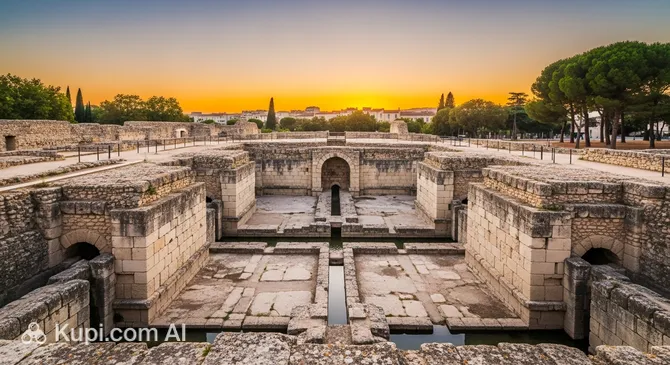
Castellum Aquae
Castellum Aquae. Иллюстрация. Источник: Kupi.com AI

The structure consists of a circular reservoir carved into the rock and lined with stone. This is where the crystal-clear water flowed after traveling 50 kilometers along the famous aqueduct, of which the legendary Pont du Gard is a part. On the facade of the building, you can still see ten round holes through which water was directed via lead pipes to public baths, fountains, and the homes of noble citizens.

Although the Castellum Aquae is smaller in size than the famous Arena, its significance for understanding daily life in antiquity can hardly be overstated. It is a rare monument of hydraulic engineering that has survived to this day in excellent condition. Today, this peaceful spot surrounded by greenery invites travelers to touch history and appreciate the craftsmanship of past masters away from the noisy tourist crowds.

Contacts

For those planning a visit to this unique monument of antiquity, below are the current contact details.

How to contactContact
Address16 Rue de la Lampeze 14, 30000 Nîmes, Франция
Websitewww.nimes-tourisme.com

What to Do

The main reason to come here is the opportunity to study ancient hydraulic engineering in detail. Take a close look at the ten circular apertures on the facade: massive lead pipes were once attached here, distributing water throughout the city. Walk around the structure to see the sluice gate at the back — Roman engineers used it to regulate the powerful flow of water coming from the aqueduct.

For better immersion into the context, be sure to read the information plaques. they tell in detail about the connection of this place with the Fontaine d'Eure spring and what role the Castellum played in the lives of the citizens. This is a wonderful location for atmospheric photos: the combination of ancient stonework, the strict geometry of the holes, and the surrounding greenery looks very impressive.

Visiting Castellum Aquae is best included in a walking tour of Roman heritage. After inspecting the reservoir, you can walk to the ancient Porte Auguste gate or climb up to the Tour Magne. The peace and quiet of this place allow you to momentarily escape the hustle and bustle and imagine how the city's pulse beat during the era of the emperors.

Getting There

Reaching the ancient water distributor is easy, as it is within walking distance of the main tourist trails. If you start your walk from the famous Arena, your journey northeast will take about 15–20 minutes. The route passes through the picturesque streets of Rue de la Madeleine and Rue de la Lampeze, immersing you in the atmosphere of the old city.

For those who prefer public transport, local buses run in the vicinity of Rue de la Lampeze. You can also use taxi services or rent an electric scooter, which is very convenient for moving quickly between Roman monuments. If you are traveling by car, you can find parking spaces on the adjacent streets, from where the structure is visible directly from the road.

For precise navigation, use the GPS coordinates: 43.8423658, 4.3558833. The site is located very close to the historical heart of the city, making it an excellent point on the itinerary of any walking tour of ancient heritage.

Ближайший город: Nimes

History & Facts

The construction of the Castellum Aquae dates back to the middle of the 1st century AD, likely during the reign of Emperor Claudius. This site was the final point of a grand engineering project — a 50-kilometer aqueduct that originated at the Fontaine d'Eure spring. The scale of ancient thought is staggering: the system provided the city with a daily supply of 35,000 cubic meters of water.

According to the principles described by the famous architect Vitruvius, water was distributed here according to a strict hierarchy. First and foremost, the resource was directed toward public needs: city fountains and baths, and only then to the private homes of wealthy citizens. Special bronze gauges (calix) were used to regulate the pressure in the lead pipes.

Interestingly, for many centuries, this engineering marvel was literally wiped off the face of the earth. In 1688, during the construction of a citadel, the remains of the reservoir were filled with rubble. It was only in 1844, during excavations, that the monument was revealed to the world again, becoming a rare surviving example of Roman hydraulic engineering — similar structures, besides Nîmes, can only be seen in Pompeii.

Time Needed

A visit to this site will not take much time, as it is compact in size. For a general viewing, reading the information boards, and taking commemorative photos, 30–45 minutes is enough for most tourists.

If you decide to combine your visit with a leisurely stroll through the adjacent quiet streets or a rest in the shade of nearby trees, it is worth allowing about one hour. This place is ideal for a short break between visiting the city's larger-scale attractions.

Working Hours

One of the pleasant features of this attraction is its accessibility. Castellum Aquae is an open site, not restricted by fences or gates, so you can visit it daily and around the clock, including holidays.

Since it is an outdoor monument, entrance is free. Nevertheless, to get up-to-date information about possible temporary restrictions or guided tours, we recommend checking the official website of the city's tourist office.

Круглосуточно

Nearby

The location of the Castellum Aquae allows tourists not to limit themselves to one site but to take a full journey through time by exploring the surroundings. Just a few minutes' walk away are other iconic monuments reflecting the former greatness of Roman Gaul.

Exploring the northern part of the city will offer you many discoveries: from shady gardens to majestic towers rising above the hills. Below is a list of interesting places located in the immediate vicinity:

NameDistance
Les Halles de Nîmes0.4 km
Tour Magne0.5 km
Nîmes Clock Tower0.5 km
L'Imperator0.5 km
Carré d'Art0.5 km
Jardin de la Fontaine0.6 km
Temple of Diana0.6 km

Reached the end of the page?

That means the route is fully explored