Support

Château de Malmaison

About

Château de Malmaison is a charming historical estate located near Versailles, France, close to Paris. This elegant castle gained worldwide fame as the favorite private residence of Napoleon Bonaparte and his first wife, Josephine de Beauharnais. It was here, away from the official splendor of the capital, that important chapters of their personal and political lives unfolded.
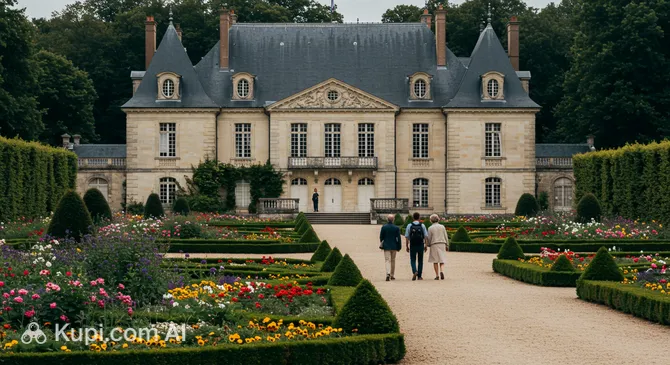
Château de Malmaison. Illustration.
Source: Kupi.com AI

Traveler photos:

Today, Château de Malmaison opens its doors as a museum, offering visitors a unique opportunity to immerse themselves in the atmosphere of the Napoleonic era. The castle is one of the finest examples of refined Consular style in France. Its rooms feature richly decorated interiors with magnificent collections of antique furniture, exquisite paintings, historical weapons, and valuable porcelain from the time of Napoleon I, dating back to the early period of his reign.

Of particular value to history buffs is the exceptional collection of memorabilia related to the Emperor's final years—his exile on the island of Saint Helena from 1815 until his death in 1821. A visit to Château de Malmaison is not just an excursion, but a real journey back in time, allowing you to touch history and learn more about the life of one of the most famous couples in French history.

Contacts

To get the latest information on opening hours, ticket prices, and available tours at the Château de Malmaison, it is recommended to visit the attraction's official website. You can also find useful information on the travel portals of Versailles or at local information centers.

How to contactContact
Address12 Av. du Château de la Malmaison, 92500 Rueil-Malmaison, France
Phone number+33 1 41 29 05 55
Websitemusees-nationaux-malmaison.fr

What to Do

A visit to Château de Malmaison is a unique opportunity to immerse yourself in the era of Napoleon Bonaparte and his wife, Josephine. Guests can explore the magnificently decorated halls, which house an extensive collection of art and personal belongings of the imperial couple. You can catch a glimpse of their daily lives while touring the meticulously recreated interiors of the time. Highlights include Napoleon’s famous library, crafted from mahogany, and the oval room, where Empress Josephine spent her final days.

The museum located within the castle offers themed tours that provide a deeper understanding of this famous couple's history and their interests. Special attention is paid to Napoleon and Josephine's passion for botany, and specifically for roses. These tours enrich the visit by providing context and sharing interesting details about life at Malmaison.

An essential part of the experience at Château de Malmaison is a stroll through its picturesque gardens. Be sure to visit the Old Rose Garden—a magnificent rosary with about 150 varieties, considered a true jewel of the estate. It is also worth spending time in the landscape garden, which was laid out according to the tastes of Empress Josephine and reflects her profound love for botany. These gardens offer not only aesthetic pleasure but also a chance to feel the atmosphere so cherished by the castle's former owners.

Getting There

The Château de Malmaison, the former residence of Napoleon Bonaparte and Josephine, is actually located in the town of Rueil-Malmaison to the west of Paris, rather than in Versailles. However, reaching this historic site is relatively easy from both the French capital and Versailles using public transport or a car.

The most popular way to get to Château de Malmaison from Paris is to use the RER A suburban train line. You need to take a train towards Saint-Germain-en-Laye and get off at the "Rueil-Malmaison" station. The journey from central Paris (for example, from Châtelet-Les Halles station) takes about 20-25 minutes. From the Rueil-Malmaison RER station, you can reach the château on foot (about 20-30 minutes) or take bus No. 258 (towards La Jonchère), which stops right at the museum entrance at the "Le Château" stop.

If you are planning a trip from Versailles, the most convenient way by public transport is to first head towards Paris, for example, to the major transport hub at La Défense. Transilien lines L or U run from Versailles Rive Droite or Versailles Chantiers stations to La Défense. From there, you can transfer to the aforementioned RER A line towards Saint-Germain-en-Laye to the "Rueil-Malmaison" station, and then follow the directions above.

For those who prefer to travel by car, Château de Malmaison is also easily accessible. From Paris, drive towards La Défense and then follow the signs for Rueil-Malmaison. From Versailles, the drive takes about 30-40 minutes depending on traffic. Parking is available at the château. Of course, you can always use a taxi service for maximum comfort, though it will be a more expensive option.

Nearest city: Versailles

History & Facts

Château de Malmaison, located near Versailles, is steeped in a fascinating history, starting with its very name. Legend has it that in the 10th century, Norsemen who raided settlements along the Seine used this site to store their loot, earning it the nickname "mal maison" — "evil house." The first documented mention of the name "Mala domus" dates back to 1244, and by the 14th century, it was recorded as a seigniorial estate called "La Malmaison." These early mentions attest to the antiquity of the site long before the castle we see today appeared.

Construction of the castle itself began in the 17th century, specifically in 1610, and continued intermittently until 1686. In the 18th century, starting from 1737, the estate was often leased to wealthy financiers who hosted receptions for high society. In 1763, the son of Chancellor d'Aguesseau purchased the castle, and in 1771, it passed into the hands of a wealthy banker, Jacques-Jean le Couteulx du Molay. His family made significant architectural changes, extending the wings of the building facing the garden. The banker's wife, Madame du Molay, made Malmaison famous by organizing a popular literary salon here, frequented by prominent cultural and artistic figures of the time.

However, the most famous period in the history of Château de Malmaison began in 1799, when it was purchased by Josephine and Napoleon Bonaparte. They completely remodeled and updated the castle, turning it into their favorite residence. From 1800 to 1802, Malmaison, alongside the Tuileries Palace in Paris, effectively served as the seat of the French government. It was here that the ministers of the Consulate frequently met and important state decisions were made, making this modest-looking castle one of the centers of power in France during Napoleon's Consulate era.

Time Needed

When planning a visit to Château de Malmaison, located near Versailles, you should allow for 2–3 hours for a complete tour. This time is generally sufficient to explore the palace's main halls, where Napoleon Bonaparte and Josephine de Beauharnais once lived, and to experience the atmosphere of the First Empire era.

This time includes touring the château's interiors, including the private apartments, salons, and library, as well as viewing the collection of artworks and personal belongings that belonged to its famous owners. If you wish to study the exhibition in more detail or take a leisurely stroll through the adjacent park and the rose garden, which was Josephine's particular pride, your stay may be longer.

For those with a deep interest in the history of the Napoleonic era or who wish to visit the temporary exhibitions sometimes held at Malmaison, it is worth setting aside an additional hour. Thus, for a relaxed and thoughtful visit, including a walk through the gardens, it is best to allocate about half a day.

Working Hours

To make the most of your visit to Château de Malmaison, we recommend checking the current opening hours in advance. Typically, such attractions are open to visitors most of the year, but the schedule may vary depending on the season (for instance, there may be different hours for summer and winter periods) and weekly closing days (often Monday or Tuesday, which is typical for many museums in France). For the most accurate and up-to-date information on the opening hours of Château de Malmaison, it is always best to check the official website of the attraction or the official tourist portals of Versailles.

When planning your visit, especially during the peak tourist season or on public holidays, we highly recommend checking if you need to book tickets in advance. For many popular sites, this helps avoid long queues and guarantees entry. On the official website, you can generally find information on whether Château de Malmaison is open year-round or has seasonal closing periods, as well as other useful tips for visitors to make your experience at this historic site as comfortable as possible.

DayOpening hours
Monday10:00 – 12:30, 1:30 – 17:45
TuesdayClosed
Wednesday10:00 – 12:30, 1:30 – 17:45
Thursday10:00 – 12:30, 1:30 – 17:45
Friday10:00 – 12:30, 1:30 – 17:45
Saturday10:00 – 12:30, 1:30 – 18:15
Sunday10:00 – 12:30, 1:30 – 18:15

Nearby

A visit to the Château de Malmaison is, without a doubt, an immersion into the fascinating history of France associated with Napoleon Bonaparte and Josephine de Beauharnais. However, to make your trip to Versailles even more rewarding and memorable, it is worth exploring other interesting nearby locations. Discovering the surrounding area will allow you to gain a deeper understanding of the region's cultural and historical context and uncover new facets of French charm.

By expanding your itinerary beyond just the Château de Malmaison, you will have the opportunity to see a variety of attractions, from other grand estates and parks to modern architectural masterpieces. Each of these places has its own unique atmosphere and history, complementing the impressions of your main destination.

NameDistance
Château de Monte-Cristo4.9 km
Albert Kahn Museum and Gardens5.6 km
Grande Arche de la Défense5.6 km
CNIT5.8 km
Château de Saint-Germain-en-Laye6 km
Bois de Boulogne6.3 km
Pont de Sèvres6.7 km

Have you reached the end of the page?

So the route has been studied inside and out