Support

Musée de l'Homme

About

The Museum of Man in Versailles is a site whose information may not be as widely known compared to the splendor of the famous Palace of Versailles. Nevertheless, the city of Versailles itself, located in the heart of France, offers travelers an immersion into history through its grand palace and park ensemble, which is essentially one massive museum.

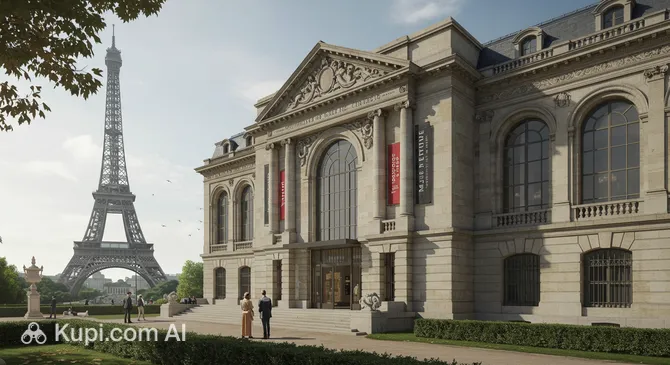
Musée de l'Homme. Illustration.
Source: Kupi.com AI

Traveler photos:

The Palace of Versailles and its park officially became a museum in 1801, opening to the public. By 1830, the entire architectural complex was recognized as a museum heritage site, and in 1837, the Museum of the History of France opened within the royal palace. Thus, Versailles offers a unique opportunity to explore history and art in one of the most impressive locations in the world.

Located just 15 kilometers from Paris, this palace and park ensemble is not only an architectural masterpiece but also a key historical and cultural monument of France. Its significance was recognized on a global level when the complex was included in the UNESCO World Heritage list in 1979, attracting millions of visitors every year.

Contacts

Unfortunately, exact contact details for the Museum of Man in Versailles are currently not available. To find up-to-date information regarding opening hours, ticket prices, or other inquiries, we recommend checking the attraction's official website, if it exists, or visiting tourist information centers directly in Versailles. There, you will be able to get the most current and accurate information.

How to contactContact
Address17 Pl. du Trocadéro et du 11 Novembre, 75116 Paris, France
Phone number+33 1 44 05 72 72
Websitewww.museedelhomme.fr

What to Do

While specific exhibits or activities directly associated with the name "Museum of Man" in Versailles may not be as clearly defined, Versailles itself is a vast museum complex offering a wealth of experiences. Here, visitors can immerse themselves in the atmosphere of grandeur and the history of France.

One of the main activities is, of course, exploring the luxurious interiors of the Palace of Versailles. You can walk through the halls where the fates of the monarchy were decided and see the famous Hall of Mirrors firsthand — an impressive 12-meter-high space richly decorated with mirrors and paintings, which once served as a venue for lavish receptions and important state events.

An equally engaging activity is strolling through the extensive gardens and parks of Versailles. These magnificent landscapes, created on the site of drained marshes, are works of art in themselves. Here you can spend hours walking among fountains, sculptures, manicured alleys, and secluded corners, enjoying the harmony of nature and human genius.

In general, visiting the Versailles complex is a unique opportunity to touch the history of the French monarchy and see outstanding examples of architecture and art from the era of French classicism. Every corner here breathes history, offering visitors an unforgettable journey through time.

Getting There

Getting to Versailles, where the Museum of Man is presumably located, from Paris is quite simple, as the city is situated just 15 kilometers from the capital of France. This makes it an ideal destination for a day trip.

The most popular and convenient way to reach Versailles from Paris is via the RER C suburban train line. Trains depart from several stations in central Paris, including Saint-Michel Notre-Dame, Musée d'Orsay, Invalides, and Champ de Mars – Eiffel Tower. The journey takes approximately 30-40 minutes to the Versailles Château - Rive Gauche station, which is just a few minutes' walk from the famous Palace of Versailles. You can also use SNCF trains from Montparnasse station (to Versailles Chantiers) or Saint-Lazare station (to Versailles Rive Droite).

Upon arrival in Versailles, most major attractions, including the palace and park ensemble, are within walking distance of the train stations. If the Museum of Man is a separate site or located some distance from the main tourist routes, you can use local buses or taxi services. Before your trip, it is recommended to confirm the exact location of the museum and plan your route from the nearest station or the center of Versailles.

Nearest city: Versailles

History & Facts

The history of Versailles, and consequently any museum telling the story of mankind and its achievements in this iconic part of France, dates back to the 17th century. It all began in 1623 when King Louis XIII built a small hunting lodge here. However, between 1624 and 1631, under the guidance of architects Jacques Lemercier and Philibert Le Roy, this modest château was rebuilt into a more imposing hunting castle. Two wings, four towers, and a defensive wall were added to the original building, laying the foundation for the future grand palace and park complex.

Versailles reached its true peak and global fame during the reign of Louis XIV, the "Sun King." It was under him that the massive construction projects began, turning the hunting lodge into a dazzling royal residence. From 1682 until the French Revolution in 1789, Versailles served as the official residence of the French monarchs. It was not just a place for kings to live, but the true center of political, cultural, and social life in France, witnessing many turning points in history.

Versailles was the place where decisions were made and documents signed that influenced the fates of many nations. For example, it was here in 1783 that an important international treaty was signed, marking the end of the American Revolutionary War. In 1789, within the walls of Versailles, the National Constituent Assembly adopted one of the fundamental documents of modern times – the Declaration of the Rights of Man and of the Citizen. These events underscore the significance of Versailles as a place where key ideas about freedom and individual rights were shaped.

The historical role of Versailles is not limited to the era of the French monarchy. In later times, it also remained at the center of important events. For instance, in 1871, the creation of the German Empire was solemnly proclaimed in the famous Hall of Mirrors at the Palace of Versailles. In 1919, the Treaty of Versailles was signed here, officially ending World War I. Later, in 1963, the Élysée Treaty was signed in Versailles, marking a major milestone in the post-war reconciliation between France and Germany. All these events have turned Versailles into a living chronicle of European and world history.
Time Needed

Determining the exact time needed to visit the Museum of Man in Versailles is quite difficult, as detailed information regarding the recommended visit duration and the scale of the exhibition for this specific museum is not always available. This may be because it is a lesser-known part of the vast Versailles complex or its visit is integrated into a more general tour.

If we assume that the Museum of Man is a separate, relatively small exhibition or a specialized display in Versailles, then it will likely take about 1-2 hours to explore. This time is usually enough to see the main collection of a small museum without rushing or going into excessive detail.

If the term "Museum of Man" refers to a broader exploration of historical and cultural aspects within the Palace of Versailles — for example, visiting the halls of the Museum of the History of France located directly inside the palace — then you should allocate more time. Depending on your interest and how deeply you dive into the exhibits, this could take anywhere from 2-3 hours to half a day. For the most accurate planning, it is recommended to check for information about the "Museum of Man" on the official resources of the Versailles complex or at tourist centers in Versailles before your visit.

Working Hours

Unfortunately, exact information about the opening hours of the Museum of Man in Versailles is not always available in general sources. Currently, according to available data, specific details regarding its operating schedule are missing. Therefore, we strongly recommend checking the current opening hours and any potential seasonal changes directly on the official website of the Versailles Palace and Park Ensemble or at the tourist information centers in the city of Versailles before planning your visit. There you can also find out if the exhibition is open year-round or has a seasonal schedule.

Given the popularity of Versailles as a tourist destination, it is also useful to find out in advance whether pre-booking tickets or making a reservation is required for the Museum of Man, especially if your visit falls during the peak season. This will help you plan your time and avoid potential inconveniences.

DayOpening hours
Monday11:00 – 19:00
TuesdayClosed
Wednesday11:00 – 19:00
Thursday11:00 – 19:00
Friday11:00 – 19:00
Saturday11:00 – 19:00
Sunday11:00 – 19:00

Nearby

Visiting the Museum of Man in Versailles is a wonderful opportunity to experience history and culture, but you shouldn't stop there. Exploring the surrounding area can significantly enrich your experience and reveal new facets of this amazing city in France. A stroll through the nearby streets and an introduction to other landmarks will allow you to feel the atmosphere of Versailles more deeply.

Several interesting sites are located near the Museum of Man that can complement your cultural itinerary. From museums to architectural monuments and cozy spots — everyone will find something to their liking. Below is a list of some of these attractions, including approximate distances, to help you plan your route more easily.

NameDistance
Maritime Museum0 km
Aquarium Club0.3 km
Pont d'Iéna0.4 km
Francette0.5 km
Guimet Museum0.6 km
Musée d'Art Moderne de Paris0.8 km
Palais Galliera0.8 km

Have you reached the end of the page?

So the route has been studied inside and out